Full article about Sunlit retablo in Caçarilhe e Infesta
Baroque gold floods São Mamede church at 09:32, then vanishes into granite silence
Hide article Read full article
At 09:32 the sun clears the ridge east of Infesta and slips through the side door of São Mamede’s mother church as if someone had thrown a switch. For twenty precise minutes the Baroque retablo is drenched in molten gold, the gilt woodwork glowing like fresh lacquer. No tour group assembles; no coach parks outside. The only witnesses are the baker’s wife on her way to leave rolls at the café and whoever has dallied too long over the morning’s first bica. Then the light tilts away, the nave returns to stone-cool shadow, and the day proper begins.
Granite that speaks
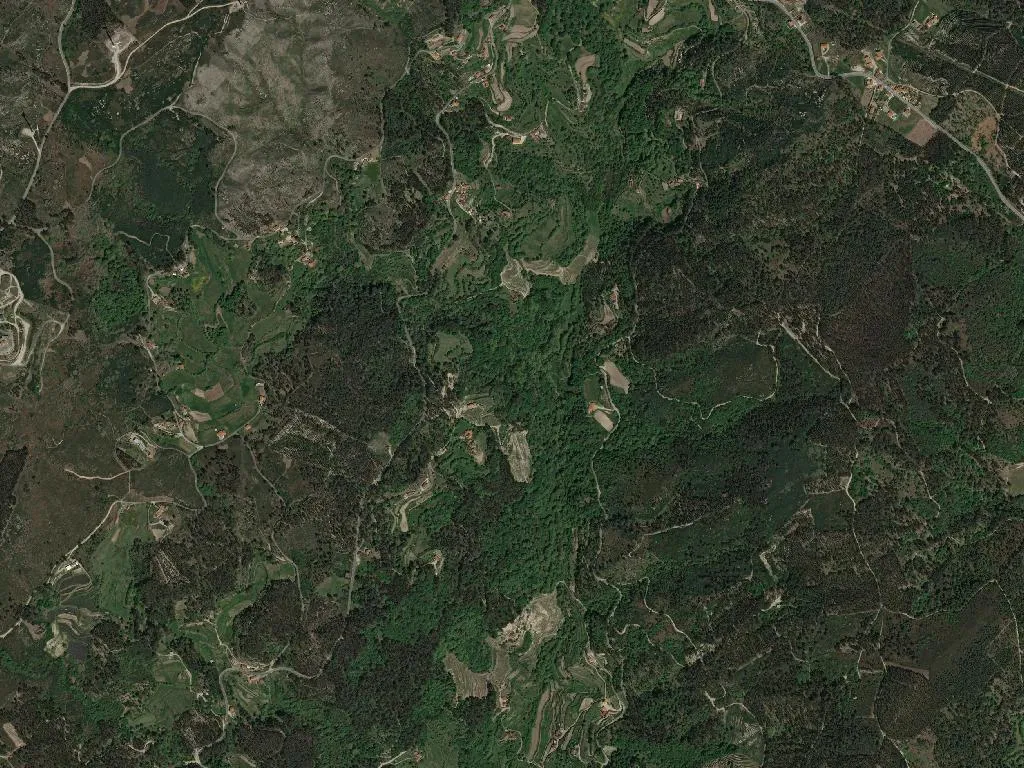
The paired parishes of Caçarilhe and Infesta were welded into one municipality in 2013, yet they have shared fields, boundary walls and gossip since at least the thirteenth century. Caçarilhe, “Cazarelhe” in a 1220 charter, still takes its name from the scattered northern oak woods. Infesta, granted a royal charter in 1258, carries the Latin infesta—disputed ground—because the ridge once marked the restless border between Portucalense counts and Leonese kings. Today 510 people inhabit a lattice of hamlets—Cimo de Vila, Rande, Moalde—where granite corn cribs stand on stilts to keep the mice out and schist walls divide holdings that have passed from father to son without a sale deed since Salazar’s day.
In the village square of Caçarilhe a wayside cross rises from a plinth carved 1753. An inscription—In hoc signo vinces—has persuaded local historians that a Napoleonic officer, stranded after the 1809 retreat, ordered the monument in thanks for safe passage. Whether fact or parish legend, the cross is still the place where lads prop their bicycles and old men judge the weight of clouds.
Three kilometres downhill the single-arched Ponte de Pedra strides over the river Olo. Built in 1742 to carry the royal road between Porto and Braga, it became, two centuries later, a film set for Manoel de Oliveira’s A Caça. Oliveira needed three days, a handful of locals and one extra take when José do Carmo, asked to mime throwing a stone, lobbed it for real and nearly brained the soundman. The shot stayed in the final cut; villagers still grin about it.
Bread, blood and oak-smoke
Caçarilhe’s signature dish is sarrabulho, a mahogany stew of pork blood, corn bread and mountain herbs gathered from gorse and heather slopes. It arrives at table in clay bowls, steaming like a forge, accompanied by an Azal-Loureiro red Vinho Verde grown on south-facing terraces above the Olo. Barrosã beef—PDO-protected, chestnut-finished—appears as rojões braised in white wine and bay, or kid roasted over oak in a wood-fired bread oven.
Every even-numbered July the Festa do Milho e do Barrosã commandeers Infesta’s square. Cows of the ancient auburn breed stand tethered to tractors, their expression suggesting they have seen every camera phone ever invented. Women judge sweetened condensed-milk puddings; men argue over whose ox turns the restored water-mill most evenly. By dusk the air is thick with corn dust, guitar strings and the caramel note of burnt sugar.
Buy honey labelled Mel das Terras Altas do Minho PDO—amber, chestnut-scented—from the beekeeper whose hives dot the upper chestnut groves. The monthly market, first Saturday, fits onto the café terrace: one stall for goat cheese from Trás-os-Montes, another for bagaco brandie aged in local oak. António, moustache yellowed with nicotine, pours last year’s batch into a thimble glass. “If you leave without tasting,” he warns, “it’s as if you were never here.”
Walking the Olo loop
The signed PR3-CB footpath, eight kilometres end to end, follows the Olo downstream from Infesta to the stone bridge. Garrano ponies, small as carousel horses, graze the water meadows; willows trail green whips in the current. By 10 a.m. river mist still clings to the surface, amplifying every watery footstep into cathedral acoustics. Abandoned water-mills stand with doors ajar—stone drums, millstones furred with moss. Step inside, clap once, and the echo answers like a reluctant guide.
From the Cimo de Vila lookout the view unwraps across the Tâmega valley to the saw-edge of the Marão range. Six geocaches are hidden along the circuit; weekend GPS pilgrims arrive from Porto with boot-box rucksacks and leave with memory cards full of straw-roofed espigueiros. Ask them what they came for and they will answer, “Soup at the village café—nothing else open on Sunday.” They say it with relief.
In the quinta chapel of São Cristóvão a 1.2-metre Gothic Saint Christopher, brought—so the story goes—by Santiago pilgrims, only leaves his niche if it rains on the eve of the parish romaria. Meteorology thus becomes liturgy: no rain, no procession; rain, and everyone stays indoors anyway rather than soak the statue. Zé Manel shrugs: “If it doesn’t rain we wait till next year. If it does, we also wait. Nobody wants pneumonia.”