Full article about Granite Altars & Hilltop Fires in Carvalho e Basto
Romanesque chapels, May pilgrimages and Barrosã beef in Celorico de Basto’s hidden parish
Hide article Read full article
Stone and lime: the face of the parish
Two grey granite churches anchor the civil parish of Carvalho e Basto (Santa Tecla). Neither the Igreja Paroquial de Carvalho nor its twin in Basto is a cathedral, yet their thick walls, lintelled doorways and candle-lit gilded altarpieces distil the north-Portuguese vernacular that art historians call "Romanesque stubbornness". Tucked among the maize plots are the even smaller chapels of Santa Bárbara and Senhora da Graça; step inside on the hottest August afternoon and the damp stone still breathes winter. Locals touch the walls the way others pat a horse—an unconscious greeting to generations of whispered anxieties absorbed by the masonry.
The pilgrimage that climbs to Nossa Senhora do Viso
Word spreads through the valley the old-fashioned way: a note in the baker’s window, a neighbour leaning over a gate. By the first Sunday in May half the district is climbing the 2.5 km dirt track from Carvalho to the hilltop shrine of Nossa Senhora do Viso. The tradition has been logged every year since 1950, but families insist it is older than the records. Babies are carried, octogenarians lean on grandchildren, returning émigrés swap Swiss number plates for walking boots. Later in July the parish trades penitence for party when the Festas do Concelho honour Saint James with brass bands, grilled kid and Vinho Verde drawn from white enamel jugs. On those nights the population swells from 942 to several thousand; even the mayor admits he can’t find a parking space.
Barrosã beef and mountain honey
Two protected labels map the taste of the territory: Carne Barrosã DOP, from long-horned cattle that graze the high heather, and Mel das Terras Altas do Minho, a dark, resinous honey collected from chestnut blossom. Smokehouses hang chouriço the colour of burgundy; alheira sausages, invented by Jews pretending to be Christians, coil like question marks above the hearth. Order rojões à minhota and the waitress will ask if you want the liver and blood—say yes, then mop the plate with broa, a corn-and-rye loaf baked in a wood-fired oven that perfumes the entire hamlet. Finish with toucinho-do-céu, a convent egg-yolk sweet so rich it once paid rent to the bishop.
Paths between vines and orchards
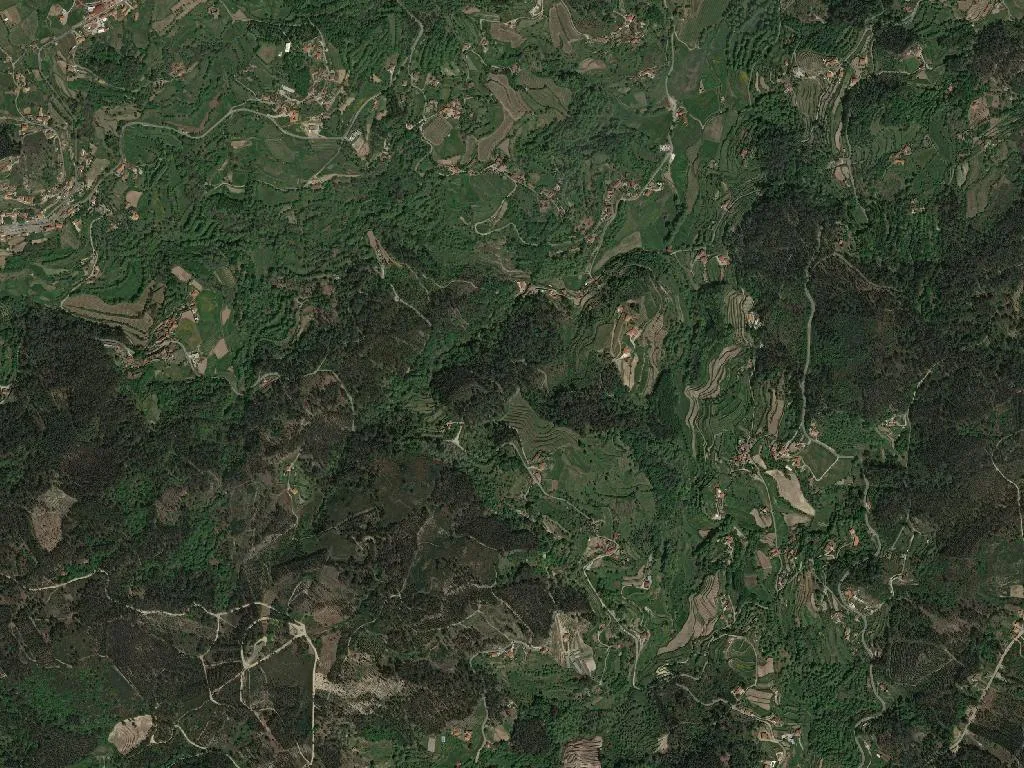
No footpath app records the lanes that braid Carvalho to Basto, yet the routes are older than the border with Spain. Dry-stone walls corral small plots of vines trained on high pergolas—an arrangement that lets sheep graze underneath and keeps mildew at bay in the damp Atlantic air. Beyond the last apple orchard the track narrows into oak coppice whose acorns once fed the pigs that fed the explorers. The only soundtrack is the Tâmega fretting over granite boulders two hundred metres below and, if you time it right, the thud of early-harvest apples being tipped into wooden crates.
The weight of silence and the houses that wait
Walk the lanes at dusk and you will smell woodsmoke long before you see a chimney. Half the dwellings are shuttered until August when the diaspora clocks back in from Paris, Neuchâtel or Lisbon. Brambles muscle through wrought-iron gates; barns that once stored chestnuts now shelter only sparrows. Yet the ledger is not all loss: new aluminium olive presses hum beside stone tanks, Wi-Fi reaches the chapel square, and the parish council has just repainted the bandstand. The 67 per cent voter turnout in the last local elections—double the national average—suggests a place that still believes the future can be negotiated village by village.
When you leave, the scent of burning eucalyptus lingers on your sweater like a receipt. It is proof that somewhere between the granite and the sky people still heat their houses with fire they lit themselves, and that smoke, given time, always finds its way home.