Full article about Rego
Granite hamlets, PDO Barrosã beef and altitude honey above Braga’s quiet ridges
Hide article Read full article
The Climb That Ends in Silence
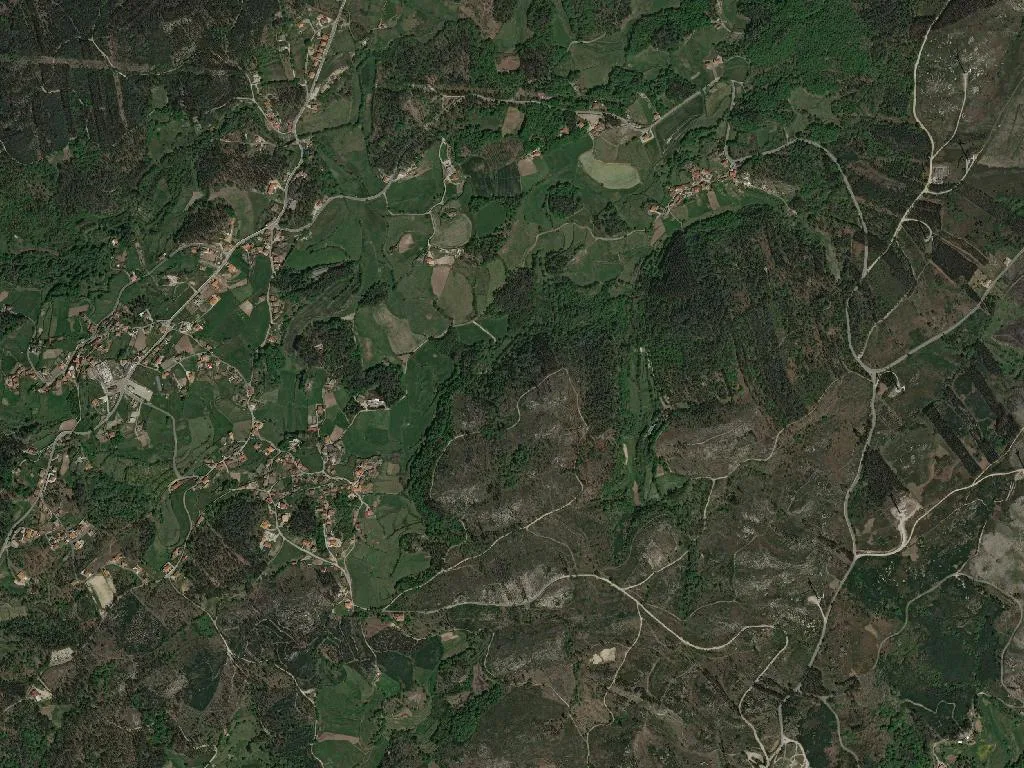
The road corkscrews upward, each hairpin shedding another layer of noise. By the time the altimeter clicks past 700 m, the only soundtrack is the wind combing through gorse and the soft clink of a distant cowbell. Rego spreads across its granite shelf like a breathing exercise: 17 km², 1 032 residents, and a horizon that feels vacuum-sealed. Even at midsummer the air arrives rinsed and cold; the light is so sharp it seems to chisel the schist roofs into paper cut-outs.
Where Water Writes the Map
“Rego” is an old Iberian word for water-channel, and the parish obeys the rule. Threads of silver run every few hundred metres—nameless brooks that once parcelled out medieval holdings and now irrigate tiny plots of kale and maize. The terraces they feed date to the 1500s, when subsistence farming etched the slopes into stairsteps still too narrow for a modern tractor. Settlement follows the same parsimonious logic: hamlets of three or four houses, stitched together by footpaths rather than tarmac. Cornfields end where granite begins; pasture begins where corn gives up.
High-Altitude Pantry
What grows up here tastes of height and hardship. Barrosã beef—PDO-protected—grazes on wind-whipped grasses so short they could pass for golf-course rough. The meat’s fibres are tight, almost equine, and reward four-hour stews with a depth that lowland cattle never reach. Late-blooming heather and wild rosemary give the Minho Highland Honey its resinous swagger; apiarists delay the harvest until late August to let mountain flora finish their slow-motion performance. Even the vinho verde behaves differently: vines are trained low to dodge Atlantic gales, and the resulting Loureiro keeps a citric snap that recalls the granite it clings to. Pour it blind and you’d swear there was limestone in the glass—until the schist minerality arrives as a dry stone wall on the finish.
Calendar of Calves and Candlewax
Religion still sets the metronome. July’s Santiago festivities draw neighbouring parishes for bagpipes, fireworks and an agricultural fair where prize Barrosã calves wear laurels of yellow broom. But the emotional crescendo is the 8 September pilgrimage to the hilltop shrine of Nossa Senhora do Viso. Pilgrims set off at 4 a.m., boots crunching on frost-rimmed gravel, swapping rosaries for water bottles at each granite crossroad. The final 200 m climb is a quad-burning catechism; the reward is sunrise over four mountain ranges and a cup of aguardiente poured by the brotherhood before Mass begins.
Sleep Under Low Beams
Tourism is measured in single digits: five self-catering houses, all converted within the last decade, none sporting a pool or a smart-TV bigger than the kitchen table. Expect chestnut ceiling beams you’ll duck if you’re over six foot, windows the size of postage stamps, and a breakfast brought by the owner’s aunt: still-warm rye bread, quince jam the colour of burnt amber, coffee strong enough to stain the cup. Checkout time is whenever the church bells strike nine; after that, the only timetable is the grazing rotation of the Barrosã herd you’ll meet on the lane.
Walk in any direction and within twenty minutes you’ll hit a meadow where cows outnumber people. The parish’s average age is 63; silence is not a marketing slogan but a demographic fact. Yet the place refuses prettification—hay is still turned by hand, irrigation channels opened with a spade, conversations paused so both parties can catch their breath. Rego does not hide from the modern world; it simply keeps it at arm’s length, 700 m above sea level.