Full article about Vinho Verde & Granite Terraces of Veade, Gagos e Molares
Taste vinho verde among 261 m terraces, hear out-of-tune bells in Molares, join July sardines in Veade, Gagos e Molares.
Hide article Read full article
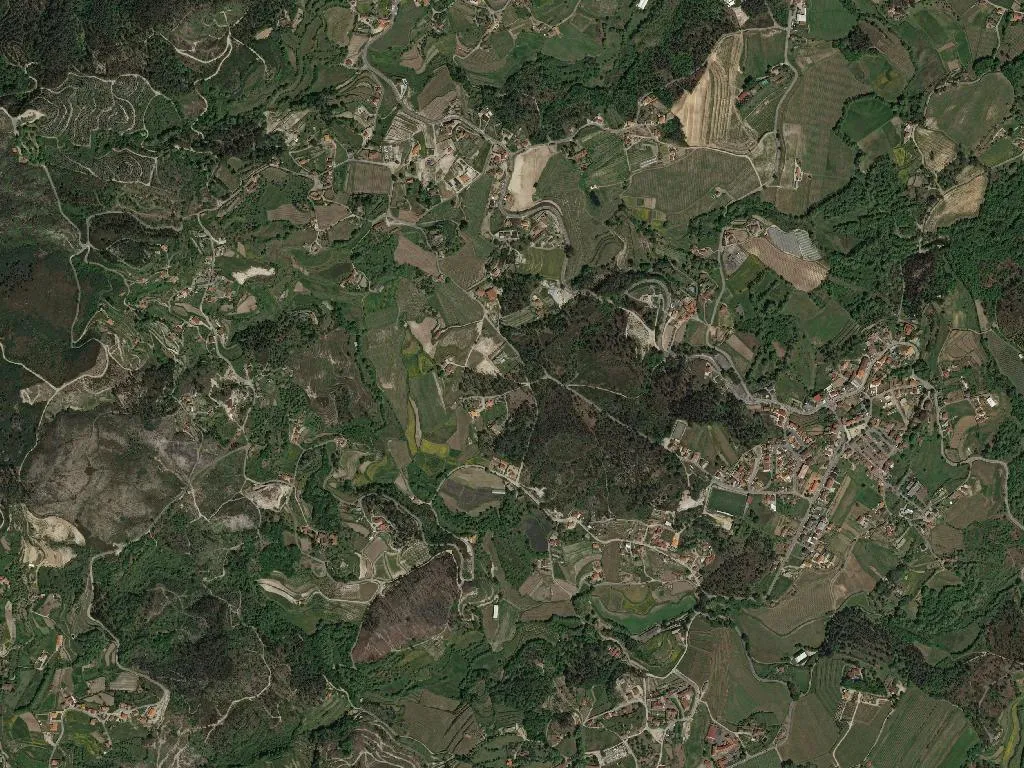
The vinho verde hits the back of the throat with a snap of acidity sharp enough to make the tonsils flinch. At 261 m above sea level the land tilts in gentle folds, vines stitched between waist-high granite walls velveted with moss. In the civil parish stitched together from Veade, Gagos and Molares, the calendar is still the farmer’s: the scent of crushed grapes drifting in with the first chill of October, the click of secateurs on a January morning, the canes fluorescing green again by April.
This parish was created in the 2013 administrative shake-up, yet the pattern is centuries older—terraces stepping downhill like giant stairs, stone water-channels still feeding the plots, the very name Veade derived from the Latin vado, the shallow place where you once forded the river Tâmega.
Three hamlets, one identity
Veade has the closest thing to a centre. Parish church crowns the ridge, its whitewashed façade glaring white at noon in August. Opposite, António’s café sells espresso for ten cents less than in Celorico’s main square. The abandoned Casa da Boavista keeps a tiled pond in its garden where two goldfish survive on no feeding schedule anyone can remember.
Gagos tumbles down the slope. Houses sprout wherever the granite allowed—some gable-end to the lane, others tucked behind vegetable plots half-way to the chapel of Nossa Senhora dos Prazeres. Inside are stored the heavy wooden processional platforms, their paper flowers powdered grey by dust.
Molares, smallest of the three, breathes with the stream. The church bells ring slightly out of tune. On St Sebastian’s day the village brass band marches through all three settlements and finishes here, handing out sardines and cornbread in Sr Adriano’s old olive-oil press, opened like a family garage.
When the council gathers
For four days every July the parish honours St James and Veade turns into a fairground. The football pitch becomes a travelling amusement park—Ferris wheel visible from the N14, doughnut stalls, vats of caldo verde ladled out in Dona Rosa’s churchyard. The procession steps off at nine in the morning, but the nights are when the lanes swell. Emigrants fly back from Paris or Geneva, parade toddlers who answer in French, and drink too many beers with classmates they last saw at fourteen.
The pilgrimage to the hilltop shrine of Nossa Senhora do Viso is a graver affair. Pilgrims leave Molares at five in the morning, climbing at a shuffle. They carry the frail, toddlers, even the family dog. At the summit a doll-sized hermitage shelters in the boulders; inside, the air is thick with candle-wax and dew-damp anoraks.
At the table of the land
Carne Barrosã never appears on a restaurant card—it is simply what is for lunch. The beef arrives from the village butcher, yellow with fat and scented with backyard bay. Smoked belly pork goes into the rojões, the sauce mopped up with rye bread that Ilda still bakes in a wood-fired oven. Vinho verde is drawn from the barrel; no one asks the alcohol percentage.
The honey is Dona Albertina’s, from hives her son keeps on the Serra de Veade ridge. When the strawberry-tree blooms in August the honey turns amber with a burnt-caramel note. Children eat it by the spoonful; adults stir a teaspoon into brandy to fend off winter sore throats.
Memories of tin
For three short years in the 1950s just over fifty men rode the cage down the Carriço tin mine. The timbered shaft is still visible, capped by zinc sheets that groan in the wind. Uncle Mário, who descended at nineteen, remembers the ore running in pencil-thin veins that disappeared into red mud. He earned twenty escudos a day and a cough that never quite left him.
Today his grandchildren study in Braga and come back only at weekends. Population density—132 people per km²—translates into shiny padlocks on gates, fields slipping into gorse, lights on only from Friday night to Sunday. There are 450 residents over 65 and just 195 under 30; the cluster primary school shrinks every September.
On misty dawns, when moisture darkens the granite and vine leaves glitter with droplets, the parish seems suspended between what was and what still manages to be. The church bell strikes nine, and somewhere a smoker’s door creaks open to reveal chorizo links the colour of mahogany, slow-cured over oak.