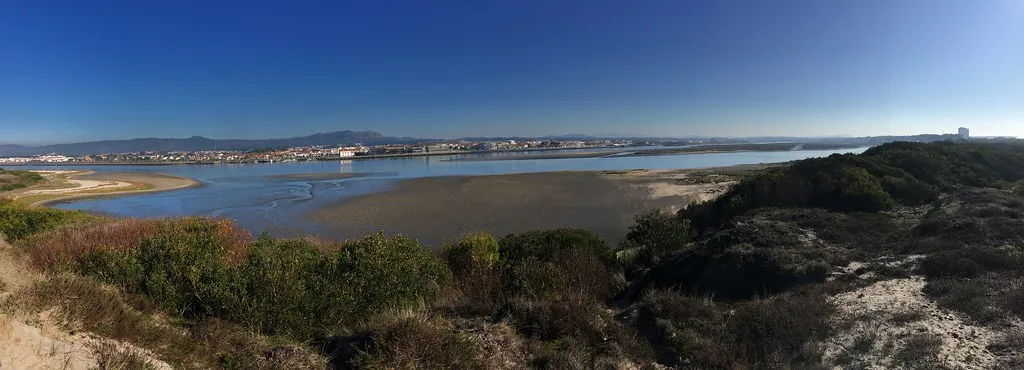
Full article about Fão’s wide Atlantic hush
Salt air, pine shade and a beach so broad it swallows footprints
Hide article Read full article
Where the Coast Path Meets Salt
A sheet of pale sand unfurls so wide you could land a small aircraft on it. Low dunes rise like slow-motion swells, their marram grass combed by an Atlantic breeze that smells of iodine and wet linen. Breakers roll in from the north-west, tripping over themselves a hundred metres out and sliding ashore with a soft hiss, embarrassed to interrupt.
Fão inhales through the ocean. Salt air slips through louvred shutters, flavours the laundry on rotary dryers, sets the stone pines of the North Littoral Natural Park swaying like metronomes. Only 3,923 people live here, yet on the beach they seem fewer; the coastal plain is so shallow that even your phone thinks you’re already at sea level. When the tide pushes in, the village feels briefly amphibious.
Where the Coast Path Meets Salt
The Coastal Camino cuts through as casually as a neighbour on a bread run. Pilgrims pad barefoot across the sand, boots lashed to packs still bearing the bruises of Viana’s cobbles. Scallop shells click against rucksack frames—trophies claimed at dawn when the retreating tide left a mirror of wet sand. Wave-roar replaces the echo of stone; here the only paving is the print you leave behind.
The Natural Park is more than cartographic poetry. Primary dunes are stitched tight by grasses that refuse to bow—think of that friend who never carries an umbrella yet never gets wet. Behind them the protection plantation doubles as a weekend picnic ground: ham-and-cheese sandwiches, a chilled bottle of vinho verde smuggled from the boot, pine needles for confetti.
Light, Family, Low-Key Summer
Fão is neither Nazaré’s surf circus nor Cascais yacht scene, and that is the whole point. No towel turf wars, no banana boats, no Lisbon prices for a single scoop. Instead, bare feet sprint across sand still warm from the afternoon, grandparents monopolise the shade with yesterday’s Jornal de Notícias, parents finally open the novel they were given last Christmas.
The 124 lodgings range from time-warp flats—oak repro cabinets, tube-TV in the corner—to detached houses whose owners drive down from Braga or Porto each July to roll up the awnings. The Atlantic is cold, yes, but the right kind of cold: a bracing handshake that becomes a lingering embrace.
São João night does what it says on the tin: charcoal grills in the street, sardines wedged into crusty papo secos, plastic cups of lager, fireworks that make toddlers cry then beg for more. Woodsmoke drifts into the sea breeze and the smell of scorched fish patrols the lanes like a resident.
Permanent Atlantic
Fão has no castle to restore, no museum to tick. It has the sea. A light that flips from mercury to pewter as clouds rearrange themselves. A beach that doubles in width when the moon hauls the water back. And always that Atlantic, punctual as a postman, delivering a different postcard every evening. When the tide returns and foam laps the foot of the dunes, the ocean reasserts itself: cold, vast, insistent—an old friend who never changes address, only the story he tells.