Full article about Marachão dawn: Fonte Boa & Rio Tinto’s split soul
Iron-tinted streams, clanging bells and a 2022 parish divorce in Esposende
Hide article Read full article
The Marachão at Dawn
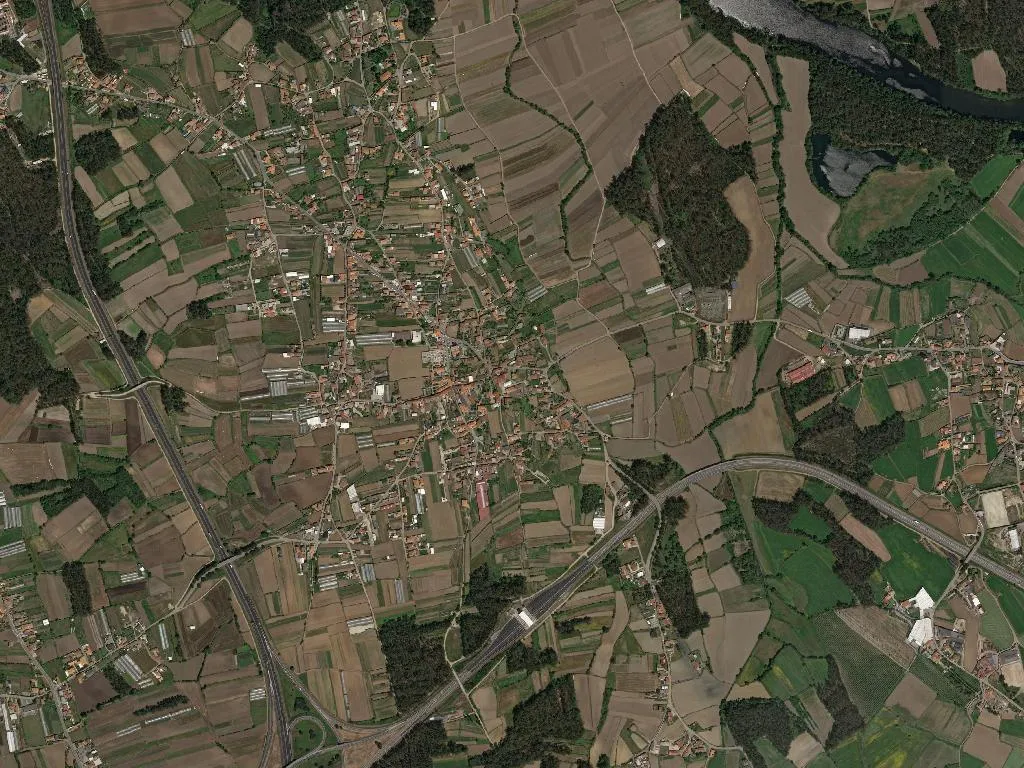
First light knifes through the Cávado’s mist and exposes the Marachão – not a “picturesque canal” but a straight incision hacked by men whose names never made the parish register. At seven the only sounds are water gulping between loose stones and a robin daring to drink at the edge. Here the river marks the old northern boundary of the merged parishes, and the land refuses tidy geometry: reeds lean into rice paddies, vines climb the riverbank until the train line slices across, rattling Mr Joaquim’s house each time the morning railcar passes.
Rust in the Water, Rust in the Story
After heavy rain the Zarague stream still runs the colour of old iron. In the café Dona Alda swears the tint is aluminium-rich earth, not the blood of Moors her grandmother blamed. The 2013 merger of Fonte Boa and Rio Tinto lasted exactly one generation; when the council split the civil registers again in 2022, both sides set off identical boxes of fireworks and the parish president toasted the divorce with supermarket cava.
Two Churches, No Fanfare
Santa Marinha is nobody’s idea of monumental – whitewash flaking like sunburnt skin, a door that sticks every August when the wood swells. The bell tolls on time and, more often, off it: last Sunday the sacristan forgot to release the clapper and the bronze hammered for twenty minutes straight, sending dogs racing toward the N13. Down the lane the Chapel of the Magi stores the parish’s folding chairs for the August procession; inside, wax stalactites hang above a niche where one of the kings lost his head during a 1997 dust-up over a girl from Paradela.
Pilgrims Who Don’t Stop
The Coastal Way of the Camino passes through, but the guidebooks skim this stretch. Walkers sweat up the “Cow Coast” – a 12-per-cent ribbon of tarmac that softens in July – then gulp air scented with crushed dandelion on the riverside cycle path. Egrets ignore the pilgrimage entirely, perching on electricity poles and whitewashing the pavement nobody pressure-washes. Population 1,838: 400 huddle in Rio Tinto’s tight grid, the rest scatter through hamlets the census calls “places of reference” – Paradela, Outeiro, Casal Novo – where “going to town” still means crossing the bridge to Esposende.
Congro, Clay and Five-Litre Science
In the tavern “O Cávado” the fish stew is made with frozen conger – the fresh catch is trucked straight to beach restaurants. No matter: coriander from the backyard, new potatoes, and a clay pot cracked twice on the wood-burning stove leak broth onto the plate placed underneath. Lamprey appears only if Mário from Caxinas phones ahead; otherwise it is octopus rice made with catch he bartered in Apúlia. The house vinho verde arrives in five-litre jugs, photocopied label taped on: “Alvarinho – 11 %”. Proof? The producer’s father tasted it and declared, “That’ll do.”
June, Up in Smoke
São João is not a postcard scene – it is sardines charring on a wire grill, corn bread torn by hand, butter melting through foil. The procession sets off at six, but only the over-seventies follow; the young wait for the dance that begins when the sky turns beetroot and Nuno – postman by day – unloads speakers from the boot of his Clio. At one in the morning someone still shouts “Mind the embers, Chico!” but nobody leaves: beer is fifty cents a glass and the brass band has just reheated the stale bread in a copper pot.
The River Forgets, the Bell Does Not
When the mist lifts again the Cávado disappears. The Marachão stays put, its half-metre drop beaching the occasional tourist kayak. Santa Marinha’s bell keeps its own time – clank, pause, clank – and the walkers on the cycle path rarely notice, earbuds in, counting steps on their phones. Yet the sound travels ruler-straight above the water, following the river until the name and the parish both run out into the sea.