Full article about Forjães: Where Vinho Verde Vines Meet Atlantic Wind
Granite-walled vineyards, sea-cooled air and 28 hamlets shape Esposende’s coastal parish.
Hide article Read full article
Atlantic Drift, Granite Bones
Dawn finds the coastal pilgrim still beside the granite way-marker at Forjães’ threshold. Cobbles glisten; the air tastes of salt and newly-turned loam. You are 4½ km from Apúlia’s dunes yet 66 m above them, close enough for the ocean to tint every weather front, far enough for the roar to dissolve into wind.
Vine Tunnels and Labourers’ Walls
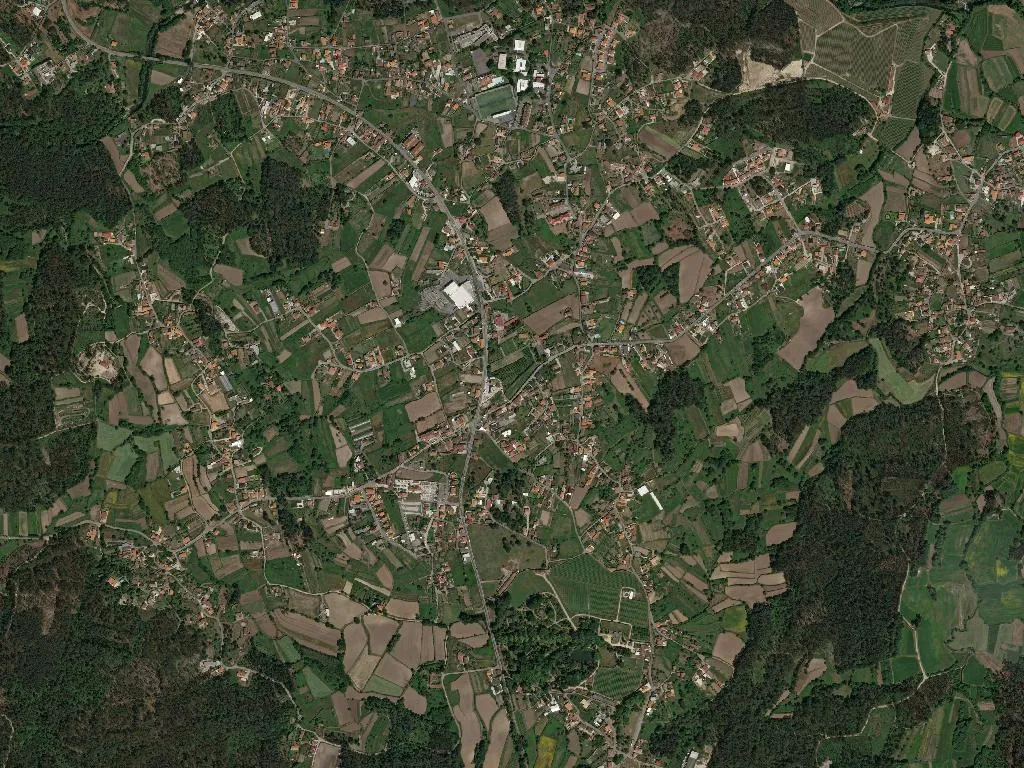
Eight hundred undulating hectares have been flayed into 1,050 separate vineyard parcels, every one registered under the Vinho Verde DOP’s Cávado sub-region. Vines are trained high on wooden stakes, the old enforcado style: rows sit 2.2 m apart, leaves interlocking overhead to form living cloisters that shade the red sandy loam. Granite walls – most thrown up between 1880 and 1930 when the commons were legally split – still carry the single strand of wire that guides each vegetative arm. Look closely and you’ll see lichens mapping century-long shifts in nitrogen and salt.
A North-Coast Microclimate
Since 1995 the entire parish has lain within the Parque Natural do Litoral Norte. Humic cambisols, pH 4.5–5.2, sponge up 1,200 mm of winter rain; the Atlantic, sliding up the Esteiro de Forjães valley, caps August highs at 26 °C. Result: white grapes linger on the acid side of ripe, giving the local cooperative – founded downstream at Fão in 1954 – the razor-edge it needs for its loureiro-based blends.
Parish Map: 28 Names, One Bell
Of 2,646 residents (2021 census), only 380 live inside the main village kernel around the 19th-century parish church. The rest occupy tiny lugar settlements – Courel, Crasto, Gandra, Padreiro, Passô, Retorta, Sejães, Ul, Valinhas, Vela – scattered among the vines like dropped stitches. Density feels lower than the official 318/km²: lanes dip and rise, perspectives close and open, every bend revealing another rectangle of trellised green.
São João: Procession, Pyre, Fish Stew
Festivity here belongs to St John, celebrated on 24 June – deliberately ahead of the solstice. Evening mass begins at 18:00; by 19:30 twenty-four men are shouldering the 380 kg, 1868 wooden andor down the nave steps. Drums from the Banda Filarmónica Recreio de Forjães (est. 1923) set the cadence. Bonfires ignite only in Valinhas, a privilege negotiated in 1962 when the parish council chairman convinced the rural police to waive the fire tax. Caldeirada of sea-bass and safio simmers in iron pots; bottles of cooperative white crack open on stone walls still warm from the day’s sun.
Wayfarers’ Rest
The Coastal Way enters at Courel (km 29.2 of the Porto–Vila do Conde stage) and exits at Sejães (km 37.8), giving walkers 8½ km of vine-walled lanes, eucalyptus shade and intermittent wafts of wood-smoke. Beds await in Valinhas’ converted primary school: 22 bunks, communal kitchen, €8 a night. Three private rooms and two licensed holiday villas supplement supply, but in shoulder seasons the municipal albergue fills first. Yellow arrows, refreshed each Easter by the Esposende “Friends of the Way”, keep doubt to a minimum.
Smoke on the Nor’wester
October is the hanging month: chouriças flushed with wine and garlic swing from attic beams, curing until February when the Atlantic nor’wester loses its salt. At noon and again at seven the 1896 bell – cast by Braga & Filhos in Porto – rolls across the treetops, a sonic line connecting parishioners, pilgrims and the few remaining smallholders who still work the 1,050 plots. Follow the lane past the 1894 wayside cross, climb between thigh-high walls and the panorama resets: yet another vineyard row, identical, irrepressibly green.