Full article about Gandra: where Atlantic salt seasons Minho vines
Cobbled lanes, garden-hose wine and a whispered Camino in Esposende’s low-lying parish
Hide article Read full article
Atlantic dust on granite
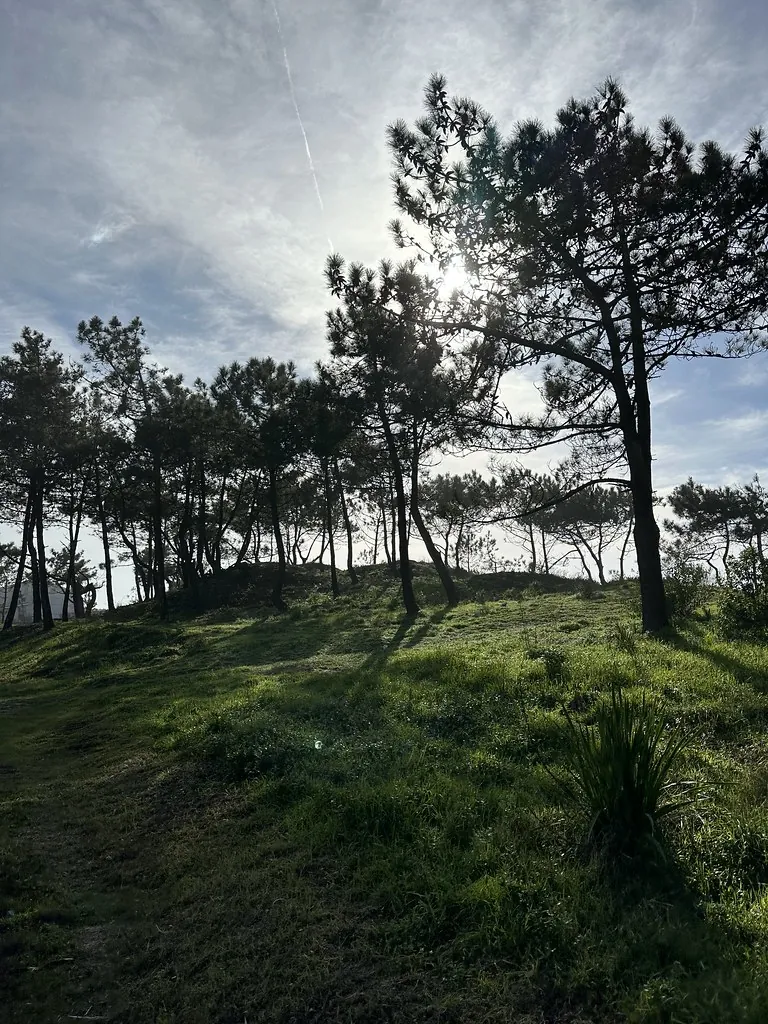
Fine sand drifts inland from the ocean, lodging between the cobbles like pale grit in a loaf of sugar. At barely ten metres above sea-level, Gandra is neither beach nor back-country; it inhales Atlantic salt, exhales the smell of turned earth. Maize leaves rustle the way parchment does when you thumb through an archive, and every second wall is topped with scarlet geraniums that have never heard of a frost.
You arrive from the south on the EN 13 or drop down from the north via a lane so narrow the camber scrapes the oil pan. Either way, the settlement reveals itself in increments: a terracotta roof, a hand-painted tile announcing “Há ovos”, a dog that lifts its head without bothering to bark. Under 4,100 people share five square kilometres, yet the place feels settled rather than dense, as if each generation has simply added another room to the back and carried on.
A line that passes through
The Coastal Way of St James cuts straight across the parish before it hugs the dunes towards Viana do Castelo. Pilgrims appear at dawn, head-lamps bobbing, aluminium sticks clicking like knitting needles. They rarely linger; Gandra has no Romanesque portal, no café selling €3 slices of almond tart. What it offers is tap water from a garden hose, shade under a loquat tree, and a bench where you can ease your boots off without anyone asking for the Instagram handle.
The council has embedded a single scallop shell in the pavement at the junction with Rua da Igreja. You’ll miss it unless you’re looking down, which is the point: here, the Camino is a whisper, not a brand.
Minho in a glass
Vinho Verde from Gandra is not the spritzy supermarket version. Locals call it “vinho de ramo”—grapes trained on wooden trellises high enough to walk beneath, picked just before the Atlantic mist turns them dilute. The result is a lemon-sharp white that snaps the palate like a green bean. There are no tasting menus, no drip-feed of adjectives. If António is in his garage when you pass, he’ll rinse out an old Fanta bottle, fill it from the cask, and refuse the two-euro coin you proffer. Drink it that evening, chilled by the river, and you’ll understand why the Minho never fell for Chardonnay.
June dusk and sardine smoke
On the night of São João the parish hall disgorges trestle tables, the brass band arrives in a white van, and someone produces a set of speakers last seen at a 1993 wedding. Children swing glowing hammers, teenagers flirt over Super Bock, grandparents guard paper plates of grilled sardines whose oil seeps into the newsprint. Midnight brings a bonfire of shipping pallets; sparks climb towards Jupiter, and for once the Atlantic fog holds off, as if remembering that even fishermen’s granddaughters deserve a clear sky. Outsiders are noticed but not fussed over—buy a beer, dance badly, and you’ll be listed among tomorrow’s telephone-kiosk gossip with benign approval.
Borrowed light
Because the ocean lies only four kilometres west, the sun behaves like a photographer’s reflector: low, diffuse, forgiving. At seven-thirty on a July evening the maize glows jade shot through with citrine, whitewash turns pearlescent, and every window becomes a slide of Kodachrome. The light is both warm and cool, the colour equivalent of a gin-and-tonic sweating on a slate counter. Stand at the crossroads by the abandoned primary school and you can watch the day expire without a single streetlamp interrupting the fade.
Plot by plot
Fields are measured in “couços”, medieval strips wide enough for an ox team. Granite walls, thigh-high and furred with lichen, divide them still, so a drone shot resembles an irregular patchwork quilt stitched in grey thread. The maize will be cut in September, bundled into shocks that lean like drunk soldiers, then fed to village hens. No one earns a living from it; the tractor belongs to a retired banker, the labour to students on summer break. Agriculture here is a habit, not a business—something to do with your hands while the afternoon passes.
Midday bell, metallic heat
The church tower is eighteenth-century Baroque, its stone quarried from the same seam that built Braga cathedral. At noon the bell strikes six times—an old Minho custom that once allowed fieldworkers to check their wages without a watch. The sound is thin, almost apologetic, yet it carries to the floodplain of the Cávado, where herons lift on lazy oars. You could set your life by it: shopping, coffee, the siesta that isn’t called a siesta but happens anyway.
What Gandra gives
There is no souvenir shop, no QR code on the lamp-posts. The parish offers instead a sequence of small generosities: shade, well water, a conversation about the price of tomatoes that somehow ends with directions to your grandmother’s village two valleys away. Check out of your Airbnb at ten and by eleven the owner will have wrapped leftover pão de ló in foil and pressed it into your hand “for the road”. Drive away with the window down and you’ll still taste salt on your lips, proof that the Atlantic is hoarding its memories, parcel by parcel, for whoever returns.