Full article about União de freguesias de Aboim, Felgueiras, Gontim e Pedraído
Hike silent terraces, sip altitude-grown Vinho Verde, taste Barrosã beef in Fafe’s emptiest parish
Hide article Read full article
The scent of earth and fire
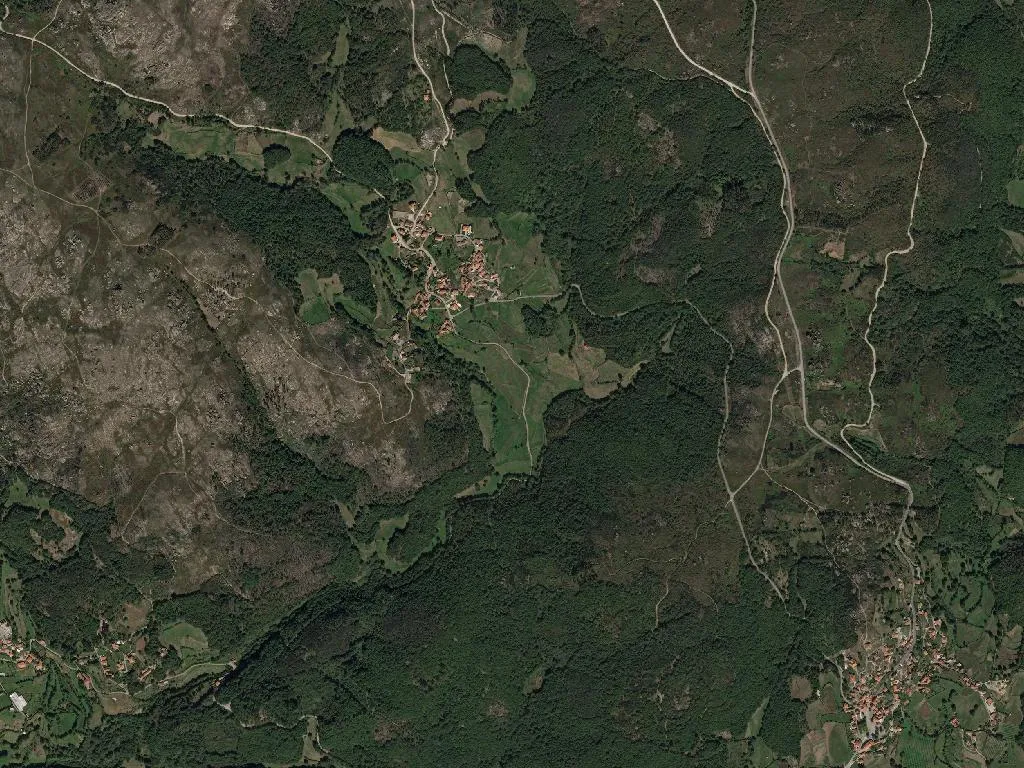
A breeze rises from the slope, carrying with it the scent of freshly tilled soil—a mineral perfume that mingles with the slow curl of smoke from a hearth somewhere in the valley. At 670 metres above sea level, the air has a different quality: finer, colder, cleaner. Here, where four ancient parishes were fused into a single administrative unit in 2013, the land arranges itself in terraces and packed-earth paths that climb and dip according to the mountain’s whim. Aboim, Felgueiras, Gontim and Pedraído are now a paper union, yet on the ground each hamlet keeps its own granite cluster, its silent square, its walled vegetable plots.
Altitude and silence
With only 29 inhabitants per square kilometre, this is the most thinly populated parish in the municipality of Fafe. Seven hundred and seventy-three people are scattered across 2,671 hectares of hillside; the arithmetic is blunt—245 pensioners to 61 children. Silence is not a metaphor here but a measurable quantity. Walk a rural lane and the crunch of your own boots is louder than any conversation. Houses stand apart, separated by parcels of vines, dwarf maize and pasture where cattle graze slowly, indifferent to the calendar.
Green wine and certified meat
Altitude and Atlantic weather make this natural vine country. Integrated into the Vinho Verde demarcated region, the parish produces grapes that become light, sharply acidic whites typical of Minho slopes. On terraces sheltered from the north wind, vines are trained either high on pergolas or low on wires, depending on whose grandfather you ask.
At Sr Armando’s quinta, grapes are still trodden in a granite lagar where grandchildren play during harvest. Beside the vineyard, livestock endures: Barrosã DOP beef, reared on these high pastures, is a fixture on local tables. Honey also stakes its claim—Mel das Terras Altas do Minho DOP, gathered from the wild flowers of these slopes, is dark amber with an intense tang that mirrors the mountain’s botanical clutter. In Dona Rosa’s kitchen, sponge cake made with this honey collapses on the tongue tasting faintly of the thyme that cloaks the uplands.
Cooking at height
The cooking here is not invented; it walks straight out of the larder. Beef and kid are simmered slowly in clay pots that sit for hours over a wood fire. Chouriço, alheira and morcela sausages hang in the smoke-blackened attics of the oldest houses, acquiring the dry, dark skins only oak smoke can give.
At O Cantinho restaurant, chanfana (goat stewed in red wine) starts at six in the morning in a copper pan; by mid-morning the scent of wine and coriander drifts through the village. Sweets made with honey and maize flour appear at the municipal festas—rare moments when the population gathers and conversation finally fills the squares.
Where to stay
There are three places to sleep in the parish, all private houses retro-fitted for rural tourism. No hotels, no hostels—guests stay in stone cottages with log fires, breakfasts of home-baked bread and unobstructed views down the valley. At Casa do Forno the bread is still baked in a wood-fired oven and served warm with homemade butter and pumpkin jam. Logistics are simple but demand planning: no crowds, no queues, no hurry. Risk is minimal; contact with everyday life is immediate.
When the low sun gilds the granite walls and shadows stretch across the lanes, you hear a chapel bell in the distance. It does not mark the hour; it marks presence. In this vertical geography of vines and pasture, what lingers is not a postcard image but the physical weight of silence and the stubborn scent of wood-smoke that follows you back to the car.