Full article about Dawn bells summon Silvares & Antime’s joint July pilgrimage
Schist lanes fill with saints, cockerel embroidery and threefold crowds
Hide article Read full article
Sound before sight: the second Sunday in July
The bells start at dawn. By the time you reach the bend at Pedra Posta, half a kilometre above the valley floor, the ringing has already ricocheted off the chestnut canopy and slipped through the car window. Drivers slow without thinking; no one overtakes on that stretch. Below, the single-track lane between Antime and Silvares is filling with people who outnumber the entire parish population threefold. They walk between schist walls furred with lichen, rosaries clicking against hand-embroidered cockerels—the Barcelos emblem worn like a passport—and patent shoes that have never met mud. The procession does not begin at the church door; it begins where the tarmac still smells of last night’s grape press outside Adega do Zeferino. Here the two villages formally meet, Silvares offering its saints to Antime’s, as they have done since anyone can remember.
Valley floor: a working geography
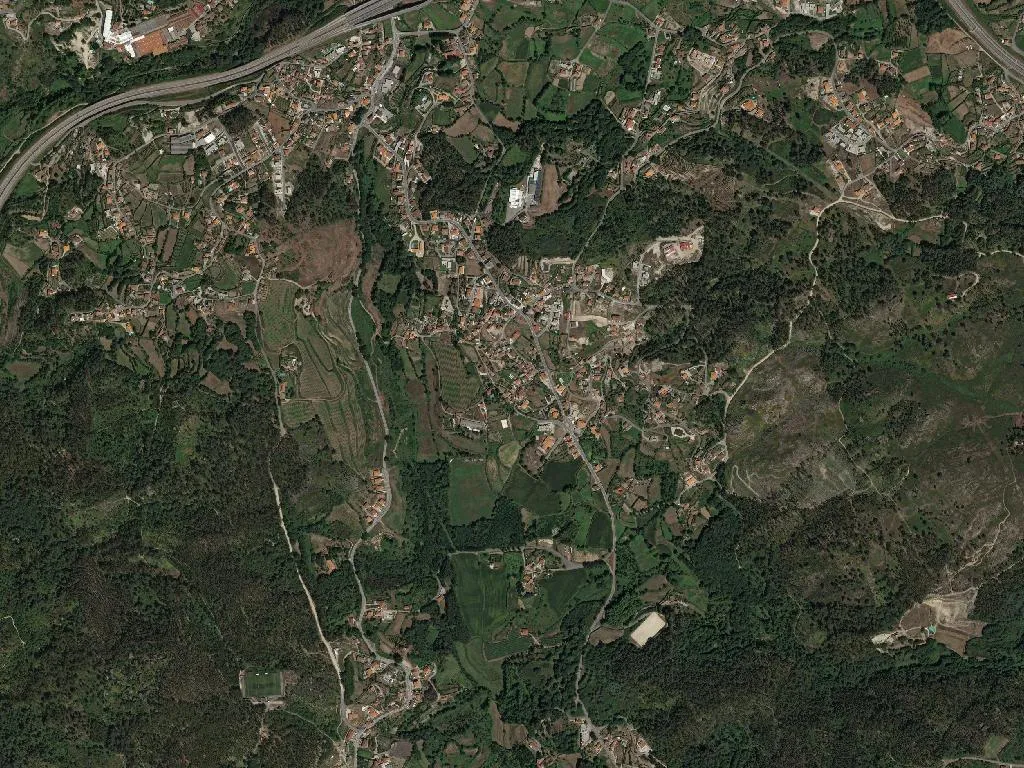
The Ribeira de Silvares is not picturesque; it is useful. In January it swells with mountain rain, in March it drags branches downstream, and by August the water has retreated so far the rounded granite stones bake in the open air. On the banks, gorse is not scenery—it is what remains after the cattle have grazed everything else. At 368 m above sea level, bread takes longer to prove than in Fafe town, maize may not dry in a wet summer, and October fog clings until mid-morning. Dusk is announced not by lengthening shadows but by a sequence of kitchen lights: first the Sequeiro farmhouse, then the Fidalgo cottage, finally the lamp above the spring where people still fill plastic jerrycans when the electric pump fails.
Merger on paper, separation in practice
When the government fused the parishes in 2013, no one consulted the festival committees. Silvares still keeps the feast of São Clemente on 23 November—short procession, coffee paid for by the brotherhood, custard-filled doughnuts served in the old primary school. Antime refuses to abandon 16 July, when Bina’s stall appears like clockwork to sell only coconut sweets and blue paper napkins. Identity cards read “União de Freguesias”, yet bread ordered in Fafe’s bakeries is still “a dozen from Silvares” or “six from Antime”. The border is the wooden bridge that groans under a scooter: cross after dark and you know which side you are on by the pitch of the dogs’ barking.
Pork, honey and vinho verde: a Minho table
The pork cubes on the plate are not supermarket fare; they come from Américo’s pig, slaughtered in January, salted for three weeks, then smoked at home over sweet-chestnut logs. The potatoes were lifted from the plot behind the water tank, the smoked paprika ground by Dona Aurélia on her granite quern because “the electric one gets too hot”. The vinho verde carries no seal—just a clay jug stopped with cork and the thumb-print of Zé Paulos, who still tastes by dipping his finger and smacking his lips to see if it “has turned”. Joca’s honey is not DOP either, but the thimble of wax floating in the jar proves it was never scorched. Cornbread appears only between seven and eight in the morning at Raul’s bakery; when the last loaf leaves the kiln, Raul locks up and drives to his shift at the Fafe textile plant.
Footpaths and green silence
The trail is unsigned; navigation begins at the flat boulder where Adelino rested his rebuilt knee. Climb the Pinheiro footpath and you hear first the yard dog, then the scrape of a hoe in the neighbouring plot, then nothing—nothing arrives when you enter the chestnut grove and every roofline has disappeared. The parish council installed a concrete bench in 2004; the brass tactile map is now illegible. From here you can pick out Antime’s church tower, the zinc roof of the barn that burned in 1998, and the N206 national road threading south like a copper wire. No one takes a selfie; the view is stored away for the day they might need to breathe.
Memory in procession
By the time the statue reaches the churchyard, the priest has given up reading names. Instead, women lean over the wall shouting “Glória, get up here” or “Zé, bring the umbrella—it’s about to cloudburst”. Wine is not poured into plastic cups; it passes in halved lemonade bottles, the jagged glass rim guarded by a curl of nylon so no one cuts their lip. Children do not chase balloons; they swap football stickers on the cold chapel step, backs warming against stone that has stored the day’s heat. At midnight, when the last Dacia starts in second gear and the sacristan’s cigarette becomes the only point of light, what lingers is the smell of melted candlewax drifting downhill with the sharper scent of cows shifting in their straw. That is how the feast ends—not with the final bell, but with the return to darkness where only hooves rustle in the hayloft.