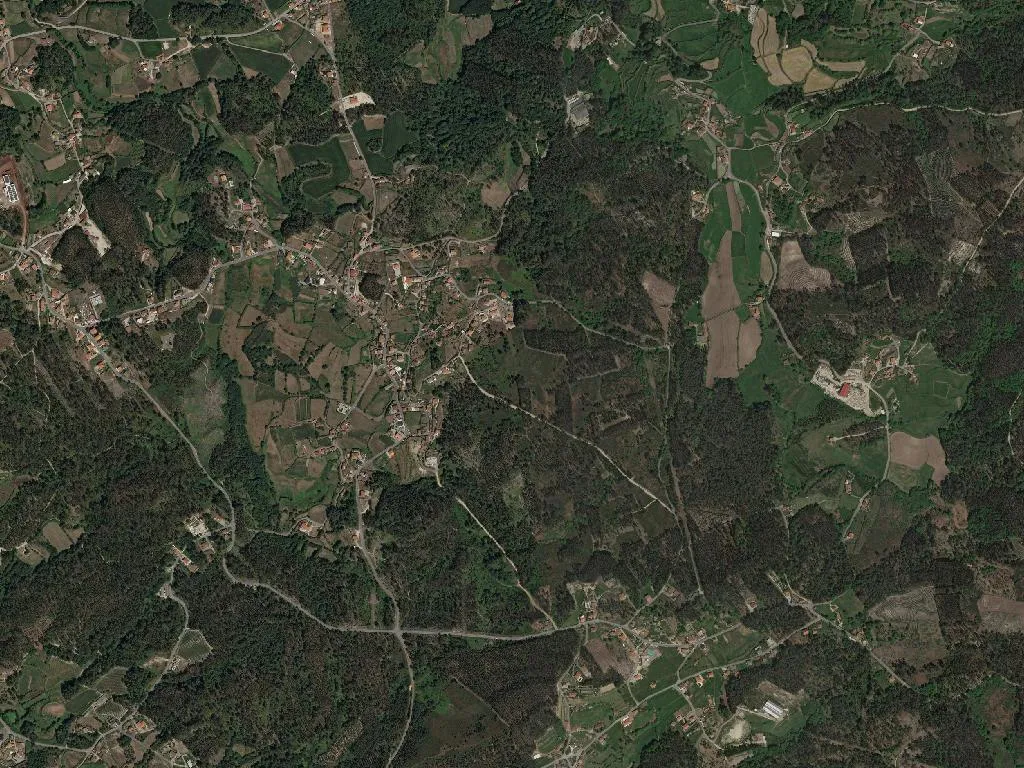
Full article about Ardegão, Arnozela & Seidões: granite time capsules
Three granite hamlets above Fafe where medieval fonts fill with rain and vines climb orange trees
Hide article Read full article
What the stone remembers
Granite elbows through the limewash at ankle height: on doorsteps worn into soft hollows, in the low lintels that still teach children to duck, along the walls grandmothers rinse each dawn with water mixed with cold stove ash. At 603 m the December air rasps like a file; even in August it arrives laced with the faint cucumber scent of mimosas that colonise the valley slopes. Fog detaches itself from the river at five, snags on the eucalyptus trunks, and by seven the bell in Ardegão’s square is ringing. By then the men with plots on the ridge have already swung mattocks for two hours, their coats glazed with dew.
What the stone keeps
Ardegão is named in Portugal’s first royal census, the Inquirições of 1220. Locals swear the word comes from the burn-beating once used to clear stubbled maize fields; ground that has been fired is still called ardido. The chapel of Santa Maria lost its roof in the 1987 cyclone; inside, rain fills a cracked medieval font until the stone greens over with moss. In Seidões the Casa do Souto keeps its own stone bridge across a rivulet—no grander than a stride wide—built so the squire need not wet his boots. The family never applied for heritage status; the slabs simply prop one another up, gravity as conservation architect.
What the land gives
Vines are trained high, braided through ash and orange boughs. The resulting vinho verde is so light the priest uses a water glass for the offertory. June honey is pressed from heather and gorse; hives double in weight overnight, and João do Vale straps six army-surplus pots into his rucksack, then free-wheels the 17 km to Fafe market on a rust-red bicycle. Barrosã beef carries milk-coloured fat that perfumes the kitchen with nutmeg and wood-smoke when braised. Pasture is leased like Manhattan real estate: €1.10 per cow per day, and neighbours still haggle.
What the day offers
There is no brown sign labelled “viewpoint”. The viewpoint is the cistern wall where Zé Mário smokes his after-supper Rothmans; from it you survey the whole veiga—the flood-plain, the shuttered primary school, and the Vodafone mast that blinks red when the wind swings east. Next to the post office Rosa decants diesel into 2-litre Fanta bottles for farmers whose brush-cutters thirst for two-stroke mix. Two cafés compete: one opens at six, the other at seven-thirty; on Sunday both run out of cups and serve milky coffee in earthenware mugs. The pastéis de nata are delivered frozen from Fafe: sold out by eleven.
What the night takes
When the sun drops behind the Senhor do Amparo shrine the granite glows rust and the hamlet seems to swell in size. The soundtrack is Adelino’s dog gnawing a bone on the step, Celestino’s generator chattering because the solar panels are still “on order”, Amélia calling her grandson whose mobile data has run dry. After that: the empty road and the sweet, dry breath of António’s maize-drying shed, stoked at four o’clock. There is no curated darkness, only the certainty that if tomorrow’s fog is thick the dirt lane will slick into red clay and the eight-o’clock bus will need two reverse gears before it can swing the corner towards Arnozela.