Full article about Granite, Grapes & Oak-Smoke Mornings in Arões Santa Cristina
Arões (Santa Cristina) in Fafe, Braga: granite farmhouses, hand-picked Vinho Verde vineyards, summer Festas de Santa Cristina.
Hide article Read full article
Morning light on granite
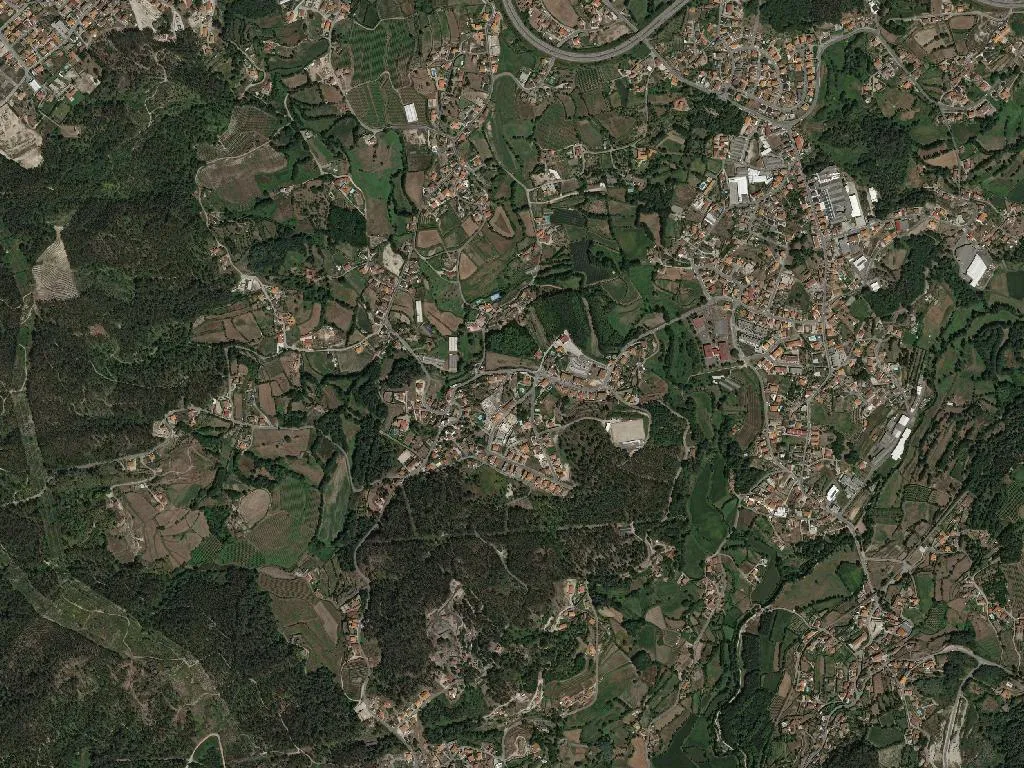
Dawn slips between the wooden shutters of a 19th-century farmhouse and stripes the wide pine boards with gold. Outside, the clink of a tin bucket against granite announces another day in Arões (Santa Cristina), a parish of 1,550 souls set 285 m above sea level on the north-eastern shoulder of Fafe. Here the land breathes at the tempo of the Minho: vineyards stitched to pergola poles, cattle moving slowly across meadows that will qualify their meat as Carne Barrosã DOP, and neighbours who still greet one another by first name across 400 hectares of hedged field and cobbled lane.
The weight of the everyday
Inside granite houses roofed with narrow vermilion tiles, oak smoke curls around strings of chouriço hanging from chestnut poles. The same air carries the high, sweet note of honey certified as Terras Altas do Minho DOP, drawn by bees from clover and eucalyptus on the lower slopes. Bread is kneaded until wrists are floured white, then proved overnight and baked in a wood-fired oven that takes half the morning to reach temperature. Nothing is staged for visitors; lunch is simply the logical conclusion of soil, season and skill.
The vineyards still occupy the terraces they have claimed for two centuries. Old Loureiro and Arinto vines grip granitic grit; their dark-green canopies sieve the light that will become Vinho Verde. Many plots are harvested by hand into wicker cestos, the must fermented in temperature-controlled steel yet the foot-treading and fingertip selection unchanged since the vineyard was planted. The resulting wine carries the acidity of cool misty dawn and the generosity of a warm afternoon—weather that 222 local children accept as normal and 239 elders have watched shift by fractions of a degree across decades.
When the village remembers how to party
For three days each July the Festas de Santa Cristina tilt the rhythm. Coloured bulbs zig-zag above the lanes, grilled sardines splutter over makeshift braziers, and children career between stall and church porch while older men audit the maize harvest from stone benches. It is life slightly amplified, not performance: the volume turned up, the lights dimmed later, conversations stretched out under a sky still light at ten.
Only one house in the parish holds a tourist licence, proof that Arões has not reorganised itself around the gaze of outsiders. At 392 inhabitants per km² the settlement is intimate without feeling crowded; gaps between houses are measured in cricket song, not metres. Granite setts replace tarmac on the steeper gradients, their seams silvered by rain that turns the stone into a dark mirror.
Evening settles over red-tiled roofs. A dog barks on the ridge, a hinge squeals, a plume of smoke rises straight in the windless air. In Arões time is gauged by the swelling of grapes, the slow granulation of honey in the comb, the weekly loss of weight in a ham that hangs in the smoke-filled eaves. There is nowhere else to be, and no urgency to leave.