Full article about Arões’ granite throat: a lane that breathes 1748
Tight cobbles climb past armorial stone to São Romão’s chilled nave, vines and Barrosã smoke beyond
Hide article Read full article
The stone corridor
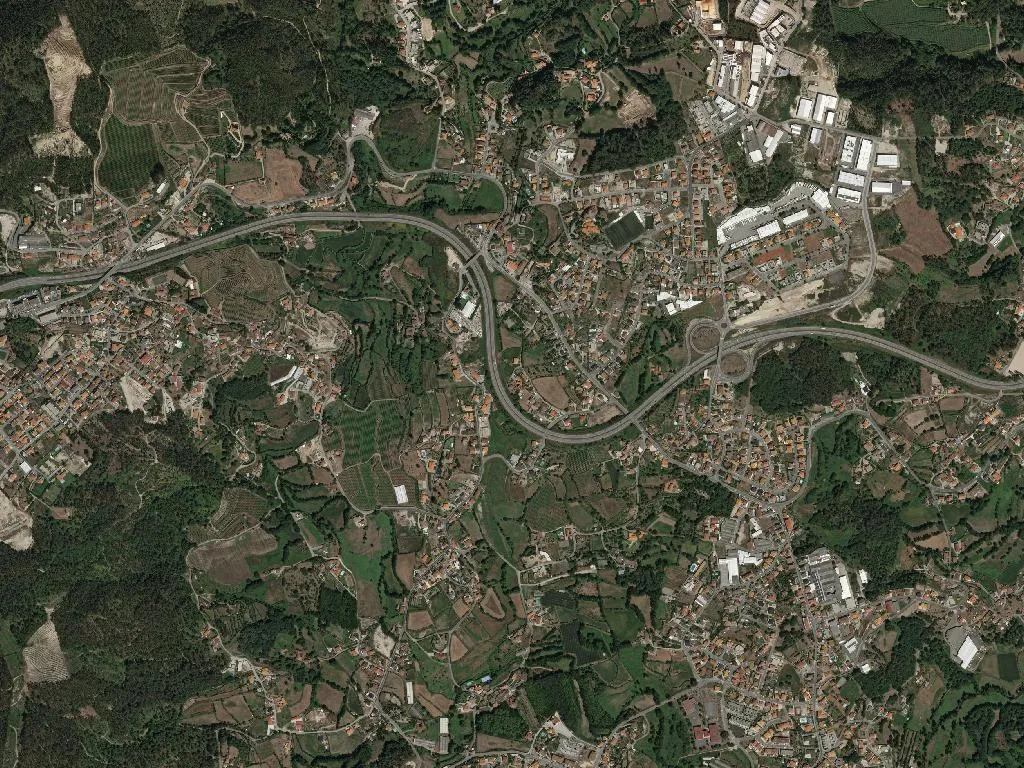
Granite walls press in as the cobbled lane climbs Rua do Cruzeiro, barely two-and-a-half metres wide. Each footstep ricochets upwards towards the parish church of São Romão, completed in 1748, while stone doorways carved with armorial bearings—now finger-smooth—record marriages, debts and deaths. Arões (São Romão) spreads across a 310-metre ridge in southern Fafe, its 3,293 inhabitants occupying just 5.83 km² of alternating hamlet and field: maize terraces in July, vines in October, the geometry of subsistence scratched into every slope.
Granite that remembers
São Romão’s church has been a National Monument since 1977. Inside, 80-centimetre walls keep the air at 18 °C even when the thermometer outside nudges 30; twentieth-century stained glass throws lozenges of colour onto worn schist slabs. Forty metres away stands the commune’s other listed building, the communal granary: six metres of oak-beamed stone declared Public Interest in 1982, still used to keep wolf-mice from the rye.
Terraced vines
The Ave sub-region reaches this far south, and the valley’s signature wine is born on these slopes. Horizontal terraces follow contour lines, the vines trained high on pergolas so tractors can nose underneath. In spring the canopy is an almost aggressive green; by late September it has faded to parchment and the harvest begins. The resulting loureiro-based white carries 11 % alcohol and a razor-line of acidity—locals pour it with salt-cod grilled over bay branches or the pork-cubed stew called rojões. Forty-seven garagiste cellars ferment in everything from stainless steel to 500-litre oak barrels once used for port.
What arrives on the plate
Barrosã beef and high-altitude Minho honey are the kitchen staples. The cattle graze above 800 m in the Serra da Cabreira; their DOP-protected meat, tasting of heather and broom, is seared over oak embers at Restaurant O Moinho on the edge of the village. The honey—dark amber, slow to crystallise—comes from 23 beekeepers in the neighbouring Bestança valley. In the smokehouse of Casa das Chouriças, 200 links of chouriço and 80 hams spend a year inhaling oak smoke, the same timber that heats bread ovens at dawn.
Daily rhythm
Of Arões’ 3,293 residents, 472 are under fourteen and 581 over sixty-five. At 4.30 p.m. the primary school releases a burst of backpacks that echo down the lane; on Sundays the 11 o’clock Mass folds three generations into the same pews. Only one dwelling is registered for paying guests—Casa do Ribeiro—so visitors tend to accept an aunt’s invitation or base themselves in Fafe and drive over for the 9 August Festas de São Romão, when the churchyard fills with grilled sardines and brass bands.
Even at midday the granite around the doorframes stays cool to the touch. Inside the older houses the air smells of last night’s hearth; bread is still slid into wood-fired ovens at six in the morning. Arões has never bothered to reinvent itself: it simply continues, patient as the vines that re-leaf each spring.