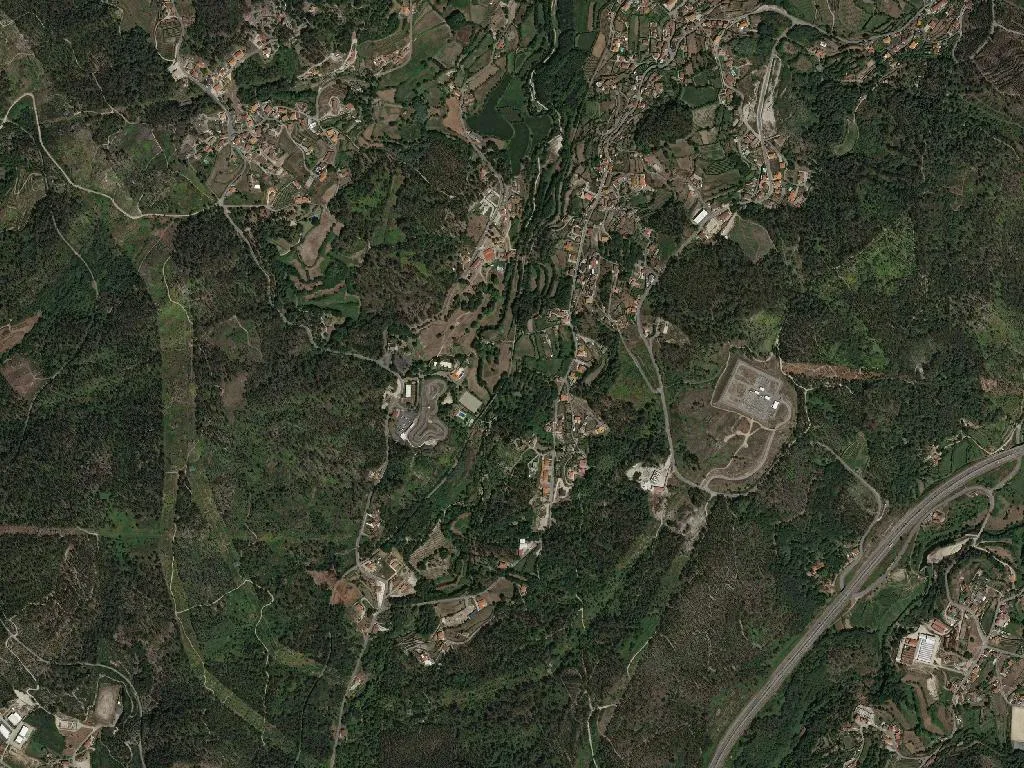
Full article about Cepães & Fareja: Woodsmoke & Barrosã Horns
Shared parish budget, shared bell-rings—daily life in Fafe’s twin highland villages
Hide article Read full article
The Smell of Burning Wood
The first clue that morning has arrived in Cepães is not light but scent: a ribbon of wood-smoke unspooling from every chimney. At 7.30 sharp the grocery “O Ganso” flips its sign and Mr Albano, 71, takes his place at the zinc counter. He has measured out the last 42 years in identical espressos; the barman still cuts the sugar cube in half without being asked. Two kilometres east, in Fareja, the bell of S. Vicente strikes nine times. It is 8.47 a.m. and Joaquim Moreira, 78, sacristan for six decades, rings exactly as his father taught him—nine strokes, no reference to the clock.
One Parish, Two Villages
Since Lisbon’s austerity-era carve-up of local government in 2013, Cepães (1,167 souls) and Fareja (1,015) have shared a single balance sheet: €197,000 this year. Their joint council meets in the old primary school of Cepães, a 1957 tile-clad block extended in 2003. In the corridor the 1962 brass plaque honouring Professor Cândido Mota—village boy turned National Assembly deputy under Salazar—still hangs beside the A4 sheet announcing next Tuesday’s open meeting after work.
Where the Accounts Balance
Of the parish’s 747 hectares, 68 % is registered farmland. Twenty-three holdings rear Barrosã cattle, the mahogany-coloured, long-horned breed native to the Minho highlands. Before the 2022 drought the tally was 312 cows; now it is 278. The Fafe abattoir cooperative pays €5.20 per kilo for certified steers; production cost hovers at €3.80, so leasing communal scrub in Fareja at €35 a hectare is still worthwhile. Honey arithmetic is sweeter: 28 beekeepers delivered 1,840 kg to the Fafe co-op last season, protected since 2021 by a DOP label that let them double the wholesale price to €9 a kilo.
Pencilled-In Feasts
- 3 May – Dia da Cruz: an open-air mass at the hilltop chapel of Nossa Senhora da Saúde followed by a sardine lunch. Eighty kilos of silver fish are bought at dawn in Vila Praia de Âncora and paid for out of the seniors’ club €2 monthly dues.
- Second Sunday of August – S. Vicente: each household brings table and chairs to the churchyard; the council supplies 200 bottles of Vinho Verde from Guimarães at €2.10 a litre.
- 24 December – Missa do Galo: a 1.2 km candle-lit procession between the two villages. The child chosen to carry the Christ-child must have made first communion that year; in 2023 it was Matilde, nine-year-old granddaughter of the former parish president.
Between Field and National Road
The EN206 slices through for 3.4 km; before the A7-Fafe interchange opened in 2011, milk tankers used to queue here all morning. Today the spur road N206-1 is pitted; the town hall budgeted €180,000 for resurfacing this year, then postponed. Detours squeeze down Rua do Carril, where 17 people live in houses built on a 1952 servitude path that once fed the now-silent Romariz iron mine. At 7.30 p.m. in winter the new LED streetlights—installed with €34,560 of EU money—snap on automatically. Monthly electricity bills have fallen 38 %, freeing just enough cash to keep the Wednesday doctor’s surgery open and to coincide with the GNR police van’s “Safe Village” drop-in. Life here is measured not in grand narratives but in centimetres of rain, cents per kilo, and the precise nine strokes of a bell that tell no time at all.