Full article about Estorãos: Where Corn-Bread Steam Meets Gilt-Baroque Splendou
Granite granaries, rain-scented lanes and a gilded 16th-century altarpiece define this Fafe parish.
Hide article Read full article
The scent of warm corn-bread and wet slate
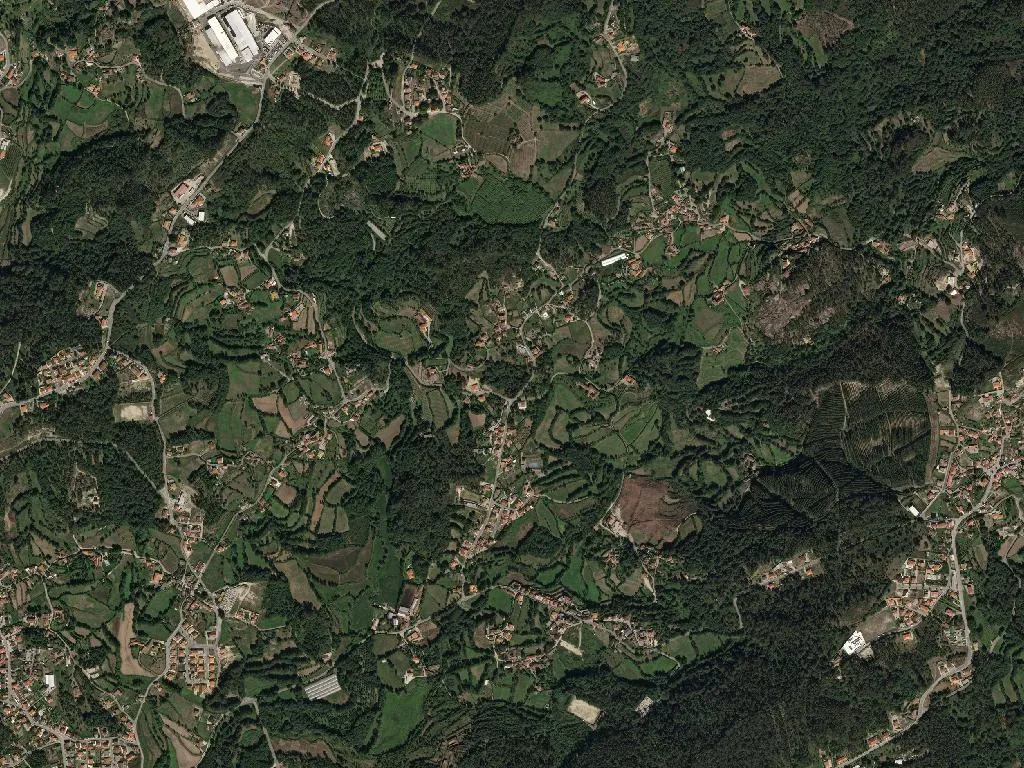
The bakery door is ajar; inside, a loaf of broa is being coaxed from its tin, exhaling steam that drifts downhill and mingles with the smell of rain on schist. In Estorãos the fields are stitched into irregular rectangles by granite walls, and every second parcel seems to support its own stone granary on four squat pillars. These espigueiros – more numerous here than anywhere else in the Fafe hills – stand like miniature watch-towers, their timber slats warped enough to reveal whether the last sheaves of maize have yet been claimed.
At 426 m the air is always faintly cool, even when afternoon sun warms the granite crosses that mark each crossroads.
An altarpiece that takes its time
The parish church of São Miguel keeps its drama indoors. Outside, the 16th-century walls were sobered-up again in the 18th, giving nothing away. Step through the studded door and the nave snaps into colour: a Baroque retable of gilt-red wood that spirals into volutes, cherubs and cornucopias, rated by scholars as one of the most idiosyncratic in the Minho. Side-light falls at a slant, revealing paint strata the restorers still argue over. In the 1758 parish memoirs the priest called Estorãos “fertile and well-peopled”; the church was already the heartbeat.
Beyond the churchyard an 18th-century granite calvary tilts slightly, scored by three centuries of Atlantic wind. Ten paces away the tiny chapel of São Sebastião stays locked except on its single day of obligation, while carved public fountains dotted through the lanes still issue cold mountain water – some illegible, some dated only by the year chiselled into the lip.
May procession, clay bowls and bell metal
On the first Sunday of May the village doubles. A procession for São Miguel squeezes under laundry-strung balconies, accompanied by a sung Mass whose treble lines ricochet off whitewashed walls. The evening fair stretches down the main street: caldo verde poured into rough clay bowls, disks of chouriço sliced thick enough to bend, and vinho verde drawn from family tanks that never see a label. Dark, dense broa is the constant, crumbling obligingly into every bowl. Come December the same square hosts a living Nativity; singers of the Menino circulate with lanterns while December frost settles on cobbles.
Flavours that out-stay the afternoon
Estorãos keeps its kitchen on a slow fire. Kid is roasted for hours in a wood oven until the ribs can be parted with a thumb. Barrosã beef – DOP-protected and finished on the high heaths – needs nothing beyond coarse salt and a whisper of garlic. Rojões arrive sizzling beside papas de sarrabulho, the sauce stained claret with smoked paprika. Sunday ends with an orange cake baked until it hovers between pudding and perfume, and Minho mountain honey, the colour of burnished amber, stirred into tea that steams against the chill.
Following the water past the granaries
The PR 4 Fafe footpath threads seven kilometres beside the Estorãos stream, looping through maize terraces and pasture. Dry-stone walls shoulder the track; water chatters underneath. Granite espigueiros appear at every bend – some still loaded with last season’s cobs, their timber ribs ticking in the breeze. Relief is gentle, never spectacular, but the cadence invites an unhurried stride.
Half-way along, a marble plaque inside the church records the name of António da Silva Alves, who sent francs home from 1960s France to rebuild both nave and schoolhouse – proof that distance is no measure of belonging.
When the bell of São Miguel strikes for Ave-Maria the note rolls across the fields, loses itself in the stream and lingers between granaries and schist walls like punctuation that needs no sentence.