Full article about Granite hamlets where Vinho Verde glows
In Freitas e Vila Cova, Barrosã cattle graze among 270 m terraces of Vinho Verde
Hide article Read full article
Granite that keeps the light
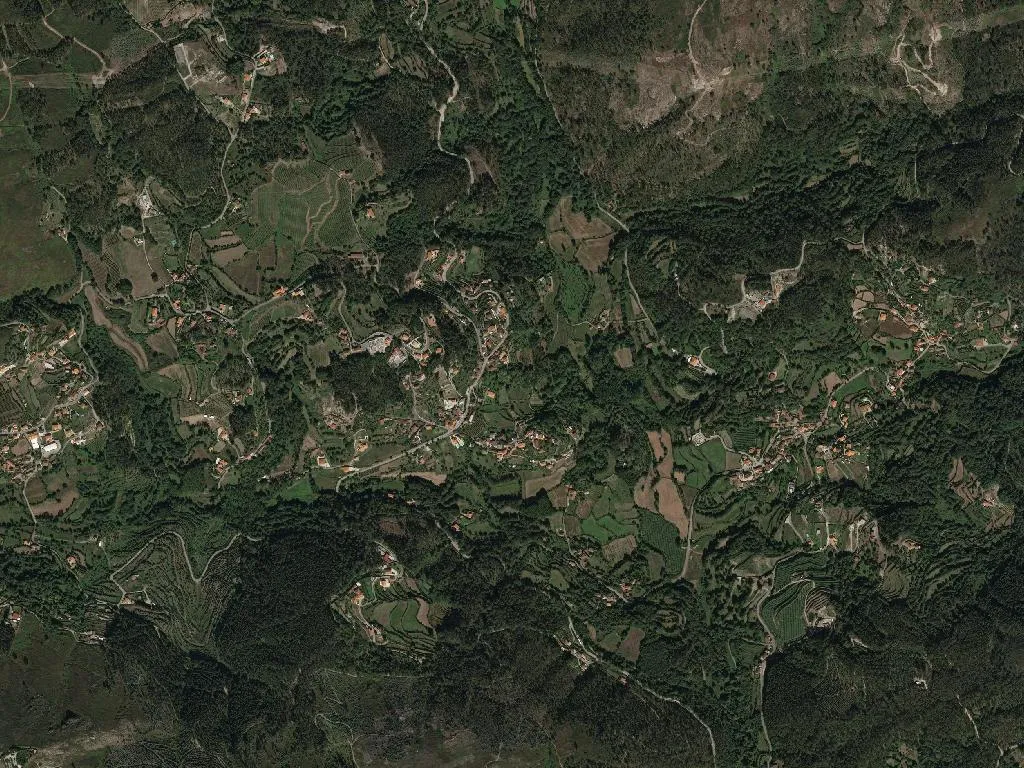
The afternoon sun lingers on the granite cottage walls long after the valley begins to cool. At 270 m above sea level, the slopes unfurl in shallow steps planted to Vinho Verde; leaves shift from bottle-green to almost glassy where the light strikes. Freitas e Vila Cova—two hamlets fused by the 2013 parish reforms—occupy barely 11½ km² of Fafe municipality, yet the space feels generous: walled vegetable plots, compact vineyards, meadows where Barrosã cattle graze. Only 747 people remain, and the ratio tilts sharply towards the elderly—71 children to 217 over-65s. Shutters stay closed; memories accumulate like dust.
Kitchen-table flavours
Food is still subsistence before spectacle. Sunday lunch might be a Barrosã DOP shin roasted until its fibres slump into the wine-dark gravy, the kitchen hazed with wood smoke. Wild-flower honey from the high Minho carries hints of rockrose and broom; the colour moves from pale citrine in spring to burnt amber after heather blooms. In family cellars, vinho verde ferments in stainless steel or chestnut barrels blackened by decades. The finished wine snaps with acidity, demanding grilled chorizo or a wedge of warm maize bread to tame it.
A landscape in mid-sentence
The parish sits on the hinge between the Serra de Fafe and the Vizela valley—never quite mountain, never fully plain. Oak and chestnut groves interrupt plots of sweetcorn; abandoned apple orchards mark where early emigrants once filled barrels for Brazil. There are no sign-posted viewpoints, no ticketed monuments. The beauty is reticent: a granite fountain smothered in maidenhair fern, a threshing floor colonised by wild thyme. Three private houses take paying guests—no pools, no breakfast buffet, just the promise of waking to roosters and the smell of eucalyptus burning in the bread oven.
The pause between sounds
For most of the year the soundtrack is sparse: a chainsaw two fields away, the parish church bell counting hours that no one is especially bound to keep. When the annual municipal fair arrives, a brass band marches through the lanes and children reappear like swallows. Then August ends, the stage comes down, and the villages return to their default hush—sunlight sliding off slate roofs, a single vine cane tapping a telegraph wire, wood-smoke rising straight into a windless sky.