Full article about Medelo: Woodsmoke & Vine Rows Above Fafe
Granite hamlet where Vinho Verde vines, Barrosã beef smokehouses & slate roofs outnumber tourists
Hide article Read full article
Woodsmoke and wet earth
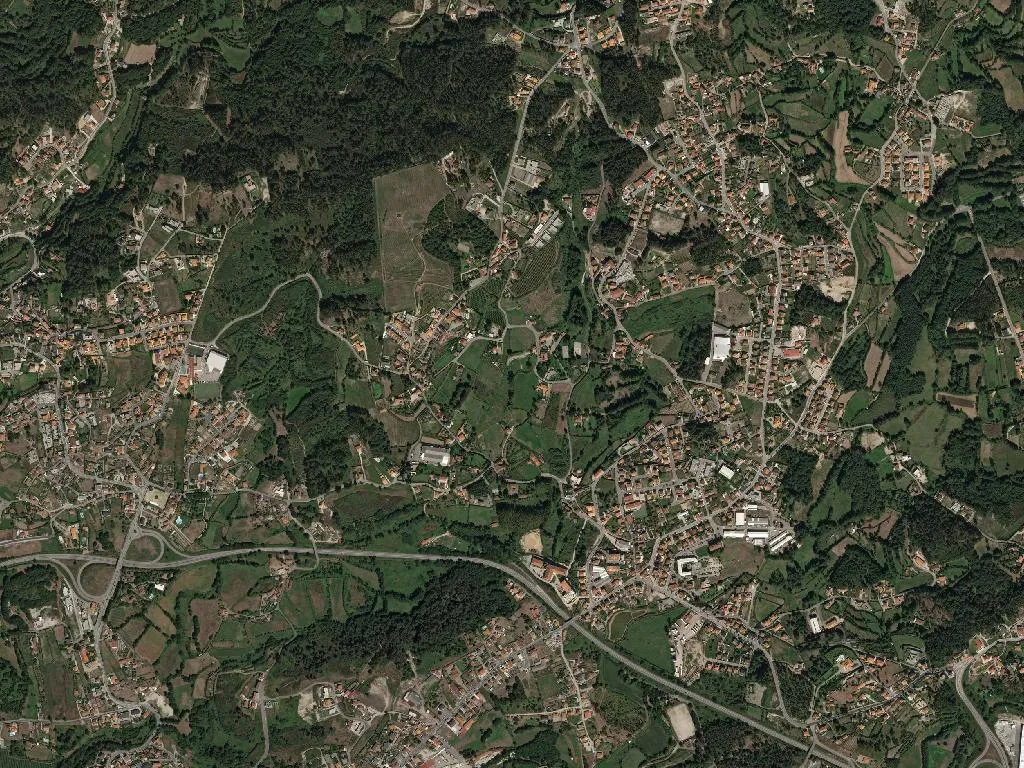
By late afternoon the scent of burning logs drifts above the slate roofs of Medelo, braiding with the smell of newly-turned soil. The hamlet sits at 347 m on a wrinkle of hills in Fafe municipality, just 40 minutes east of Braga, yet feels governed by an older clock. Barely 1,500 souls live here, distributed among granite houses whose colour shifts from dove-grey to pewter according to the cloud-filtered sun. Dry-stone walls of schist parcel the fields; maize stands higher than a tractor cab; every third gate carries a hand-painted nameplate instead of a number.
Vine rows and smokehouses
Medelo lies inside the Vinho Verde demarcation, but the denomination is more than cartography. Low pergola-trained vines climb every available post, the bunches swelling slowly under the region’s habitual Atlantic fleece. The wine’s bright acidity is the foil for long, wood-fired stews of Barrosã beef—one of Portugal’s four protected breeds—and for the cured sausages that dangle in basement smokehouses, still scented with oak from last winter’s prunings. Add a spoonful of high-mineral Minho honey, another DOP product, and the larder is seasonally complete.
Demography tilts towards the past: 389 residents are over 65, only 158 under 14. Mid-morning silence is broken either by the bell of the 18th-century Igreja Matriz of São Tiago or by a distant John Deere descending Rua do Cruzeiro. Children still learn the shortcuts between dwellings and the exact spot where a spring runs cold even in August.
Stone, green and two guesthouses
Tourism here is domestic, not corporate. Casa da Eira and Quinta do Vaqueiro—both converted farmsteads—offer four rooms between them. Guests wake to roosters, walk to the communal bread oven at Fornos de Matos for still-warm loaves, then follow the 8 km waymarked loop that links Medelo with neighbouring Vale de Laje. There are no queues, no timed tickets, no risk of crowds; the only likely delay is a neighbour leaning on a wall, ready to explain rainfall records or the price of chestnuts.
The landscape withholds spectacle. Rounded ridges are upholstered in gorse, oak scrub and smallholdings measured by the hectare, not the dozen. Streams narrow enough to step across clatter through mossed granite. Guidebooks call the area “unsung”; photographers sometimes leave disappointed. Yet the restraint is the point: a diffuse northern light that softens every edge, a palette of greens that Turner would have recognised.
Calendar of returns
For two days each summer the village re-inflates. On 25 July the feast of São Tiago summons a brass band from Fafe town hall and fills Largo da Igreja with sardine smoke. Emigrants back from France since 1974 compare flight prices over plastic cups of riesling-style Vinho Verde. Fifteen days later the Festa da Senhora da Saúde draws 400 people to a candlelit procession; in 2023 the population briefly doubled. Then the tents come down, the streets empty, and silence reasserts itself—not absence but a low-volume presence: wind combing through maize leaves, a chair scraped across a patio, the late bark of Sr António’s Labrador.
Dusk is signalled by kitchen lights clicking on one by one. Woodsmoke lifts again from the chimneys, carrying the scent of potato-and-kale caldo. Medelo promises neither adrenaline nor souvenir shops; instead it offers the increasingly rare option of inhabiting time without haste, of feeling the measured weight of days that repeat themselves with only the incremental variation of wheat heading out, grapes sweetening, honey sliding thickly across warm crust.