Full article about Moreira do Rei’s granite spine hides a 950 AD necropolis
Walk castle ramparts where Afonso Henriques forged borders, then taste Barrosã beef in Várzea Cova’s
Hide article Read full article
Granite erupts from the ridge like vertebrae on the back of a sleeping giant. At 559 m, the fractured walls of Castelo de Moreira do Rei knife the sky, the last brittle remains of a fortress founded in the tenth century, when the county of Portucale was still a borderland. Wind funnels up the Ave valley carrying the sour smell of wet slate and oak mast. Below the battlements, 72 graves are socketed straight into the bedrock – human silhouettes chiselled to fit shins, elbows and skulls. They date from the moment this knoll was both barracks and basilica: the Christian advance of the Reconquista, AD 950-1250.
A parish stitched together
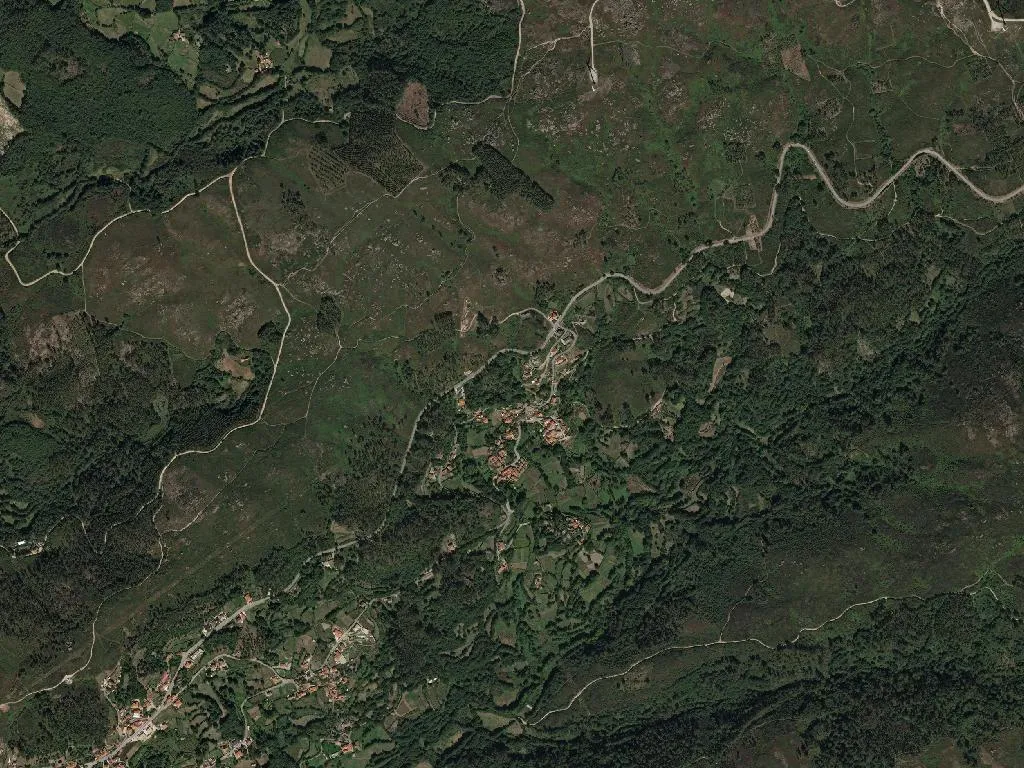
Administratively, the place is a 2013 marriage of two hamlets: strategic Moreira do Rei and the high-pasture meadows of Várzea Cova. The first charter was granted in the 1160s by Afonso Henriques, soon to be Portugal’s founding king, after he rebuilt the castle as an outpost against the Galician nobility. Excavations led by Fafe town hall have turned up something Portuguese castles almost never yield: a medieval foundry for smelting copper and iron behind the curtain wall, proof that weapon- and tool-making happened here under military protection.
Death in granite
The necropolis beside the ruined Igreja de Santa Marinha is one of the largest early-medieval burial fields in northern Portugal. Carved sarcophagi lie flush with the ground, lidless and orientated east–west. Osteologists recovered belt buckles, a child’s bronze ring and a single iron arrowhead still lodged in a rib. When the low winter sun skims across the rock, each cavity prints its own shadow-portrait of the body it once held. A small interpretation centre, due to open in 2025, will plot DNA results against isotope data to show where these people grazed their sheep and what pine honey they chewed.
Milk, honey and Barrosã beef
Várzea Cova keeps to older rhythms. Brown, long-horned Barrosã cattle – the same breed etched on the prehistoric rock art of the Côa valley – graze the common land at 500 m. Their meat carries the Barrosã-PDO label and reappears on local tables as rojões (paprika-spiked pork and beef hash) and kid roasted over laurel twigs. Beehives tucked into chestnut groves give dark, high-altitude honey that tastes of heather and broom; it is bottled under the Mel das Terras Altas do Minho DOP seal. Stone watermills, now roofless, line the trails that drop towards the Vizela river; their millstones still bear the 1783 tax stamp of the Royal Treasury.
Up on the roof of Minho
Climb the castle keep not for masonry – little survives beyond a slit window and a stretch of parapet – but for the horizon. On clear days you can clock the full width of the Ave basin: striped smallholdings, oak scrub, the aluminium flash of a distant solar farm. When Atlantic weather rolls in, the hill becomes an island adrift in cloud, the bell of Várzea Cova’s chapel striking the hour somewhere beneath your boots. Population density is 58 souls per km²; one in three residents is over 65. You will share the ramparts only with kites and the creak of hawthorn.
Guided walks to the necropolis and castle run on request through the parish council (contact ahead; English spoken). Go late afternoon, when the light is oblique and the wind smells of rain on granite – the same scent that greeted the sentries who once watched from these walls for Leonese cavalry riding out of the dusk.