Full article about Paços: where granite walls smoke chouriço at 450 m
In Paços, Fafe, Barrosã beef cures in fumeiros and Sunday lunch summons every generation
Hide article Read full article
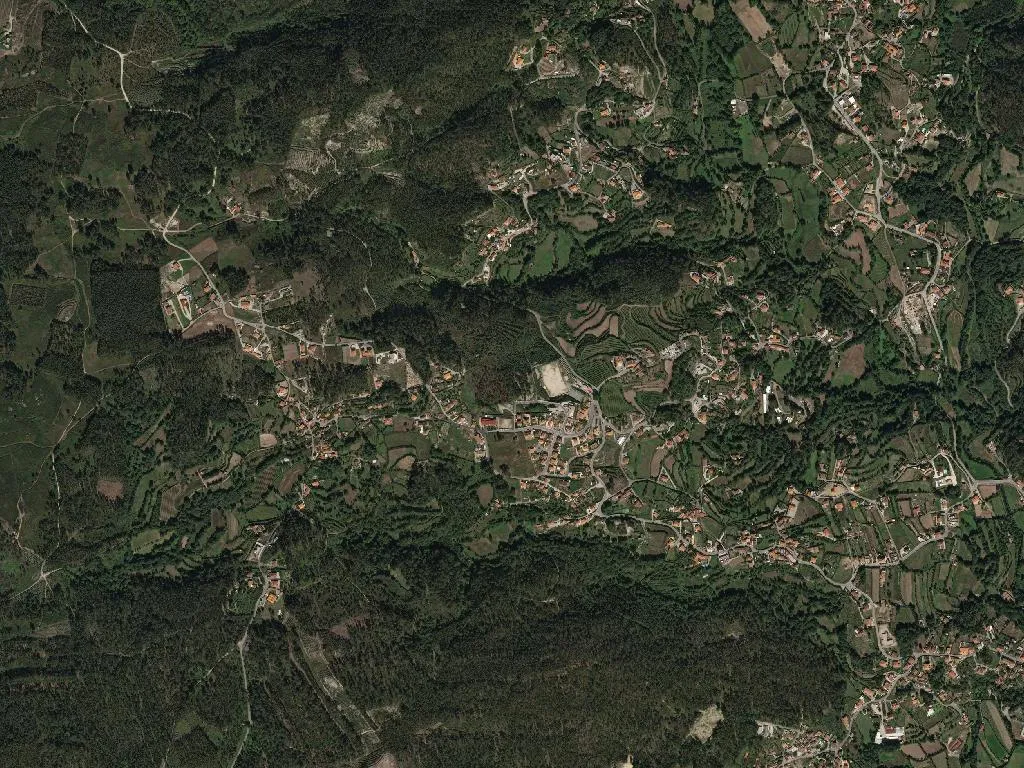
Smoke drifts languidly from the chimneys of Paços long before the bakery lights come on. At 450 m above sea level the air feels priced by the lungful—thin, bright, sharp enough to make you roll your shoulders on winter mornings. Behind granite houses, fumeiros—tiny smoke-holes punched into back walls—glow with oak embers and nurse chouriço and presunto through their slow weekly transformation. Here, on the lower slopes of the Minho highlands, both Barrosã beef and Terras Altas honey carry DOP seals, yet no statute can hurry a cure.
One thousand and fifteen reasons to stay
The parish roll calls 1,015 souls. It can feel like more—everyone knows your parents’ nickname—yet also fewer, because the houses straggle uphill as if shy of crowding. Among the 206 residents over 65 are people who remember when the road to Fafe was compacted earth. The 101 under-14s still boot a scuffed ball across the churchyard, though they pause to check TikTok between passes.
A vertical larder
Barrosã beef announces itself long before it reaches the plate. Sunday kitchens reverberate with garlic and Minho white wine; the smell of roasting is the village pager for family lunch. Highland honey slides slow as lava off the spoon, then sets into comb in larders carved from stone. Lower down, vines wrestle with granite outcrops, their fruit yielding a light red that sulks if served above 14 °C.
The fumeiro is no rustic prop; it is a mouth-sized cavity in a two-foot wall that tastes of oak and winter insurance, turning raw meat into edible memory.
Learning gravity by heart
Living at 450 m is a lifelong negotiation with gradient. Locals’ calves are contour maps: every chapel step, every bend where the gradient pretends to relent, is stored in muscle memory. Winter is sterner here, summer merciful, autumn precise as a colourist who enjoys his work. The council has installed one bench halfway up the lane to the cemetery; on feast days it doubles as a confessional.
There is, officially, one place to stay—an old schoolhouse refitted by a Lisbon architect who married in from the Silva family. Paços does not sell itself; it simply fails to object when the right visitor arrives.
Silence with an echo
At dusk, when light slips behind Monte do Viso, the village defines itself: houses that touch shoulders for mutual support, paths that climb with good manners, vegetable plots measured by the soup pot. Silence here has texture: a gate dragged shut, a dog rehearsing echoes from the next hamlet, the clean crack of firewood.
Hurry is pointless; altitude teaches that rushing only delivers you earlier, not fresher. When legs vote no, you sit on the low wall of the 1898 water tank and wait. There is always time for one more bifana—pork loin marinated in massa de pimentão—before the bar shutters. What lingers is the smell of smouldering oak and the aftertaste of honey that knows the mountain’s name.