Full article about Quinchães: granite village above the fog
Dry-stone terraces, paprika-dark Barrosã pork and chestnut-scented air at 510 m
Hide article Read full article
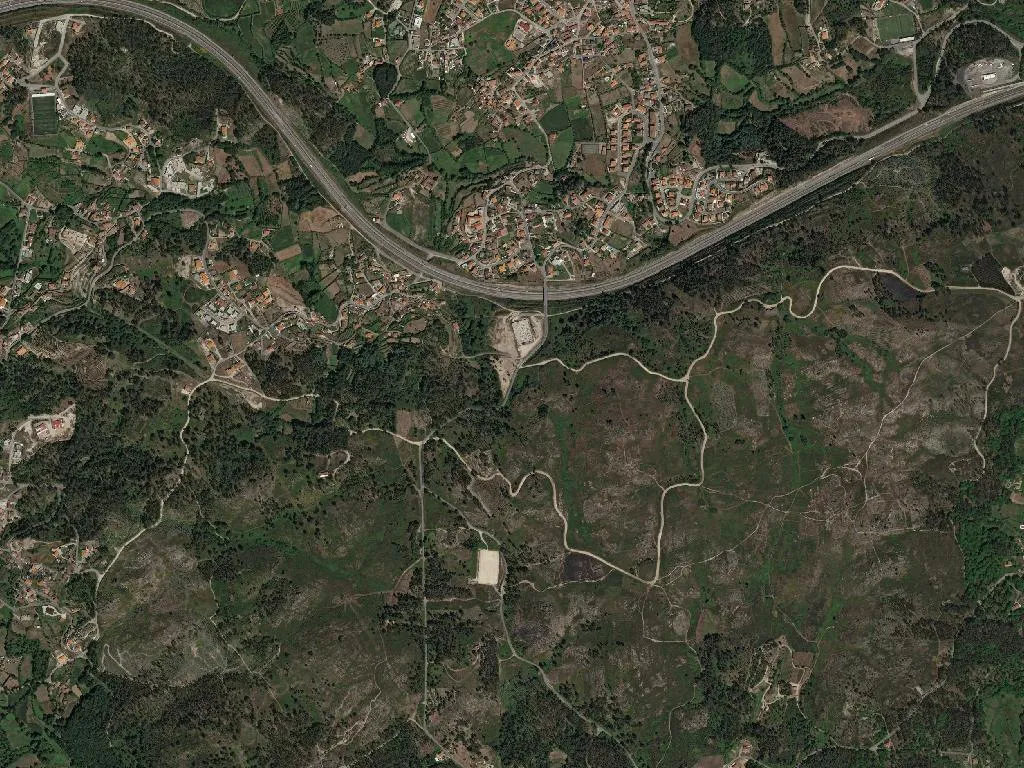
Granite ribs push through the hillside like vertebrae of an ageing beast. The road to Quinchães corkscrews upward, each bend apparently sketched by someone already half-drunk on sunlight, threading between dry-stone walls whose joints bloom with grey-green moss. At 510 m the air nips the ears even in August; morning fog lingers longer than it takes the coffee pot to finish gurgling. Altitude here isn’t postcard shorthand – it’s the reason jackets stay buttoned until May and the potatoes arrive pea-sized but stubbornly flavour-packed.
Geography as neighbour
The parish unrolls across a thousand hectares of slope, parcelled out by people who measure land in days of ox-work, not square metres. Every wall is a grandfather’s last will and testament: surplus stone, surplus patience. There is no wild upland or rolling plain, only a colossal garden where each terrace has a proprietor, each vine a first name and every mongrel knows the sound of your hire-car before you’ve worked out which hair-pin comes next.
You walk past granite houses that look exhaled rather than built – no render, no pastel paint, just masonry the colour of weathered bread. Doorways face south-east because the winter north-west is a tenant who never pays and still refuses to leave. In the backyards smoking sheds stand like confessionals: inside, chouriço cures in silence and hams slowly accumulate the taste of years that will not come again. The honey is chestnut and gorse, but also the product of beekeepers who climb the hives the way others visit awkward in-laws.
Flavours that earn the climb
Carne Barrosã carries DOP letters, but in Dona Aldina’s tavern it answers to a simpler theology: “Dá-Oh-Meu” – “Give-It-Here”. Pork nuggets arrive stained dark with paprika, paired with potatoes that have clearly been bench-pressing and greens that still remember the frost. This isn’t chef cuisine; it’s lunch made by people who finished grafting before they picked up a knife.
The local vinho verde is trained high on pergolas, yet the secret is elevation itself: grapes sleep longer, ripen slower and still wake up tart – rather like the drinker. In the cellars stainless-steel vats gleam like new kettles, but September’s harvest dialogue is prehistoric: “This year it’s sweet,” “This year it’s sour,” “This year we drink, next year we pickle.” Arrive without a bottle in hand and you leave with regret in the boot – no waiting list, just pre-emptive saudade.
The stubborn weight of years
The census claims 2,171 souls, but that tally includes weekend sleepers and ghosts who rarely come home. The primary school has four classrooms and a playground where voices ricochet like broken vinyl. Still, a grandmother is always stationed at the gate, declaring that her grandson “has his father’s cheek plus extra luck”.
Zé Mário’s café keeps a television nobody watches; the screen flickers while locals track diesel prices and gossip about cousins “who moved to town and now pay rent like it’s a kidney transplant”. Resistance here wears no manifesto – it’s a wall rebuilt on Saturday, vines pruned too early, a wood-fired oven lit for São Martinho even when only four guests remain.
Quinchães offers no Unesco badge or red-carpet viewpoint. Instead it hands you a silence you can actually hear, a perfume of smoke you can follow, a road that, if you keep climbing, gives back the minutes you lost at city traffic lights. When the church bell strikes six it isn’t the time – it’s a warning: “Dark’s coming; get down before the fog swallows the bend at Pedra Escura.”
You turn the key, engage first and, in the rear-view mirror, catch the square of kitchen light over Dona Aldina’s door snapping open like a cat’s eye. It isn’t goodbye – it’s a postponed appointment: “See you next week, unless the weather loses its mind.”