Full article about Airão Santa Maria: granite terraces etched with nicknames
Loureira grapes, Barrosã beef and 4 a.m. crosses—life above Guimarães
Hide article Read full article
Whitewash that bites the eyes
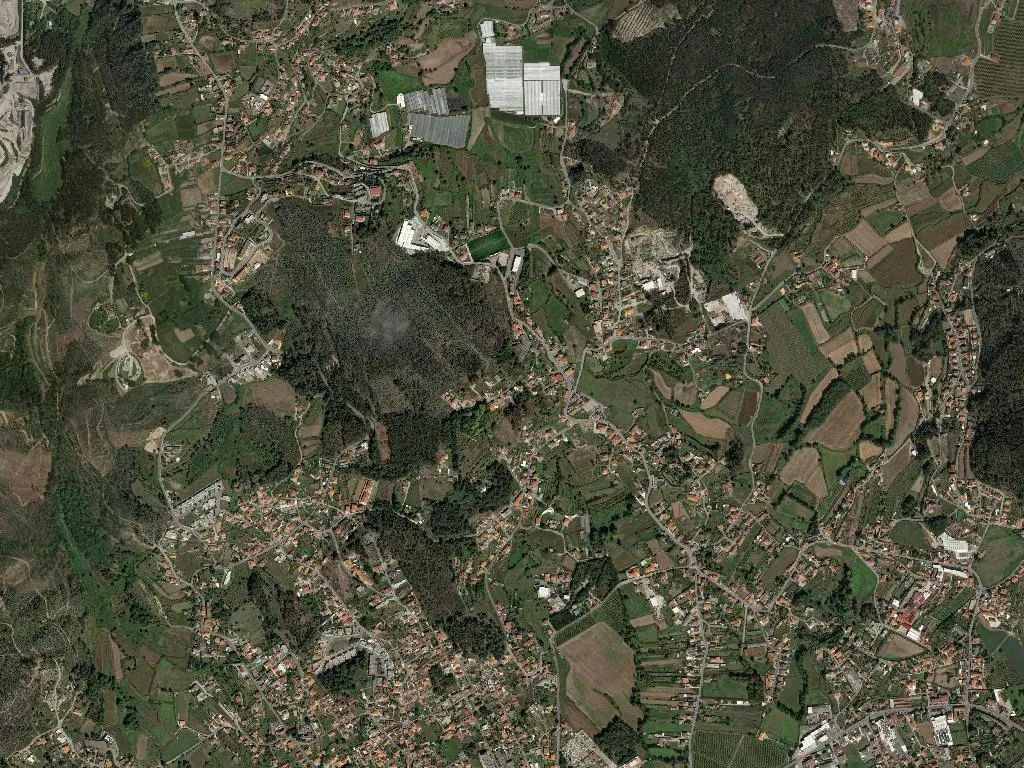
The lime on the walls flakes at the corners, and when the sun strikes head-on the whiteness is almost violent. These aren’t postcard terraces; they are granite terraces wrestled from the slope, each one inked with the nickname of the grandfather who built it — Padrão, Valinhas, Corgo da Rapa. Locals don’t talk about “row lengths”; they count in ladras, shoulder-width strips of earth. Lose the count and you’ve lost the boundary with your neighbour.
Green wine isn’t “tasted” in a show-cellar. It is poured beside the granite press while the man who trod the grapes still has purple shins. Yes, it’s sharp, but the trick is the squeeze of lemon from the tree wedged between house and wall; without it the Loureira grape forgets how to speak.
Beef that smells of the climb
Yesterday the Barrosã cow grazed Chiqueiro do Meio; today she hangs on Amália’s rail, level with the road that zig-zags up to Silvares. When the butcher slides the lorry door, the scent of warm straw fuses with wood-smoke. This isn’t Wagyu-marbled fiction — it’s meat that climbed to 500 m to graze on heather, that wore winter rain for a coat. The fat is butter-yellow, not bleach-white, and melts on the iron grill before the salt even lands.
Crosses that rise at four a.m.
In Serzedelo, on the night of 2 May, boys start raising the crosses at four, before the cockerel. The chestnuts are still leafless, but Gloria’s bakery already has warm milk-bread cooling on racks. A bottle of bagaço slips into shirt pockets to heat the hands that steady the beams; by seven, when sun slices the mist, the village smells of molten wax and wilting white roses.
When Guimarães turns the lights off
At half-ten the number-52 bus clocks off. Passengers step down with tomorrow’s shift in a plastic bag — thick-cut ham, sliced pan, a carton of skimmed milk. The N309 empties; only Couto’s dog hears the engine tick itself cold. Windows light up, but it isn’t lamplight — it’s the blue flicker of last night’s Jornal da Noite on repeat. At weekends church bells spar with the clatter of improvised barbecues; smoke hangs so low it seasons the sheets drying on the line.
The six-o’clock wind carries gorse and the damp-cellar scent of the stick Tonho is curing downstairs. It isn’t vineyard perfume — it’s the smell of someone still saving grapes for a final drip of bagaço baked in the bread oven.