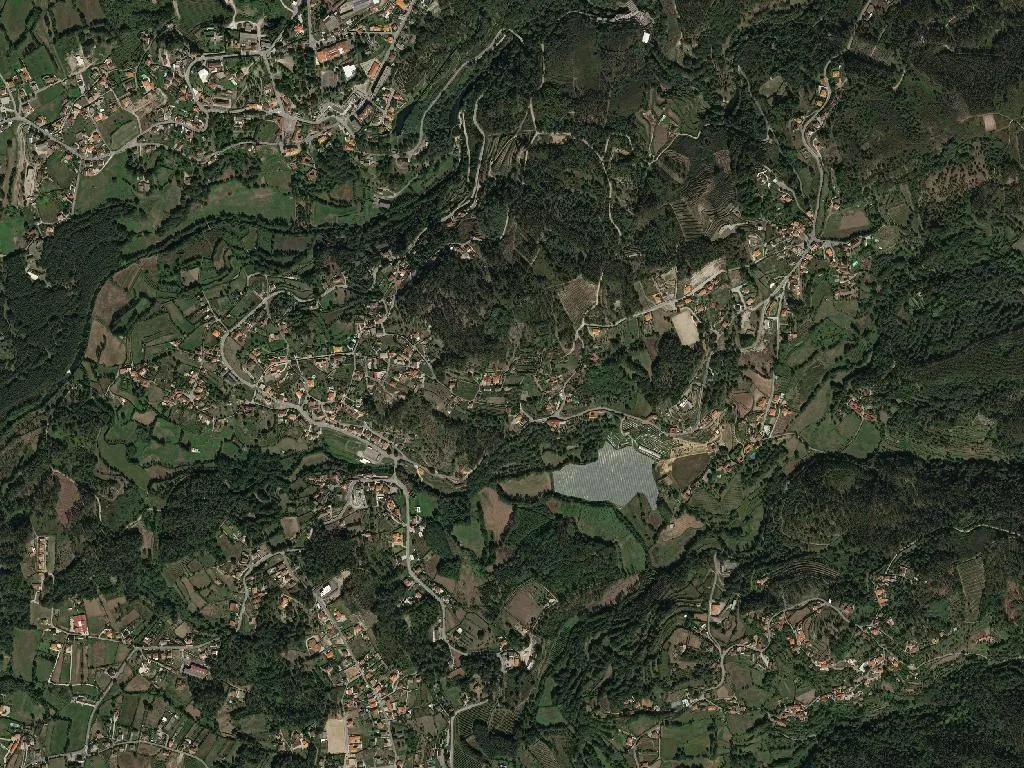
Full article about Arosa & Castelões: Dawn on Granite, Mist over Soil
Two Guimarães hamlets stitched by oxen paths, Loureiro vines and 11th-century gossip
Hide article Read full article
Dawn light ricochets off the granite setts of Santo Amaro square, scattering silver shards across the dew. The only sound is a broom’s bristles grazing a doorstep; even that seems deferential. Arosa wakes as though centuries were alarm clocks – gently, without snooze buttons. A kilometre south, Castelões stirs in the same Atlantic mist, but here the colour palette shifts from stone to soil: low schist walls enclose vegetable plots, and the scent is of turned earth rather than granite dust.
Two hamlets, one collective memory
The civil parish merger is barely a decade old, yet the two settlements have shared oxen, priests and gossip since at least the 11th century, when the royal road between Guimarães and Porto cut straight through Arosa’s centre. A 1515 charter granted Arosa a Tuesday market; Castelões, tucked into the alluvial plain, supplied the produce. Together they now occupy 5.54 km² and a voter roll of 699 – few enough that the pharmacist still addresses clients by their father’s nickname, dense enough that no one needs to ask for the surname.
Faustino Costa, parish-council president for 24 years, poured the concrete benches in Santo Amaro and rebuilt the little chapel of Santa Marinha in 1998. Guidebooks ignore both, yet they serve as parish noticeboards: cards for Sueca tournaments are propped behind the holy-water stoup, and the votive candle shelf doubles as a lost-and-found for forgotten umbrellas.
Wine with a stone accent and beef that earned its letters
At 214 m above sea level the Atlantic still reaches the vines with cooling breezes, but the sun is pure Minho. Small holdings of Loureiro face south over slate terraces; locals call the resulting wine “stone water” – sharp enough to slice the fat from grilled trout, cheap enough to fill a tumbler at lunch. The Barrosã steer that provides special-occasion steak roams the upland meadows towards Amarante; its DOP pedigree means slaughter age ≥ 48 months and a flavour that reminds you grass once had terroir.
Festas that borrow their neighbours’ fireworks
Neither village stages a spectacle to rival Guimarães’ Gualterianas, yet the calendar still insists on noise. On 29 June São Pedro brings a brass band to Arosa; tractors double as parade floats, and the church bell rings until the clapper warms up. Castelões saves its gunpowder for the second Sunday of October, when Senhor dos Passos is carried through vegetable gardens and the parish council lays on caldo verde for anyone holding a bowl. Both processions are dwarfed by external pilgrimages: the Festa das Cruzes in Serzedelo and the Romaria de São Torcato clog the EN309 with wax-scented traffic and slow-roast smoke that drifts over the parish boundary like a borrowed soundtrack.
Proximity outweighs population
There is precisely one place to stay: a single room above the former grocery of Dona Alda on Rua do Cruzeiro. Reservations travel by word-of-mouth rather than Wi-Fi, and breakfast is whatever the baker delivers. Density statistics – 126 inhabitants per km², 202 aged over 65, 67 under 25 – read like an elegy, yet the arithmetic misses the gravitational pull of eight kilometres. Guimarães’ Unesco-listed centre is close enough for morning coffee in a tiled café, distant enough that night returns a sky full of star-fields instead of streetlights. The last bus back leaves at 20:05; anyone missing it walks the old royal road home under constellations that have not been re-zoned.
When the sun drops behind the watchtower of the neighbouring quinta, slate roofs smoulder amber and the church bell gives a single, almost apologetic note – less a call to prayer than a reminder that someone is still here to pull the rope.