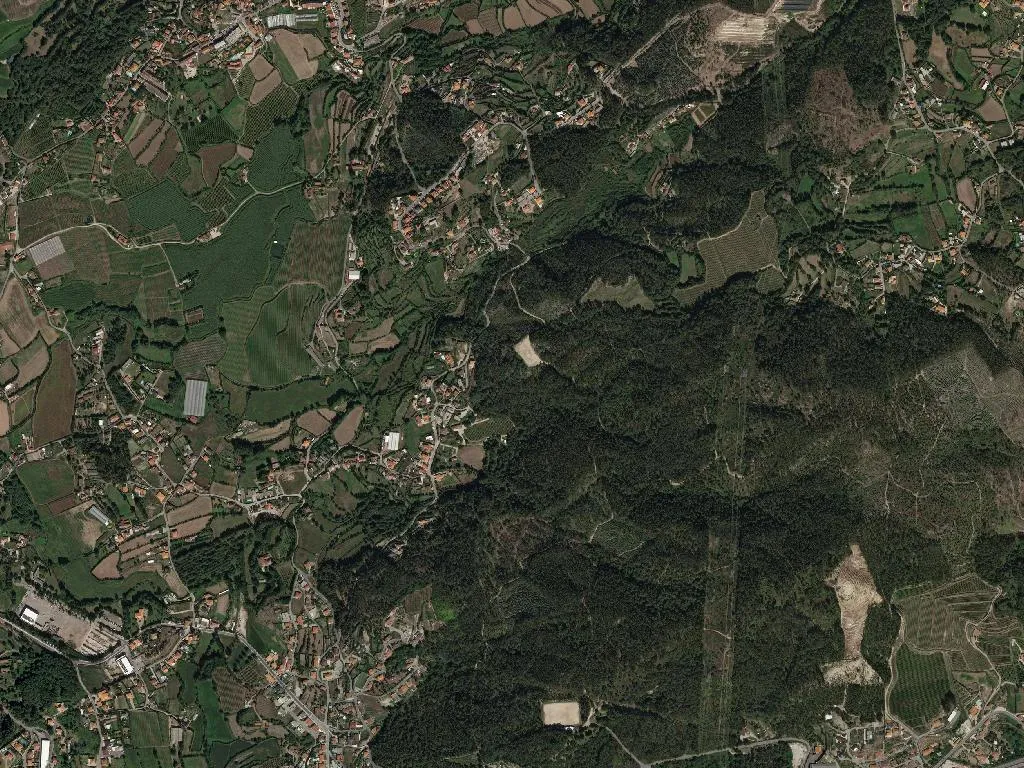
Full article about Granite Bridges & Growing Beards: Atães e Rendufe
Atães e Rendufe pairs medieval granite bridges, vineyard trails, Saturday corn-grinding, Barrosã beef skewers and yolk-almond tarts in Guimarães.
Hide article Read full article
The granite of Ponte de Atães still weeps long after the sun has dried the Loureiro vines. For eight centuries its single arch has carried pack animals, Napoleonic supply wagons and, on Sunday mornings, cyclists heading to the river beach at Penha d’Águia. When the Ave drops in August, the scarred stones reappear where women once thumped sheets against the current until washing machines arrived in 1974.
Two bridges, one valley
Atães and Rendufe were merged into one civil parish in 2013, yet they have always shared this fold of the Ave. In March 1809, French foraging columns rode through, skirmishing with local sharpshooters among the gorse. Ten minutes’ walk separates the two bridges – hence the nickname “land of the double bridge”.
Rendufe’s church, rebuilt in 1754, keeps its Romanesque footprint; inside, a gilded baroque retable catches the 5 p.m. light like a shutter release. Atães’ chapel of São Paio shelters 18th-century frescoes and a wooden St Antony whose beard, villagers insist, still grows – the damp is blamed.
Stones and water
The Rota das Pontes stitches the villages together in an eight-kilometre loop. Three watermills line the route; one has been restored and grinds corn every Saturday at 10.30 a.m., the miller happy to explain the difference between millrace and tailrace. The path follows the levada of São Torcato through Loureiro and Arinto vineyards; wild boar root among the oak scrub at dusk.
What to eat
At Adega Regional de Rendufe, Barrosã beef skewers (€14 for two) arrive sizzling on laurel twigs. In Atães, the bakery’s corn broas leave the wood oven at 7 a.m. and 4 p.m.; they rarely last twenty minutes. Pastelaria O Cardoso turns out toucinho-do-céu – a rich yolk-and-almond tart – for €1.20.
September’s Romaria Grande parades folklore groups and mounted riders in traditional woollen capes. During Carnival, the Enterro do Bacalhau (Burial of the Cod) satirises local politics with papier-mâché masks first worn in 1923.
Red crosses
After the Carnation Revolution, villagers painted the traditional May crosses crimson. Faded photographs of the impromptu ceremony still hang in Café Central, opposite the chemist.
The São Torcato river park opens at dawn; borrow the fixed binoculars to watch grey herons and white-throated dippers before the mist lifts off the water.