Full article about Barco’s slanted sun on lichened granite
In Guimarães’ Barco, vinho verde grapes, Barrosã beef and 13th-century stone share slow afternoons
Hide article Read full article
The Afternoon Light in Barco
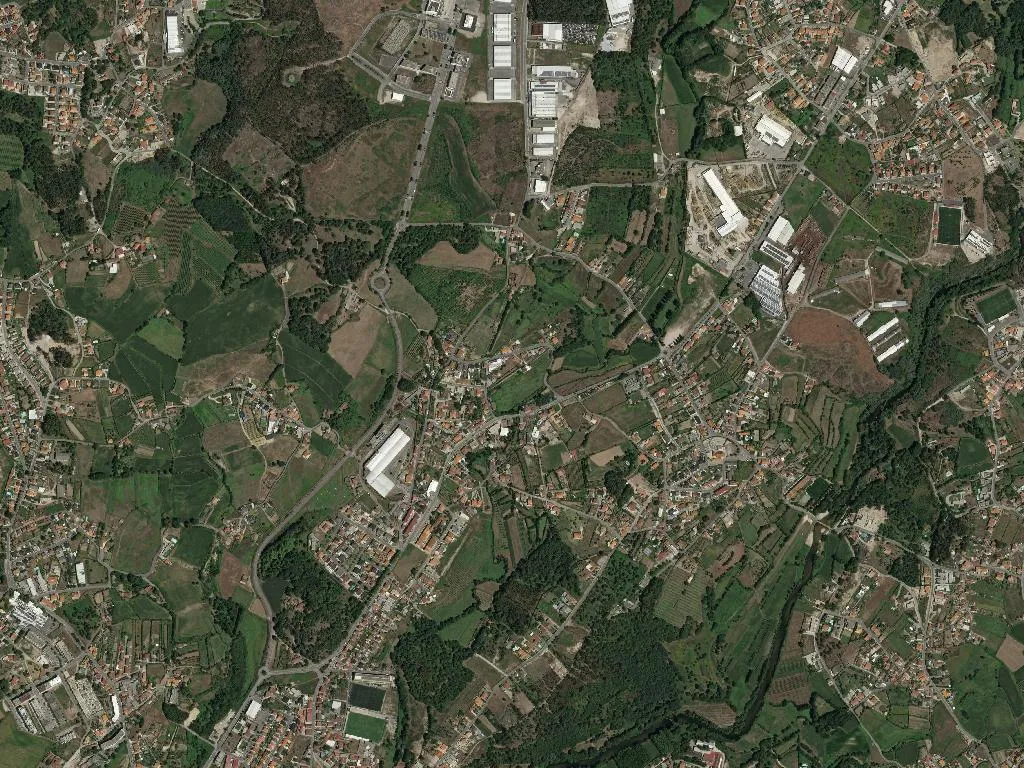
The sun slants through the sash windows of the terraced houses along the N206, pooling on the granite sills where the paint has bubbled. In Barco, 1,439 souls share three square kilometres of northern Portugal’s Minho region, yet the density feels generous; there is always room to greet a neighbour, to notice lichen colonising a wall, to let a child’s bicycle freewheel down the gentle 133-metre contour.
Everyday Fabric
Barco refuses the postcard pose. Rooflines sag in slow motion, clay tiles weathered to a mottled tortoiseshell. Granite façades alternate with cream render, and every third gate reveals a quintal still in production: pergolas of vinho verde vines, regimented cabbage rows, a coop of Barrosã chickens muttering at passing traffic. The Vinho Verde demarcation begins here; the wine’s sharp Atlantic snap is tasted at kitchen tables rather than marketed on terraces.
The parish’s single classified monument, the thirteenth-century Capela de São Torcato, stands back from the road. Its baroque façade of dressed stone is flanked by a Manueline bell tower whose four diminishing storeys have been polished by three centuries of Minho winds. Inside, a polychrome statue of the martyred Visigoth saint carries the sword that legend says he plunged into the ground to mark his burial place.
Meat and Festival
Barrosã beef, protected by DOP status, reaches local kitchens from upland pastures beyond Fafe. The deep-red cut is roasted slowly or grilled over oak embers, its dense fibres softened only by the acidity of the accompanying vinho verde and a wedge of corn broa so compact it could anchor a fishing net.
Two annual rites interrupt the calendar. On the first Sunday of May, the Festa das Cruzes de Serzedelo draws neighbouring parishes to a cross-shaped flower carpet laid on the tarmac. Fifteen August belongs entirely to Barco: at nine o’clock the Romaria Grande de São Torcato sets out from the mother church, procession and philharmonic band descending the N206 to the granite cross where an outdoor mass is celebrated amid arches of home-grown carnations and marigolds. The band still plays the 1923 marcha composed by local teacher António dos Santos; brass chords bounce off the tarmac like heat haze.
Generations in Balance
The 2021 census sketches a fragile equilibrium: 205 children under fourteen, 267 residents over sixty-five. Yet childhood persists in the playground of the EB1 primary school, in the creak of swings beside the football pitch, in the collective hush that falls when the Transdev bus brakes at the Largo do Cruzeiro at dusk. Ageing has not erased life; it has simply slowed the tempo, making every shouted game of tag more audible against the hush.
Access is uncomplicated: the N206 delivers you to Guimarães in twenty minutes, and a footpath of packed earth climbs gently to the São Torcato cross, where maize fields roll away towards the Serra da Penha. No vertiginous trails, no coach parks—just a parish that can be walked end-to-end before the church bell tolls again.
Evening lowers a gold filter over the west-facing façades. A green-painted window scrapes shut; wood smoke begins to rise. Somewhere a dog barks once, twice, then thinks better of it. The day finishes as it began—quietly, on a tide of wood smoke and the faint, metallic scent of vine leaves cooling after heat.