Full article about Briteiros Santo Estêvão e Donim: Granite Echoes of Iron-Age
Walk moss-padded lanes to Citânia de Briteiros, chapel squares & flowered May crosses.
Hide article Read full article
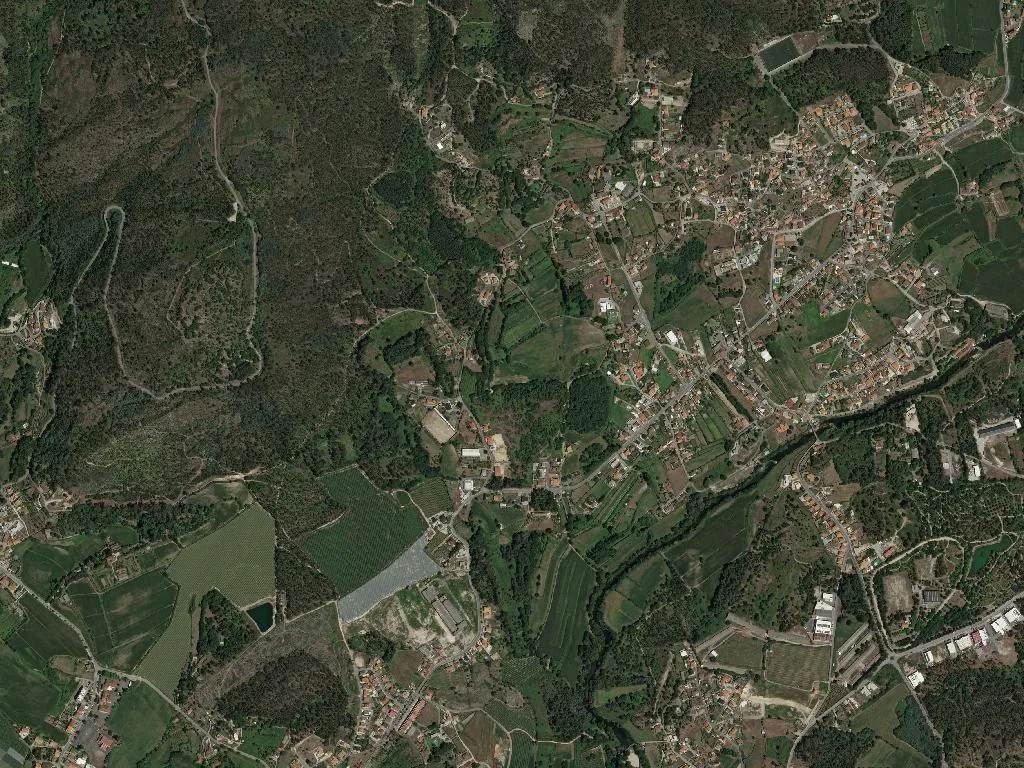
Granite threads itself through the hedgerows, its joints padded with emerald moss where yesterday’s rain still pools. Beyond the lane, the hilltop bristles with dark-stone walls that once ringed family compounds and warmed Iron-Age hearths two millennia ago. Wind carries the scent of turned earth and damp alder from the stream that once drove the village mills. In the parish union of Briteiros Santo Estêvão e Donim, the past is not a museum caption; it is stone you graze with your palm, a furrow your boot still catches.
The Citânia that Francisco Martins Sarmento Gave Back to the World
At 280 m above the Ave valley, the Citânia de Briteiros unfolds over seven of its original 24 hectares. Francisco Martins Sarmento, a 19th-century archaeologist with a Romantic beard and sharper instincts, spent 35 summers here, lifting turf to reveal a pre-Roman town of 600–1,500 souls. Circular and rectangular huts sit inside a double wall; a paved street still drains rainwater through stone gutters. In the southern bath complex stands the Pedra Formosa, a 3 m sculpted slab whose swirls may have framed initiation rites or simply channelled steam—scholars argue over wine late into the night. Joint entry to the site and the adjacent Museu da Cultura Castreja costs €3; inside are glass cases of loom weights, forge tongs and a tiny granite pig that once belonged to someone’s children.
Below the citadel, the 13th-century Capela de Santo Estêvão squats among manor houses built from the same grey rock, their balconies of chestnut wood projecting over cobbled lanes. Granite here is more than building material; it is the parish’s filing system—every field wall records a land swap, every threshold remembers baptisms and funerals.
Crosses, Processions and Faith Handed Down
On the first Sunday of May, Serzedelo’s Festa das Cruzes drapes four towering lime-washed crosses in scarlet geraniums and carries them through the lanes to the thud of bass drums. A fortnight later the Romaria Grande de São Torcato draws thousands to a 12-km torch-lit walk from the church in nearby São Torcato to a hillside shrine; women in molhante black shawls balance baskets of bread on their heads, men in homespun tunics keep cadence with brass bands. These are not set-piece folklores—there is no ticket desk, no amplified narrator—just processions that have to happen so neighbours can remember who owes whom a favour.
Vinho Verde, Barrosã Beef and the Taste of Alto Minho
Vines are trained high on granite posts so Atlantic air can circulate; the resulting vinho verde is bottled while still adolescent—pale, 10.5 %, with a prickle of CO₂ that makes it an ideal breakfast wine. Locals pour it into white ceramic bowls with the Barrosã steak that carries DOP status: cattle graze year-round on unfenced upland, yielding deep-red meat tasting faintly of wild broom. At O Queimado, a wood-panelled tavern in São Salvador de Briteiros, the cozido arrives as a volcanic tureen of shin, chorizo, cabbage and potato that has burbled since dawn. Finish with toucinho-do-céu, a saffron-yellow convent sweet whose name translates, irreverently, as “bacon from heaven”.
Trails among Mills, Streams and Castro Memory
The 12-km Rota da Citânia loops from the citadel through oak and sweet-chestnut woods, dropping to the Rio Febras where four water-mills still keep their paddle wheels and corn-dressing stones. One miller, Sr. Araújo, opens his barn on request; inside, the smell of wet beech shavings mixes with the metallic song of a 1920s turbine. Beyond Donim the path climbs an old transhumance track whose ruts are polished by centuries of ox-carts; from the saddle you see the Ave valley open like a green theatre curtain, Serra da Falperra standing in the wings.
Back in Santo Estêvão the evening bell tolls three times, a code older than the parish loudspeaker. Wood-smoke rises straight in the still air—someone is burning last year’s olive prunings, someone else is simmering beans for tomorrow’s feast. The granite walls do not merely survive; they keep tally, and tonight they have counted 2,024 souls, none strangers.