Full article about Fermentões
Guimarães village where medieval loaves, Santiago-bound boots and Manueline gold still echo.
Hide article Read full article
The square where stone remembers fists
Step down into Largo do Eirô and the first thing you hear is your own footfall ricocheting off uneven granite. The slabs are cupped in the middle, gently hollowed by centuries of market-day boots and, until the 1960s, by the elbows of men who arm-wrestled here during the parish festa. An eighteenth-century fountain trickles at the edge; its thin stream blends with the dry rustle of plane trees. Fermentões wakes slowly, smelling of wet soil and cold stone.
Yeast, bread and the road to Galicia
The name is a give-away: fermentum, the Latin for leaven, signals land that has always risen into bread or wine – or both. A charter from 1059 donates the village to the Benedictine house of São Mamede, and by 1258 the royal surveys of Afonso III already list Fermentões as a chartered settlement. What turned the hamlet into a hub was not just the fertile alluvium of the Ave valley but the medieval highway that stitched Guimarães to Santiago de Compostela. Pilgrims, mule trains and mercenaries crossed the River Ave over Ponte de Fermentões, first thrown across in the thirteenth century and rebuilt in the 1700s. Walk its pitted arches at dusk and the reflection wavers like a parchment map: you feel, through the soles of your shoes, the same tremor that once carried ox-carts and royal retinues.
Gold leaf and an undeciphered code
Inside the sixteenth-century mother church light slips through arrow-slit windows and lands on a Mannerist altarpiece gilded so lavishly it seems to breathe. The air carries the metallic chill peculiar to granite sanctuaries – a coolness that persists even in August. Outside, a pillory transplanted here in 1932 stands like a taciturn sentinel. Nearby, the fifteenth-century Capela de São Torcato wears a scale-tiled spire that flashes ochre-rust in late sun. Further uphill the Cruzeiro de Serzedelo, dated 1789, bears a cipher no scholar has cracked – three lines of numerals and letters that three centuries of curiosity have failed to unpick.
A bronze plaque beside the cross records the verdict of parish priest António Maria Ribeiro (1923-57): “Stone speaks, but only the patient understand.” The tablet was bolted to the granite in 1998 by grandchildren of the stone-carver José da Silva Azevedo, whose cemetery inscriptions were so precise they looked monk-transcribed.
Smoke, chestnut and yolk
Fermentões tastes of people who worked both soil and loom. At “A Cozinha do Eirô” the house plate – Aunt Alice’s pork – folds Serra da Penha chestnuts into the sauce, their floury sweetness cutting the fat. Caldo verde is sharpened with DOP Carne Barrosã chouriça, and every Wednesday the communal wood-fired oven in Serzedelo opens its iron doors. Bring your proved dough the night before; stay for gossip, wood smoke and a nip of white Vinho Verde while the loaves blister.
The Sunday after São Torcato’s romaria, the Araújo family serves sarrabulho porridge from their front room at No 42 Rua do Cruzeiro – four generations of ladling out the dark, iron-tasting stew. At Padaria Central the toucinho-do-céu – a conventual slab of yolks and almonds – is so dense a sliver sugars the whole afternoon. Drink either Loureiro-Azal Vinho Verde from Quinta da Ponte or Magnífica aguardente aged in Seixoso oak pipes.
Looms, trains and the “barrel wagon”
The nineteenth century threaded iron rails through the valley and everything changed. In 1875 Joaquim Augusto de Azevedo built the Spinning and Weaving Factory of Fermentões; within a decade the parish was an industrial engine of the municipality. A tanker wagon nicknamed a pipa – the barrel – shunted daily between the station and the mill, keeping the turbines wet. The 1880s railway terminus still stands, now the Ave Valley Interpretive Centre. Inside, a 1:200 cardboard model of the vanished mill took engine-driver António “Toi” Cerqueira seventeen years of off-duty minutes to assemble.
Factory whistles also blew Fermentões into modern politics: in 1946 mill-hand Maria da Conceição Azevedo became the first woman elected to Guimarães town hall. A discreet plaque on the old primary-school façade remembers her name.
Levadas, oaks and barrel-bellied cattle
The Valos Trail (PR1 GMR) runs eight kilometres between Fermentões and Serzedelo, shadowing irrigation channels through gall-oak woods where light pools green and gold. The path dips to marshland on the Ave and Selho rivers, royal herons lifting just above the water. Local anglers swear the best spots are under the Romanesque bridge where the current curls and fish tire themselves out.
A shorter loop, the Waterfall Trail, marked in yellow by Guimarães Mountaineering Club, circles two kilometres to the Levada da Roda cascade. The falling water forms an acoustic wall that erases every other sound. In neighbouring pastures barrel-bellied Barrosã cattle chew with the unhurried cadence of animals that have nowhere particular to be. Shepherd Manuel “Barrigão” names each one: “That’s Perpétua – fourteen years old and still gives enough milk for my wife’s mountain cheese.”
Bonfires on May night
At dawn on 3 May the Festa das Cruzes lights Serzedelo with procession bonfires. Flames throw long shadows across granite façades; voices rise in cantares ao desafio, improvised verses edged with Minho dryness. The neighbourhood group “Os Rouxinós” keeps the custom alive; António “Tó” Silva rarely resists teasing his namesake cousin over the fire.
On the eve of Epiphany masked mascarados in straw and rags troop from house to house demanding aguardente. The circuit starts at São Torcato at nine and ends when the final glass is emptied in Zeferino’s tavern, where Carlos still pours liquor infused with backyard herbs. Shrove Tuesday brings the mock funeral of a papier-mâché cod – the Enterro do Bacalhau – a satirical cortège that buries the fish in the old mill garden with full comedic last rites.
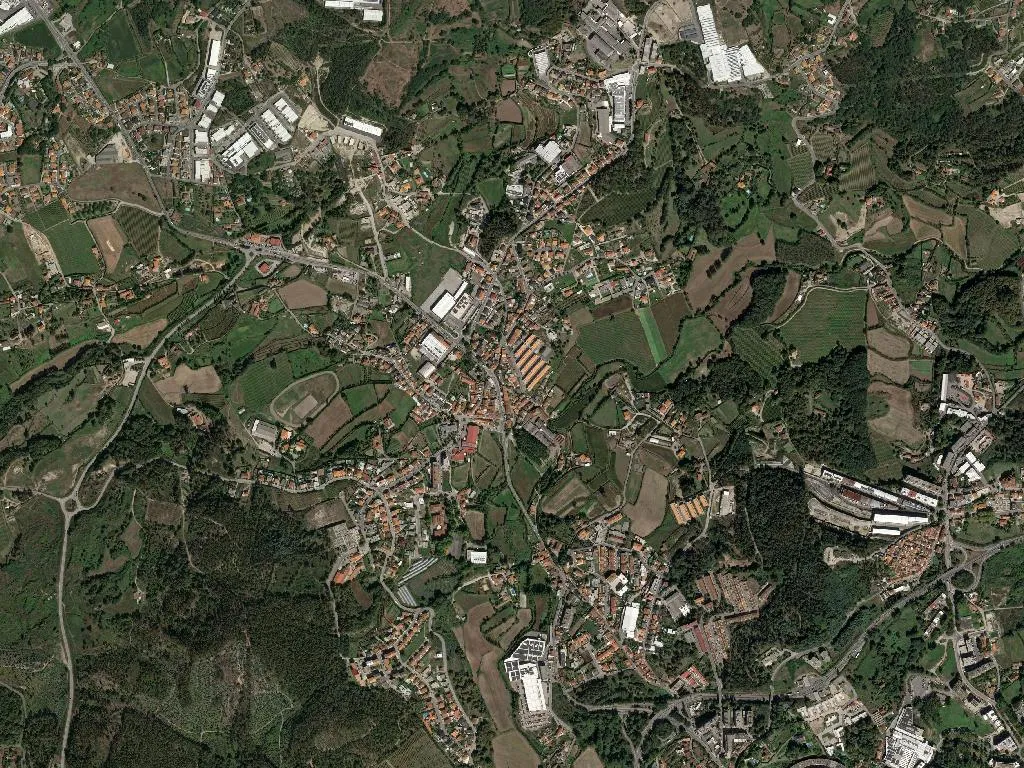
Fermentões has 5,739 inhabitants, a density of more than 1,500 per square kilometre, and lies ten minutes from UNESCO-listed Guimarães. Yet what lingers after you leave is neither statistic nor proximity. It is the concave granite in Largo do Eirô – the ghost imprint of a thousand clenched fists – and the fountain that keeps running for no one in particular.