Full article about Gandarela: A Village Held Together by Bell-Ring
Stone casais, Vinho Verde & 11th-century bells echo across sandy vineyards
Hide article Read full article
The Bell that Maps the Valley
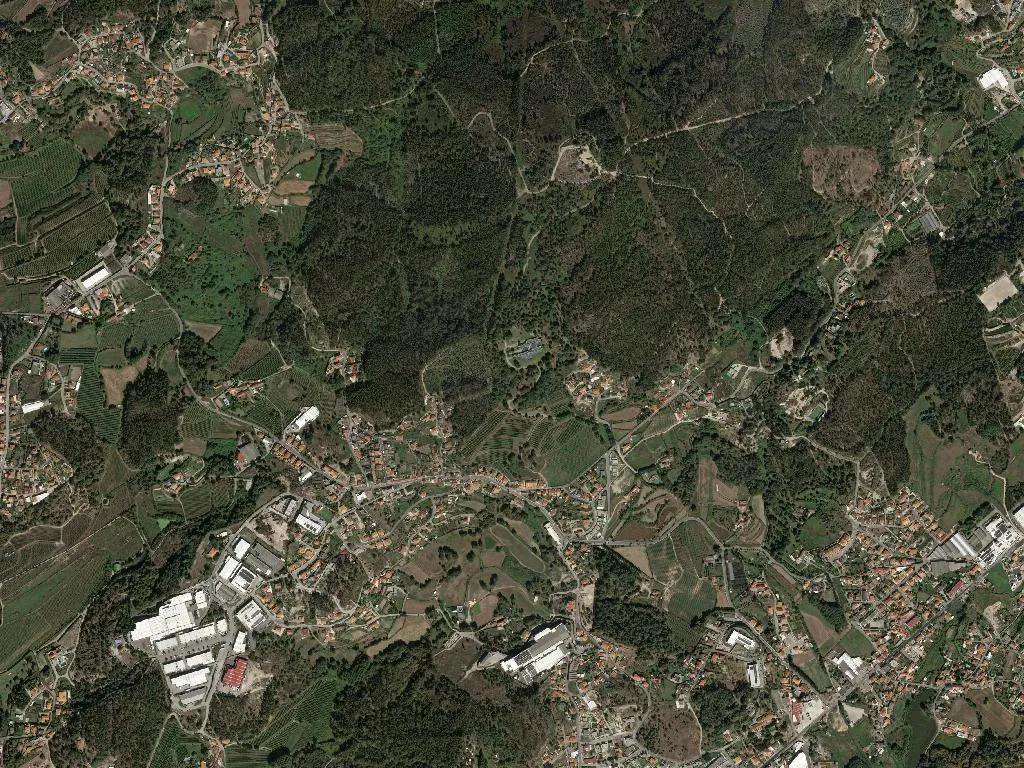
At 17:45 the bronze strikes, a single clear note that slides over red terracotta and bare granite. It starts in the new church tower, then spills north to Carvalho, south to Casa Nova, east to Monte, west to Passamão. Gandarela is not a village you walk through; it is a scatter of casais—stone pairs of house and barn—held together by sound rather than streets.
A parish older than Portugal
A parchment from 1059 already lists “Sanctus Salvator de Gandarela” beside São Cristóvão de Selho. The name derives from gândara, the local Galician-Portuguese word for sandy, untilled ground; walk the vineyards today and you still strike pockets of that pale, droughty sand. Until the liberal municipal reforms of 1834 the parish belonged to Barcelos, not Guimarães, and its tithes flowed to Braga cathedral. Independence is a recurring theme: after being merged into the union of Conde e Gandarela in 2013, residents lobbied for five years to regain separate civil status—granted, after a local referendum, for January 2025.
The present parish church, opened on 9 October 1988, is a low, white-rendered building that seats 700 but feels like a living room on feast days. Inside, the project “Da Tradição à Contradição” programmes folk-song quartets, Baroque recorder ensembles and neighbourhood choir rehearsals—music as social glue rather than heritage cabaret.
Vinho Verde and Barrosã beef
Vines are trained low along granite posts so the afternoon heat reflects off the stone and ripens the grapes. At 285 m Gandarela sits in the sweet spot of the Penafiel micro-climate: Atlantic breezes funnelled up the Ave valley meet the warm, sandstone hinterland, giving wines with the snap of gooseberry and laurel. Quinta da Levada’s old-loupe alvarinho, foot-trodden and steel-fermented, is poured by the carafe in the parish café—no label, no marketing budget, just the farmer’s mobile number on a scrap of paper taped to the counter.
The same fields graze Barrosã cattle, one of Portugal’s two DOP-protected beef breeds. Look for the chestnut-coloured cows with lyre-shaped horns grazing the boggy ground along the Ribeira de Pevidém; their meat ends up in the smokehouses that cling to almost every farmhouse—cedar-blackened chambers where chouriço and paio cure over slow oak fires.
A lattice of footpaths between farmyards
Gandarela shares boundaries with five rural parishes, so a morning’s circular walk can collect five different stone-masons’ marks and three distinct dialect pronunciations of the word “granite”. There are no way-marked trails; instead you follow the levadas—narrow drainage ditches—between smallholdings, lifting the loop of wire that passes for a gate. Spring brings ox-eye daisies up through the maize stubble; by late summer the same fields flare gold before the first cut of silage.
From the crest at Alto da Senhora da Saúde you can see the UNESCO-listed centre of Guimarães 7 km away, its Ducal Palace towers rising like a cardboard cut-out. The contrast is instructive: one horizon holds Portugal’s cradle of nationality, the other a working landscape where 1,232 people still shape their week around the tractor-hire rota and the parish mass.
Dusk ends with a second bell—eight slow strokes that mean the consecration is beginning. Wood-smoke drifts from chimneys, the valley exhales, and for a moment the only straight line is the sound travelling across darkness, tying Carvalho to Casa Nova, the living to the long documented dead.