Full article about Gonça: Granite, Vineyards & Silence above Guimarães
Terraced Vinho Verde vines, smoke-scented kitchens and dusk-lit stone walls define this Minho hamlet
Hide article Read full article
Stone & Vine
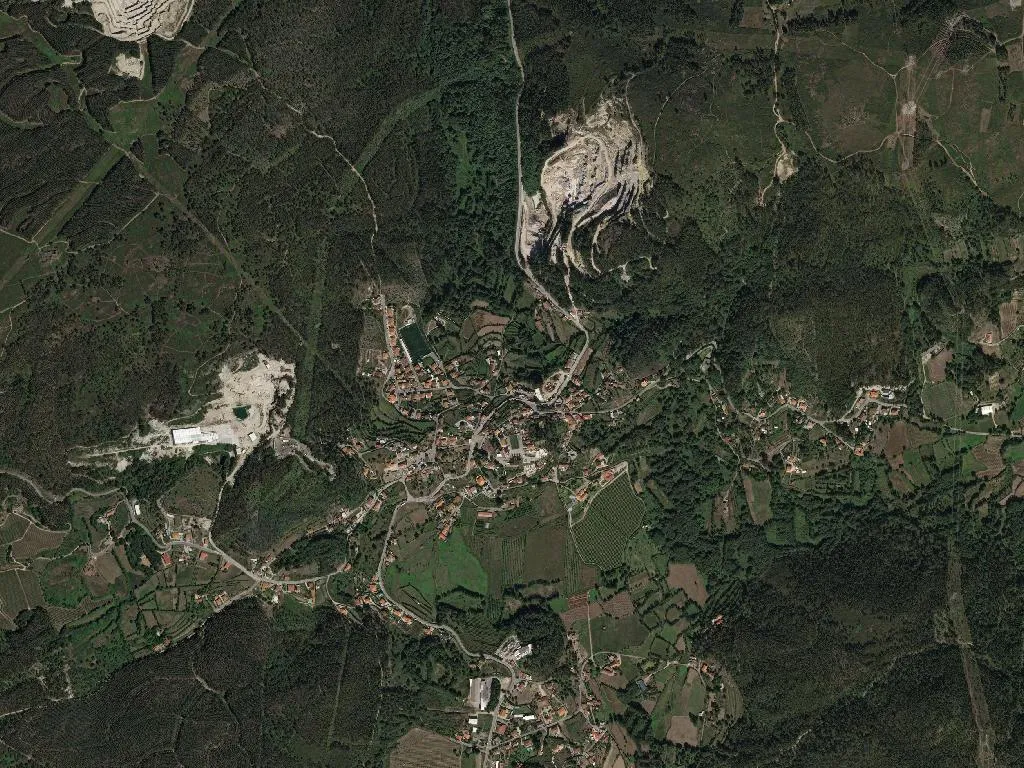
Morning sun strikes granite walls, warming them like stored bread. Below, the Ave valley unrolls in stitched terraces of Loureiro vines. At 370 m, Gonça sits just high enough for dusk to arrive with a chill and for the towers of Guimarães to glint on the horizon. Nine hundred and fifty-four people occupy seven square kilometres of scatter: single-storey cottages wedged between hand-stacked stone banks, no cluster, no centre.
Between granite and green
Vinho Verde plots climb the incline, each row pinned to schist and quartz. Granite outcrops everywhere—split, chiselled and locked into retaining walls that have lasted since the 1700s. Density: 135 souls per km². One hundred and eight children, 165 pensioners. At eight o’clock you hear the neighbour’s John Deere; by three, only wind worrying the tendrils.
What you’ll eat
Barrosã beef, DOP-branded and corn-fed, drives down from the Alto Minho. Kitchen fireplaces still burn vine prunings; hams and oak-smoked chouriços hang within lunging distance of the flames. In the cellars, the current vintage rests either in temperature-steel tanks or chestnut barrels the colour of wet tobacco.
Festivals
The Festa das Cruzes in neighbouring Serzedelo and the Romaria de São Torcato turn the chapel forecourt into a car park: coaches with German plates, trestle tables loaded with rojões (paprika-spiced pork) and kale soup thick enough to hold a spoon upright. Emigrants fly in from Lyon or Newark for 36 hours.
Next-door Guimarères
UNESCO-listed Guimarães is a ten-minute drive south. Half the village commutes there—bankers, call-centre staff, university technicians—then retreat uphill for silence and guaranteed parking. Two meticulously restored granite cottages take guests; both are reached by tarmacked lanes, no hairpins required.
When September light rakes the stone, shadows stretch like catapult cords across the terraces and the only sound is irrigation water slipping downhill.