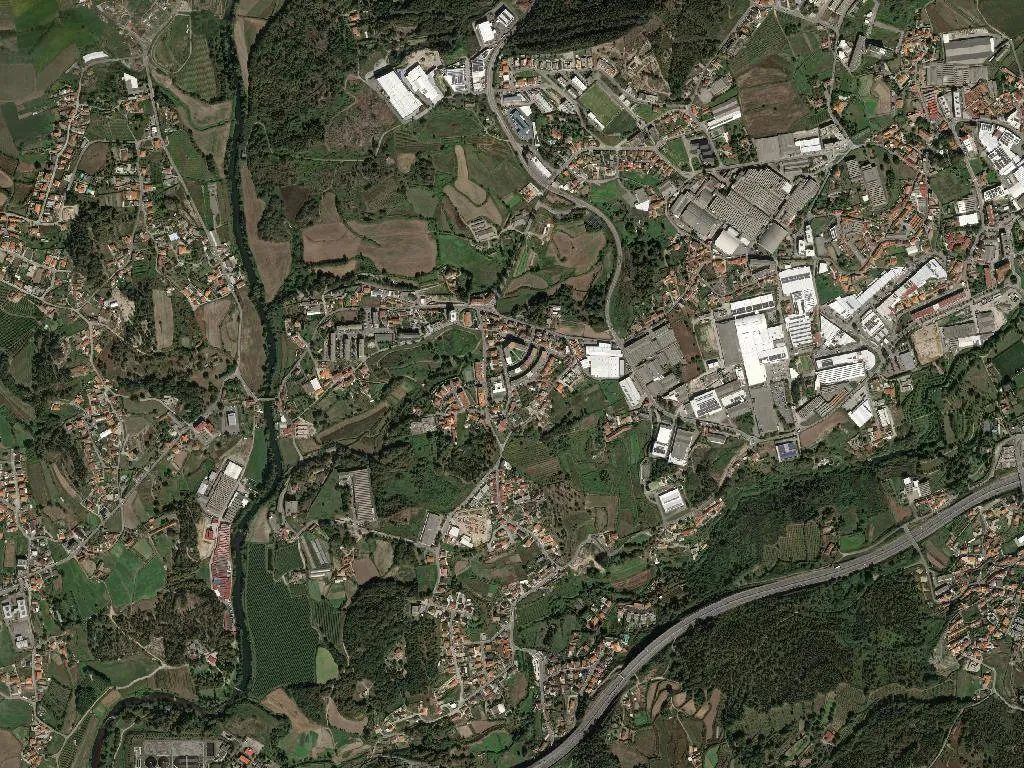
Full article about Gondar: Guimarães’ Water-Slick Village That Won’t Quit
Gondar, Guimarães: walk stone lanes where paper-petal processions follow a constant stream turning ancient mills beneath vine-draped plots.
Hide article Read full article
The neighbour who never turns the tap off
The Gondar stream is the sort that would be slapped with a hosepipe ban anywhere else in Europe. For centuries it has slipped between schist walls no wider than a supermarket trolley, turning a handful of water-mills that still remember when grinding wheat counted as Saturday-night entertainment. The village perches on a 153-metre shelf, glued to the granite flank of the Serra de Santa Comba as if frightened of wasting shoe leather. When the thermometer nudges August, the place mutates: volunteers spend the night belly-down on the lanes, gluing marigold-yellow paper petals into kilometre-long carpets that will be trampled to confetti during the Romaria de São Torcato – Guimarães’ loudest parish knees-up, one that leaves even the priest sounding like a pack-a-day baritone.
Stone that talks more than most people
Iron-Age castros crown the ridge above the stream; Romans followed the glint of tin and gold along the Orbacém floodplain and left pock-marks in the turf the size of giant hoofprints. Whether “Gondar” descends from the Roman “Gondarum” or is simply a linguistic red herring matters less than the enduring geometry of the fields: every household still commands its own pocket-handkerchief plot, its own pergola of vinho verde vines, and the unshakeable conviction that no council surveyor will ever redraw the lines.
The nineteenth-century mother church is a neoclassical cough sweet – sober outside, gilded to the eyebrows within. Arrive before ten and the sun slings bars of light through the railings, buttering the high altar like toast. Two hundred metres downhill, the tiny Capela de São Torcato braces for its annual invasion on the Sunday after 15 August. The procession sets off from Guimarães at dawn – floats winking, brass bands wheezing, plastic bowls of kale soup sloshing onto sandalled feet. Pack a reusable cup or you’ll be handed a clay bowl that strips every molecule of lipstick before the first gulp.
An oven that never cools
In May the hamlet of Serzedelo stages the Festa das Cruzes around a granite cross older than several European nations. The communal oven is fired at dusk; by the time the moon rises, matriarchs are arguing whether the sponge cake is “cool enough for the tins” while the men fork pork belly over an olive-wood spit. Tables sprout on the tarmac, wine arrives in thumb-sized clay cups, conversation lasts until Tino’s cigar in the bar opposite finally expires. Order chanfana – goat or mutton depending on what was surplus that week – and when you finish, clatter the dish on the counter: local applause for a supper well eaten.
A short trail, long legs
The Trilho dos Moinhos is a five-kilometre figure-of-eight that starts where pilgrims once tripped over the medieval bridge before the main road was rerouted. Walk at first light: valley fog irons out the climbs and you half-expect a period-drama crew to appear with clapper boards. By seven you’ll hear the first brass-band chords drifting up from the romaria; by eight the scent of newly baked broa slips through the bracken; by nine you’ll realise you forgot water and the next café is at the finish. Flip-flops are technically possible, but schist greased by dew is slipperier than a hustings promise.
When the paper petals have been ground into the cobbles and the last firework has coughed itself silent, Gondar lowers its voice. Bells from across the ridge exchange long, bronze syllables; wood-smoke from roasting chestnuts clings to your jumper like an apology. Stay until the final petal has blown away – it will be back next August, as certain as the friend who only rings when he needs to borrow a ladder. If your feet are still speaking to you, limp into the tasca where Sequeira pulls a fino that tastes almost medicinal and counts as the village’s idea of first aid.