Full article about Guardizela: Watchtower Village Above Ave & Vizela Valleys
Walk Guardizela’s 11.9-km loop past Roman vineyards, 13th-century church, bullet-scarred oaks and fortified manor houses.
Hide article Read full article
A Watchtower Above the Valleys
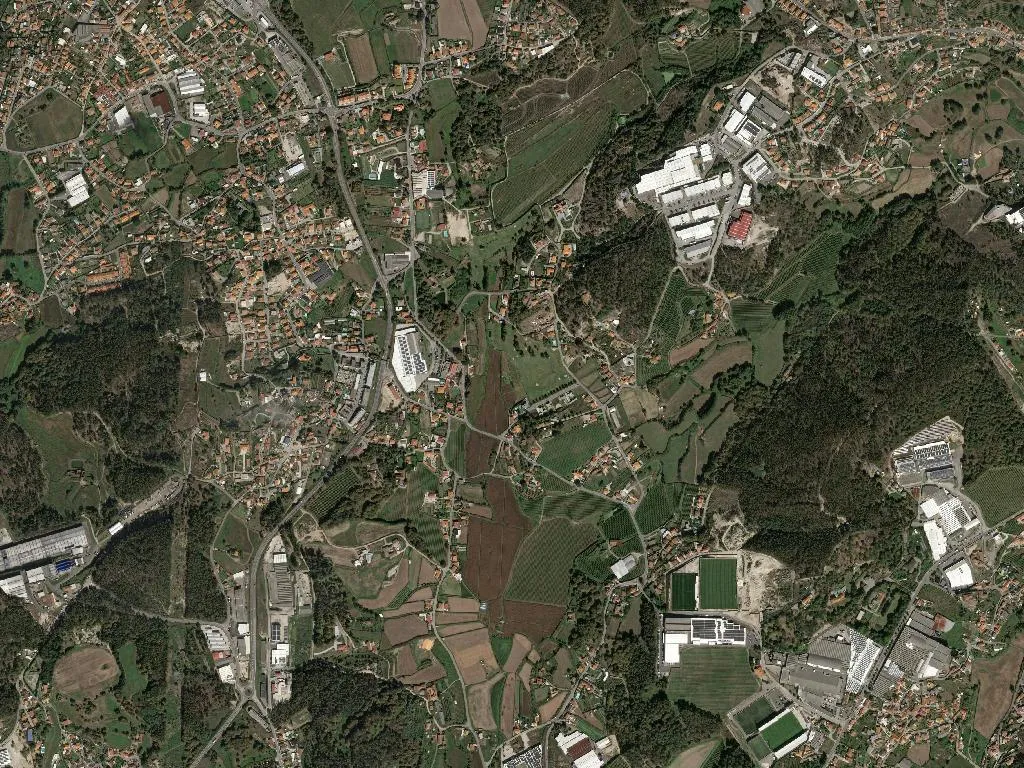
The name still does its job. Guardizela descends from the Latin “guardacellam”, a forward post, a place to keep watch. At 123 m the parish sits above the snaking Ave and Vizela valleys, a natural control room ever since Roman surveyors pegged out a roadside farm at Quinta de Cutiães. Their low-lying wall lines are still traceable among the vines.
Down in the village centre the thirteenth-century Igreja Matriz of Santa Maria holds the high ground. Its granite terrace carries a working eighteenth-century sundial; step inside and a gilded baroque retable flashes back the light like a signal mirror. From the churchyard lanes climb to the whitewashed ermida of Santa Luzia, launch-point for the 11.9-km Guardizela Loop that folds through the Bosque das Fontaínhas, across schist-walled terraces grafted with Loureiro and Avesso, and past farmhouses whose doors have been pivoting on iron pintels since the 1500s.
Ambush in the Oak Wood
Those same woods once served as cover for the local ordenanças. In 1809 Guardizela and neighbouring Serzedelo militia hid among the oaks of Coteães and opened fire on a French foraging column. Lead balls from the Third French Invasion are still lodged in the trunks; one oak near the stream crossing carries four visible pimples of grey metal. Captain António da Silva Carvalhal, who planned the ambush, is remembered in street names and in the scored surface of Penedo Grande, a whale-backed granite slab that served for centuries as the communal threshing floor.
Keeps, Manors and Stone Memory
The parish keeps its fortified DNA. At Quinta do Pinheiro a twelfth-century tower house rises from a stone-walled enclosure; its semi-circular turret doubled as the village lock-up until the 1550s—narrow, windowless, acoustically perfect for extracting confessions. Nearby, Quinta de Sacoto (first mentioned in a 1178 royal charter) and the Gothic-windowed Casa de Vila Verde complete the armoured set. Today these buildings harbour small production vineyards, B&B suites and weekend restaurants where chanfana—Barrosã DOP goat slow-poached in red wine—arrives at table in a clay pot still bubbling.
Tasting the Map
The cooking is legible in the surrounding fields. Pork loin is marinated in the same white wine that will later wash down the meal; sarrabulho porridge is thickened with pig’s blood and served beside a wedge of regueifa, the local airy loaf. Caldo verde is scented with vinha-d’alho sausage; milk cakes and “granitic sponge” take their mineral name from the bedrock. The sub-regional vinho verde—light whites and a coppery rosé—pairs with chanfana finished in olive oil and flor de sal. Look for hillside honey scented with heather, small-batch medronho firewater and transhumant goat cheese that appears only when the herds come down from the Serra da Cabreira in late October.
Walking Between History and Water
Allow three and a half hours for the Guardizela Loop. The trail climbs to the Fontaínhas viewpoint, skirts Penha do Grito—a 228-m granite outcrop that stares straight at the pilgrimage church of Nossa Senhora do Monte—and then drops to follow the Ribeira de Guardizela, a year-round stream that irrigates vegetable gardens and feeds marshy pockets where grey herons nest and blackbirds feed. Along the route the 2023 Tree of the Year, a centuries-old cork oak, spreads a parasol of evergreen shade. Every May the Caminhada das Fontaínhas adds guided geology and bird-watching stops; in August the romaria of São Torcato draws thousands of pilgrims, horses decked in velvet trappings and a craft fair that clogs the lanes with the smell of grilled corn.
At dawn on 13 December the rising sun shafts straight through the door of Santa Luzia and ignites the altar—an alignment calculated by medieval builders for the winter solstice. Processions wind up the hill carrying torches and singing the villancico; the air carries beeswax and woodsmoke, and the brotherhood ladles out hot caldo verde from a cauldron set on Penedo Grande. Light, fire, food: Guardizela repeats the same elemental ritual it has performed for half a millennium.