Full article about Infantas: Where the Bell Cracks and Echoes Answer Back
Guimarães granite hamlets, Vinho Verde cellars, 13th-century chapel, July pilgrim smoke.
Hide article Read full article
The bell of Infantas church does not ring – it fires. A single, dry crack that rolls down the valley like someone waking their own echo. It is late May, the season when laundry hung on the line never quite dries, yet the fields glow an almost suspicious green, as if the land were showing off. At 465 m the air is so thin it feels like a dare: breathe in and you remember you are alive, but only just.
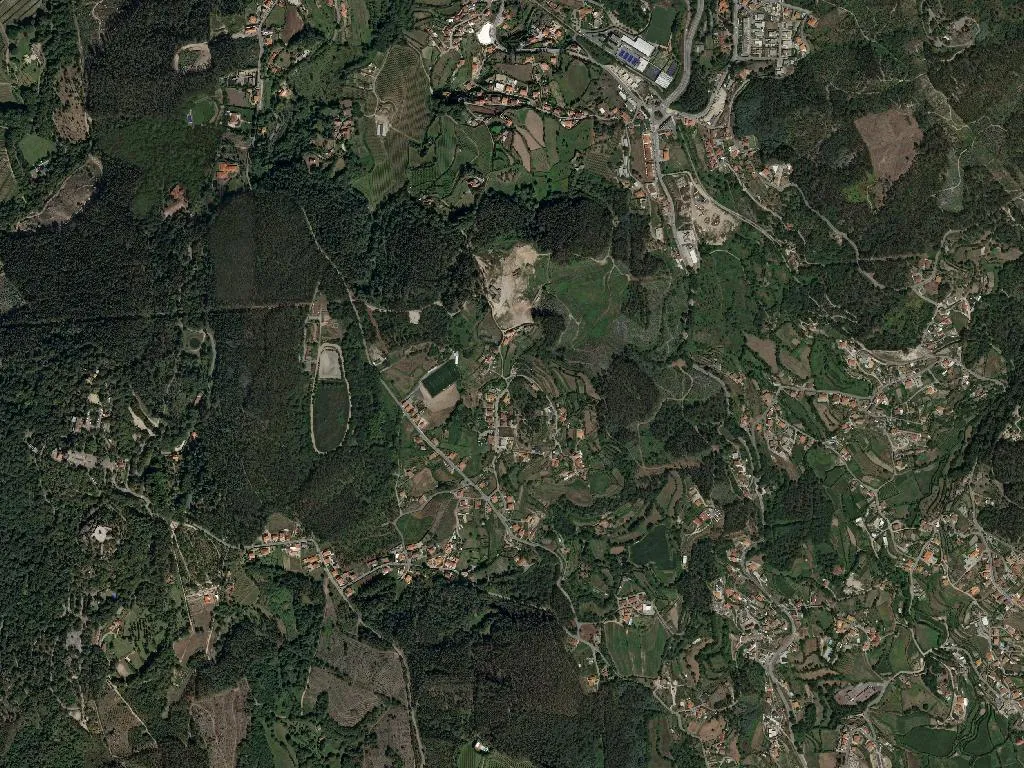
Infantas does not surrender itself easily. You reach it the way you try the wrong gate key – turn a corner and find another granite calvary, another terraced vineyard, another dog that watches instead of barks. Seventeen hamlets scattered across 649 hectares, 1 740 inhabitants and a population density (268 per km²) that sounds busier than it feels. Voices vanish into the granite folds; even the River Ave, glinting down in the valley, sounds like polite dinner-party chatter.
The Name No One Can Explain
Local wisdom claims “Infantas” honours some forgotten princess who passed through, stayed, or was buried here – no one agrees. What is certain is that the parish church has stood since the thirteenth century, its stone the same grey granite as the houses, the pavements, the graveyard slabs. In the hamlet of Serzedelo, the chapel of São Torcato fills every July with pilgrims who swear the saint once cured a liver – or possibly a gas bill. The open-air mass begins under a sun that could fry an egg on the communion plate and ends after dusk with roast-pork pasties and what the programme discreetly calls “traditional popular music” – reggaeton no one will admit to downloading.
What You Eat and Drink
Infantas is Vinho Verde country, but forget the supermarket miniature bottles. Here the wine is made in the family adega, pressed by hand and stored in fat-bellied glass demijohns. The white is feather-light with a faint petillance that makes fried fish feel overdressed. It accompanies papas de sarrabulho – a pork-and-blood stew thick enough to stand a spoon in – and rojões colorau, scarlet nuggets of marinated pork that stain plate, tablecloth and T-shirt in a single swipe. Cornbread arrives hot; if it cools it doubles as cobblestone. Chouriço, salpicão and morcela cure in the smoke-blackened kitchen rafters until even the cat smells of toast.
Festivals that Last as Long as They Need To
May brings the Festa das Cruzes: roadside granite crosses draped in poppies and marguerites, candles melted into bottle-glass holders, cake stalls that do brisker trade than the priest. In June Santo António takes over – bonfire in the square, sardines leaping from the grill, and a village dance that ends only when the Peugeot 205 sound-system battery dies or the GNR politely suggests everyone “start thinking about bed”.
Where to Wear Out Your Shoes
Two footpaths justify the blisters. One threads from Serzedelo up to the chapel of Nossa Senhora do Carmo; the other links the two main hamlets. Start early, carry water and ignore the GPS – it will send you through a farmyard guarded by a mastiff called Assassino. From the top the view makes your phone feel redundant: terraced vineyards stepping down to the Ave, the air so clean it looks almost white.
How to Carry It Home
There is nowhere to plug in a selfie stick. Infantas is taken away as the scent of fermenting must in your boot leather, the bruise of granite on your knee, the 7 p.m. bell that even the bar dog respects. Pack that – and remember that Vinho Verde drunk in the shade makes no bruise on the body, only on the heart.