Full article about Longos: Where Granite Echoes & Kiwi Terraces Climb
Bell tolls ripple through 17th-century air above Vizela’s kiwi terraces in Guimarães’ hidden Longos.
Hide article Read full article
The bell of Longos’ parish church tolls three times, low enough to ripple the air. By the time the last vibration dies, the terraces of kiwi and trellised vines above the Vizela valley have already sent the sound back like an echo in slow motion. It is 11 a.m. in May; sun strikes the granite forecourt at an angle that makes the 17th-century crucifix cast a shadow sharp enough to read the weathered Latin—an indulgence granted by Pope Paul V in 1607, four centuries of Atlantic wind having eaten only the serifs.
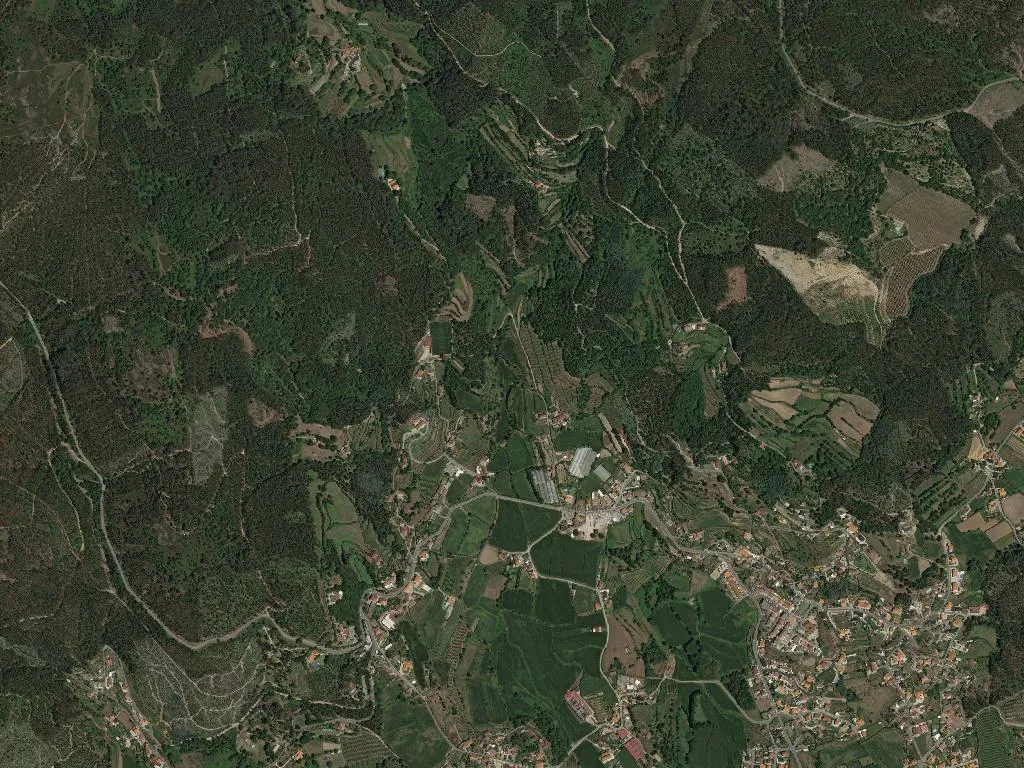
Longos unfurls for exactly 250 m of altitude, a single-file village that honours its Roman name, longus. The settlement was formalised under Manuel I, yet the ridge was tamed earlier: medieval smallholders terraced the slopes, trained vines overhead and dotted the lanes with stone shrines. Inside the national-monument church, a rococo gilded altarpiece catches the side light and turns it into slow-moving amber; the nave is only four pews wide, so silence feels almost upholstered.
Calendar of rites
On the second Sunday of May the Romaria Grande redraws the map. A noon procession spills out under processional banners, Latin responses mixing with beeswax and resin. Afterwards, trestle tables appear loaded with toucinho-do-céu (literally “bacon from heaven”), feather-light papos-de-anjo and Longos’ own browned-cheese tarts—convent recipes that still use lard and sticky egg yolk, the sugar crystallised to a glassy sheet. Accordion and cavaquinho follow; couples spin under strings of coloured bulbs until the dew forms. Three weeks earlier, the Festa das Cruzes in neighbouring Serzedelo wakes the fields with a rocket salute and a priest sprinkling holy water on plough blades, an agrarian memo to the sky requesting measured sun and timely rain. In October the Festa do Pão drags wood-fired ovens into the square so crusts crack like thin ice and the crumb steams when torn.
Green wine and Barrosã beef
Inside low, slate-roofed cellars the air is thick with fermenting Jaen. The barrels are family property, not supermarket stock; ask Zeca “do Café” for a bottle to go and he’ll laugh himself purple. Posta barrosã—thick flank of the mountain cow—hits oak embers before it reaches the table; fat spits, smoke brings tears, nothing is rushed. Winter Saturdays start with cozido at dawn: Dona Rosa cuts kale while her husband chooses the smoked chouriço that has been dangling in the fireplace since Advent. Chestnut rojões owe their orange bloom to sweet paprika that arrives from Vizela in paper bags that bleed rust on to fingertips.
Between the Vizela and the oaks
The Longos footpath begins where the parish tar ends. The first climb threads dry-stone walls where wild parsley grows and children prize the first green peanuts of the year—soft, tasting of soil. On the ridge, Uncle Manel’s alvarinho oak carries an axe scar as high as a boy’s shoulder; he will tell you how his father taught him to pick the twist for a cartwheel. The Longos stream keeps up a cold, mossy mutter; on the hottest days women still carry laundry here, beating shirts against the same boulders their mothers used.
Living traditions
In the first week of January darkness drops before teatime and you hear the singers before you see them. The janeiras group always pauses at Dona Albertina’s gate; she has kept a honey cake since Christmas and they sing louder because they know she still remembers the verses her husband once led. The communal granary—built 1892, one of the country’s smallest—has its door lashed with wire; inside, a few forgotten cobs from 2021 wait for a grandson who never got round to grinding them.
When the romaria lights go out and the square empties, the smell of melted candle stubs mingles with the lilies someone left at the foot of the cross. The Latin inscription is still there, illegible to most, cut deep into granite—like everything else in this long, narrow parish that has learned to endure.