Full article about Granite Echoes & Flowered Crosses of Moreira de Cónegos
Quarries scar blue stone, baroque altars blaze, pilgrims bleed knees—Minho’s soul carved here.
Hide article Read full article
The Echo of Granite
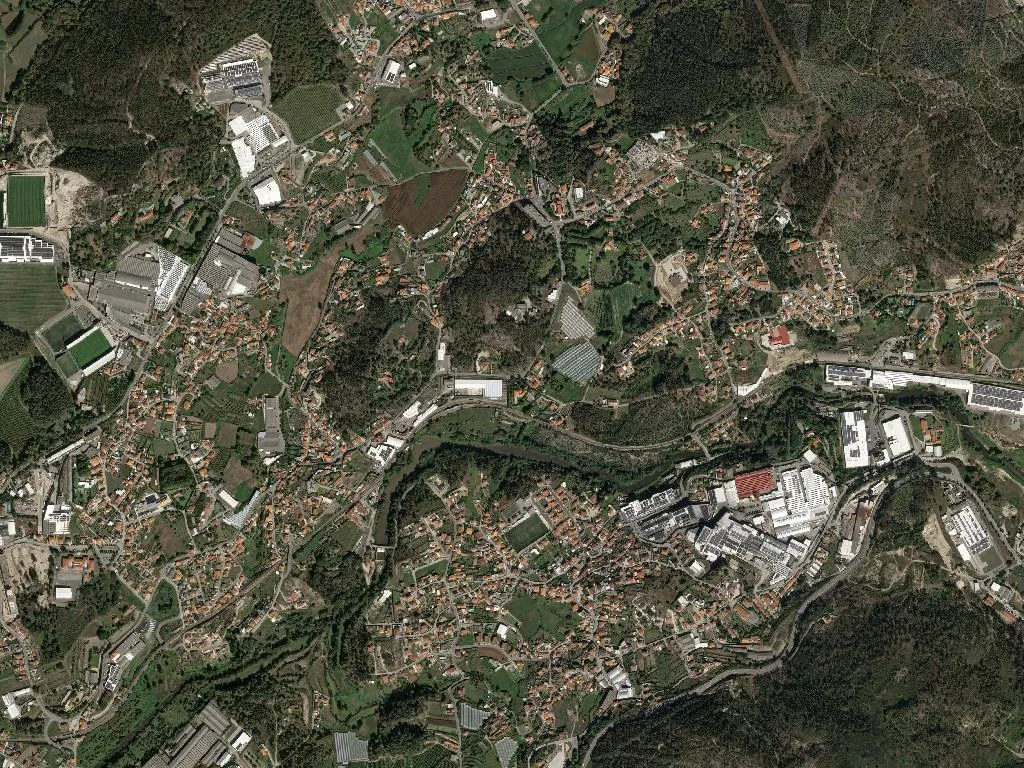
The sound arrives first: the pneumatic hammer’s flat crack against blue-grey stone, followed by a dense hush that pools between the quarry walls. Only then does the echo follow. Moreira de Cónegos inhales and exhales at the tempo of rock – that singular bluish tone masons recognise by touch, cold under the palm even in August. In the open-cast workings abandoned decades ago, rainwater has settled into jade mirrors where alder leaves drift like green coins. The granite that left here built the bridges, manor-house thresholds and roadside calvaries of the entire Minho. Extraction began in the nineteenth century; the landscape still wears the scars – geometric incisions, giant staircases blasted by dynamite, the pale dust that powders nearby garden walls.
Canons and Stonemasons
The place-name tells no lie. “Moreira” signals the alder groves that once lined the streams; “Cónegos” records the ecclesiastical estates clustered here. Carved out of Serzedelo in 1853, the parish grew around its sixteenth-century mother church where a gilded baroque retable flames against bare granite. In the tiny parish museum, wax and silver ex-votos – a leg, a heart, a pair of lungs – chronicle vows kept since 1870, each dated in spidery ink. Eighteenth-century São Torcato chapel, humbler and whitewashed, halts the pilgrims who climb barefoot or on bloodied knees from Guimarães; the stone still keeps their rust-coloured prints.
Eleven stone crosses pepper the parish, some listed for public heritage. Each May the Festa das Cruzes dresses them in archways of carnations, roses and marigolds that tremble in the valley wind. Women shoulder the flowered cruces, backs bent but gazes unflinching; men launch rockets that burst against a pewter sky, showering coloured paper onto terracotta roofs. Bombos and concertinas set the slow beat, while the smell of melted candlewax drifts into damp earth.
Thirty Thousand Pilgrims and a River of Promises
On the last Sunday of August the village swells beyond recognition. The Romaria Grande de São Torcato pulls in over thirty thousand souls – more than six times the resident population. From dawn they converge on foot from Guimarães and neighbouring parishes, shielding lit tapers with cupped hands. Café Central unlocks at 5 a.m. to pour the first galão for those who set out at four; Dona Alice’s bakery sells still-warm padres-de-novena – lardy anise rolls that taste of Christmas in high summer. By noon, cavalhadas kick up ochre dust: horses groomed with red-and-yellow ribbon, riders in hand-embroidered boleros whose mothers stitched every swirl. Nervous whinnies answer the midday rockets.
Night brings a kilometre-long fair: comes-e-bebes, rag-doll stalls dressed in chintz, pimba music at full tilt. Fat smoke from roasting kid and chestnut-glazed chouriço hangs in the air until dawn; people dance on stamped earth as though the world might end before Monday.
Beef, Stone and Vinho Verde
In the tascas, Barrosã DOP beef arrives as scarlet cubes dusted with sweet paprika, punched potatoes and sarrabulho rice thick with pork blood. The bacon dissolves on the tongue, leaving a ghost of oak-smoke from kitchen hearths. At O Cónego, Sunday chanfana – goat braised in red wine and bay – has been breathing from clay pots over embers since eight o’clock; the scent ambushes passers-by. Vinho Verde from the Guimarães sub-region, poured in thick ceramic mugs, slices cleanly through the fat. Over broa-dunked caldo verde, men argue about Moreirense FC’s midfield and whether the new quarry wire-saw is worth the outlay. Dona Lurdes, wiping thirty years of glaze from her fingers, still enquires “Mais um golinho?” before tilting the jug once more.
Trails Between River and Rock
The São Torcato footpath loops five kilometres between chapel, disused quarries and the Ave. Cart-wheel ruts scored by oxen hauling granite blocks score the baked soil – some deeper than others, dictated by generation upon generation. Restored water-mills spin again, largely for show, yet miller Joaquim lets children run flour-dusted hands over the wooden gears. The river slides quietly between alders and willows; September brings bramble-heavy banks that tint young tongues purple and shirts torn on thorns.
Higher up, terraces alternate vines with maize; the wind carries the sweet reek of fresh manure and ripening grapes beginning to swell.
At dusk, when the active quarry powers down, silence returns. Only the Ave’s murmur and the mother church bell – three leaden seconds of resonance against the blue granite – mark six o’clock. Children sprint home before mothers call supper; old men play sueca under the plane tree, tallying impossible scores over glasses of aguardiente no one ever quite counts.