Full article about Nespereira: where vines stitch granite into morning light
Tiny walled estates, a 1720 chapel, sarrabulho scent drifting from Barrosã logs
Hide article Read full article
The bell that measures the day
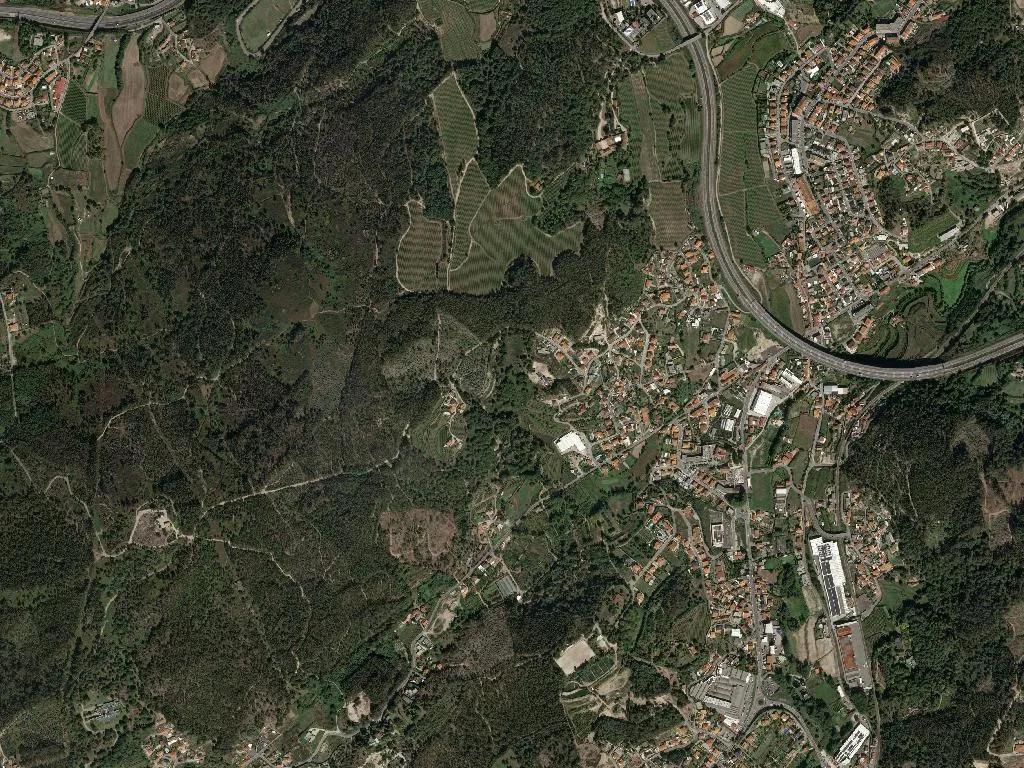
At nine sharp, the bronze of São Miguel’s single bell spills over the vineyards of Nespereira. Sun has already drawn the chill from the granite, yet dew still beads the vines stitched into pocket-handkerchief plots. The note rolls across 368 hectares, slips through loquat orchards—nespereiras that probably christened the place—then dissolves where oak meets chestnut on the ridge. At 254 m above sea-level, the Minho countryside is not décor; it is the village bloodstream.
A geography of small estates
Centuries of partible inheritance have sliced the land into ribbons no wider than a terrace. Granite walls the colour of weathered linen keep the neighbour’s vines from the maize, the cabbages from the poultry run. Walk the dirt lanes and you tread a living patchwork: every square belongs to someone who can name the grandfather who last rebuilt its wall. The gradient is gentle enough for a plough drawn by a 55-year-old David-Brown tractor, yet tilted just enough to let winter rain drain fast—perfect for the loureiro and arinto grapes that become Vinho Verde.
Stone that recites centuries
In the hamlet of Poupa, the chapel of São Simão has stood since 1720, its limewash blinding against grey granite door-jambs. Inside, the air is thick with the hush of a family oratory: one altar, two pews, light entering through a slit no wider than a hand. A kilometre away, a manor house begun as a 15th-century tower-house was gentrified in the 1700s with sash windows and a sober Baroque coat of arms. The thickness of the walls—almost a metre—tells of medieval defence; the elegant voussoirs announce Enlightenment confidence.
Deep-Minho on a plate
On cold mornings, the smell of oak logs meets steam from copper pans of sarrabulho rice. Barrosã beef, DOP-protected and reared on the high mossy pastures north-east of here, arrives as nuggets of shin dusted with sweet paprika, crisped in lard with new potatoes. In the smoke-houses dangling from ancient eaves, chouriço and salpicão cure for six weeks over oak embers, acquiring the glossy skin and whisper of resin that no restaurant smoker can fake. The local white Vinho Verde—poured in small glasses kept chilled in the well—cuts the fat and primes the palate for the next wave of pork, liver and cinnamon.
A feast that stitches generations
On the last Sunday in September, the parish forgets its post-code. The brass band strikes up outside the mother church, the statue of St Michael sways on young shoulders, women follow with candles guttering in the breeze. In the square, chestnuts pop on sheet-iron pans beside hot filhós doughnuts. Folk groups in scarlet waistcoats stamp out vira reels; clog heels beat time on cobbles polished by centuries. Between the 294 teenagers and the 541 over-seventies, every generation is present, sharing the same memory bank and the same plastic cup of beer.
Ties that cross borders
Since 2013 Nespereira has been twinned with Royère-de-Vassivière, a village of 650 souls in the Limousin. Ten years of school exchanges, embroidery exhibitions and veterans’ football have followed. Civic participation here is not abstract: turnout at council elections is routinely fifteen points above the national average. As José Lameiro, 71, puts it while mending a wall, “Missing the parish assembly is like missing mass—you’d better have a doctor’s note.”
When the sun drops behind the chestnut ridge and cool air rises from the Ave tributary, the bell sounds once more. Neither summons nor curfew, it is simply a promise that tomorrow someone will open the quinta gates, taste the new wine, light the smoker. Continuity needs no advertising hoarding here.