Full article about Ponte, Guimarães: Coffee steam over Minho valley vines
Granite lanes, backyard muscatel and café gossip where Guimarães fades into farmland
Hide article Read full article
Ponte, where Guimarães still keeps country hours
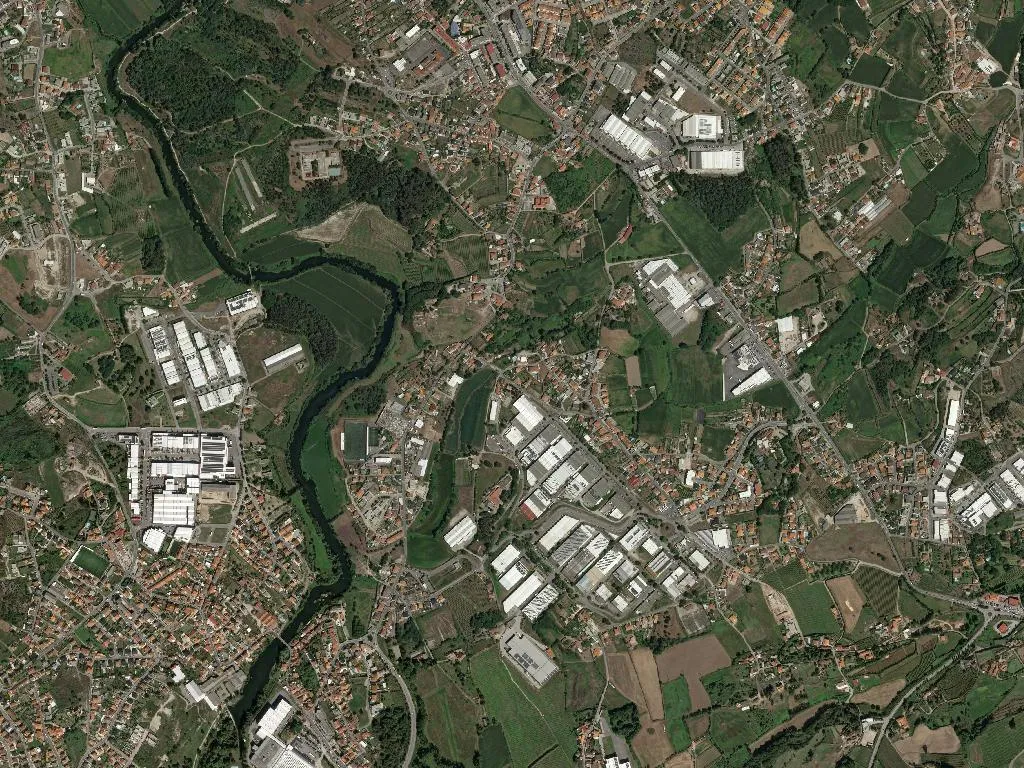
The soundtrack arrives before the scene: an “Empresa Hórus” bus hissing to a halt on the EN206, the scrape of a plastic fruit crate across the forecourt of Mini-Mercado “O Padrão”, the soft slam of the Café Latino door. Ponte wakes like this, without ceremony, on an ordinary Tuesday. Low morning light slides over the terracotta roofs of Rua Dr. José Sampaio—altitude a modest 117 m—and the air carries the cool, damp breath that belongs only to this wrinkle of the Minho valley. Six hundred hectares of parish are squeezed between the lane to São Torcato, Sr António’s granite backyard wall (eggs sold from a bucket by the gate) and vineyard plots combed as tight as teeth. With 6,687 inhabitants packed at more than a thousand per square kilometre, Ponte is neither village nor city. It is the coffee served at the Sporting social club—neither Porto’s espresso nor the countryside’s café pingado, but enough to steady the day.
Granite, whitewash and the accretion of living
Walk here and you realise the place grew by accretion, not design. Waist-high walls of grey granite, blackened by January-long damp, hem gardens where vines still climb rusted wire strung between concrete posts. Ponte sits inside the Vinho Verde demarcation, yet the region’s identity shows less in show-piece wineries than in the stacks of wicker baskets outside Sr Albano’s gate, in the smell of wild grapes bursting on your mother’s stove for muscatel. This is wine without an enotourism script—poured in the Tasco da Boa Esperança in chunky tumblers that Zé Manel hauls over from Casteleiro, no tasting notes, no label.
Proximity to Guimarães’ UNESCO-listed historic centre gives Ponte a singular vantage point. It is not the stage, it is the prompt side—like the splash of olive oil your grandmother added to soup: not the dish, yet missed when absent. The parish church of São Torcato, twin bell towers visible from the EN206, shares in that heritage by osmosis—stone, floor plan, the 18 h habit of collecting bread from the village oven.
Calendar rippers: the parish’s two big bangs
Two dates puncture Ponte’s quiet and haul it into the open. The Festa das Cruzes (28 April) drapes the streets with flower-laden arches that compete for height against the Praça da República fountain; rockets leave a gunpowder scent that clings to winter coats like Aunt Albertina’s perfume. Three weeks later the Romaria Grande de São Torcato (21 May) ups the ante: procession pushed uphill along Rua da Igreja by Dormir’s brass band, wax candles dripping onto devotees’ fingers like butter on cornbread. These events are not watched; they are inhabited. Feet blister on the walk down from Caldelas, fingers grease up on grilled pork belly at O Grelhador do Arnaldo, and Quim Barbeiro’s concertina threads its way through the clatter of Maximiano’s fun-fair rides.
Barrosã on the plate, village on the table
Barrosã beef, a DOP-protected breed, is less a label here than a letter of introduction. The meat appearing at Adega do Albertino is raised two hours away on the high plateaux of Barroso, yet finds its most loyal crowd in Ponte—rather like Benfica playing Lisbon, only with more justification. Firm texture, ox-blood ruby, intramuscular fat that melts across the cast-iron grill at Tasco do Tonho: a ritual performed without flourish, the way some cross themselves before eating. You eat well because the raw material is serious—animals the local vet calls by name.
Young, old and the almost-balanced ledger
The 2021 census tells a quiet story: 972 children under fifteen, 1,065 residents over sixty-five—a gap of barely a hundred, the statistical equivalent of a marital stand-off over school pick-up. It is the Minho’s familiar demographic seesaw: slow ageing while the primary school on Rua da Misericórdia still floods with chatter each morning and the playground on Rua do Calvário squeaks at dusk like a budget-hotel bed. Ponte survives in that fragile equilibrium, dense enough to keep services alive: a Pingo Doce supermarket, Dr Manuela’s pharmacy, the newsagent where you buy Monday’s Record and linger to argue about yesterday’s nil-nil.
Only three registered lodgings—Casa do Fontão, Quinta do Além, Casa da Ribeira—suggest that visitors are not after corridor hotels or pool-and-spa resorts. They want a house with walls a forearm thick, a window framing a lemon tree like Sr Joaquim’s on Rua das Hortas, the relative silence of a back road where dogs bark once at the postman then return to their shaded siesta.
Departure tax: the smell you can’t bottle
There is a moment guidebooks can’t sell and Instagram can’t filter: late afternoon when the light shifts from milky Minho white to a viscous gold that stains the granite on Rua Nova the exact colour of the only coffee Sr António at Café Central ever gets right. Vine trellises cast drawn-out shadows across the cobbles of Rua de Santa Maria, and somewhere in a kitchen off Rua do Lombo Maria Alice strikes a match under the soup. The scent of shredded kale and boiling potatoes slips through a cracked window, mixing with a neighbour’s cigarette smoke. That is Ponte’s parting gift—nothing grand, nothing performative, yet so precise that months later, eyes shut in a Lisbon pastelaria, you catch it again at the tip of your nose and find yourself ordering a perfectly pulled minho, homesick for a place you never actually lived.