Full article about Ronfe: Where São Torcato’s Three Rings Still Rule the Valley
Ronfe in Guimarães keeps its 13th-century stone crosses, vineyard terraces and local festivals free of pilgrim crowds—experience a living Minho village.
Hide article Read full article
Three Rings from São Torcato
The bell of São Torcato tolls three slow strokes across the fields of Ronfe. Sound drifts without hurry through the low Ave valleys, glances off vineyards stacked in uneven terraces, and ricochets from granite wayside chapels. At only 122 m above sea level—neither plateau nor plain—this medieval parish still obeys the cadence the land dictates: vines that ripen at their own pace, cattle that graze the lower slopes, festivals that repeat because they always have.
Stone Country
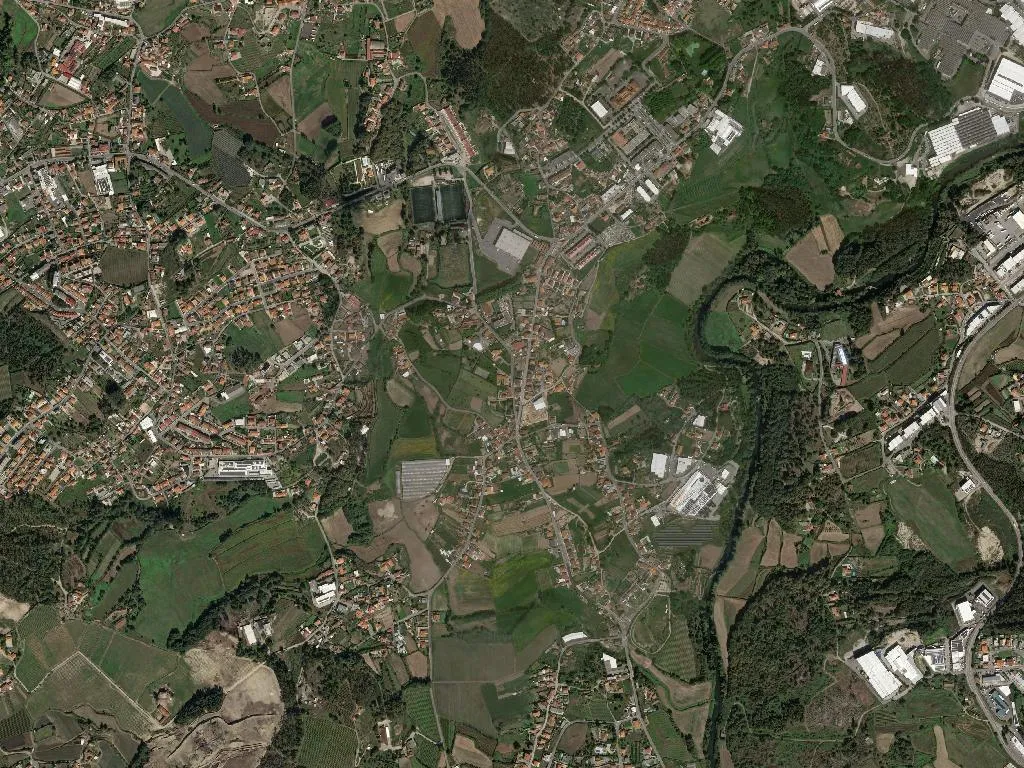
First recorded in the 13th century, Ronfe stretched across the alluvial flats of the Ave as Guimarães pushed its agriculture westward. The name probably comes from the Latin runcio, meaning both watercourse and small hill—usefully vague in a landscape where the Ribeira de Ronfe scribbles damp little valleys between ploughed rigs. The parish church anchors the view with a hulking mass of grey granite. Around it, stone crosses and miniature chapels punctuate the lanes: the 17th-century Cruzeiro de Serzedelo, granite shrines smothered in moss, manor houses whose doorways have been shouldering Atlantic weather for four centuries.
Nowhere near Santiago
Ronfe is one of the few parishes in Guimarães that no official Camino de Santiago enters. The omission has shaped a self-contained identity, tuned to its own calendar rather than to the pilgrims’ drum. The year pivots on two events: the Festa das Cruzes de Serzedelo in May, when processions trace the same cart tracks used by grandfathers, and the Romaria Grande de São Torcato in July, complete with concertina-led folk groups and smoke from open-air pork-fat barbecues. Outsiders are welcomed, but the script stays local—no souvenir stalls, no way-marked detours, just the parish council erecting a canvas awning and someone’s uncle pouring vinho verde from a plastic jug.
Looms, Barrosã beef and convent sweets
Until the 1950s Ronfe sustained a small colony of hand-loom weavers who turned regional wool into rough blankets. The looms fell silent, yet the taste for local raw material survived. Carne Barrosã DOP—chestnut-coloured, slow-maturing cattle—now appears on every table. Order rojão à minhota and you get nuggets of shoulder marinated in smoked paprika and garlic, flash-fried until the edges caramelise. The same beef is simmered for cozido à portuguesa, its fat skimmed just enough to leave the fork-tender shin gleaming. Between courses, a glass of lightly sparkling vinho verde from a neighbour’s quinta cuts through the richness; afterwards, a slab of toucinho-do-céu—“bacon from heaven”—channels the egg-yolk excess of nearby convents into a dense, saffron-coloured slice.
Vine rows and willow bends
Ronfe’s countryside is not spectacular; it is serviceable, lived-in, domesticated. Corn plots give way to vines trained on granite posts, then to pocket-sized oak woods. The stream meanders through willow and bracken, water sliding over moss-covered granite. There are no nature reserves, yet a 40-minute footpath to the hamlet of Serzedelo delivers unfiltered rurality: cow-track lanes, knee-high walls heaved together without mortar, the blackbird’s fluted call the only soundtrack.
With almost 900 inhabitants per km² you might expect congestion, but the 4,496 residents are scattered among small clusters called casais, each with breathing space. When São Torcato’s bell sounds again, the note travels the same valleys, finds the same ears. Ronfe answers the way it always has—slowly, deliberately, certain of the precise weight of stone and the exact week the grapes will be ready.