Full article about Dawn fog over Sande São Lourenço e Balazar’s granite vines
Iron-Age ramparts, baroque bells and loureiro grapes ferment in shale-scented air
Hide article Read full article
The Ave Valley, 07:30
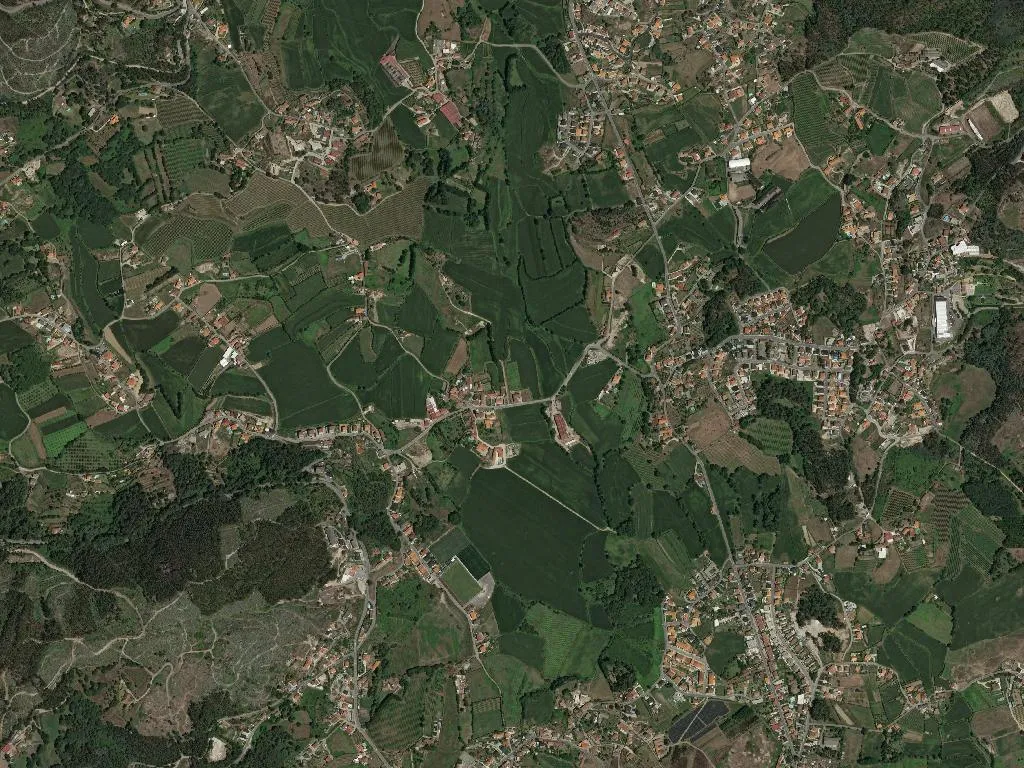
The bells of São Lourenço ring at half past seven, their bronze pulse rolling over trellised loureiro and arinto that still wait for the pickers. October fog thickens between the rows; in Sande and Balazar the first shale fires are lit, scenting the air with damp wood and the sweet note of corn bread crisping in clay ovens.
Granite Roots
The civil parish of Sande São Lourenço e Balazar was formalised in 2013, yet a 1220 charter already lists “Sandi Sancti Laurentii” among the holdings of the Sancada family. Balazar surfaces later, in 1258, as “Balazario”—a name local historian Father Américo Monteiro tentatively linked to the Latin “Balasarius” in 1956, though the evidence remains speculative.
Above the modern village, the Iron-Age hillfort of Sabroso crowns a 210 m ridge. Excavated in 1916 by Virgílio Correia, the site yielded Campanian A tableware and a small altar to Bacchus now displayed in Guimarães’ Museu Alberto Sampaio. Ramparts 2.4 m thick still trace an oval 180 × 120 m, their stones silvered by lichen.
Inside São Lourenço church, a gilded baroque retable carved in 1734 by José Álvares de Passos faces a 1712 azulejo panel by Friar Luís de Jesus recounting Lawrence’s martyrdom. Balazar’s side altar shows a 1747 Saint Bartholomew signed by António Gomes de Sousa—the same hand that worked in nearby Rendufe. The porticoed chapel of Santa Ana, listed in 1978, once sheltered muleteers descending from the Cabreira with pack-salt.
Grapes and Pilgrims
Forty-two hectares of vineyard fall within the Vinho Verde demarcation. At Quinta da Cancela—its land register dated 1693—18,000 bottles of loureiro were produced in 2022. The granite lagar still bears the date 1874 on its lid; inside it, grandchildren of the original pressers now tread. In 2018 Ana Cardoso, the founder’s great-granddaughter, opened six spare rooms to paying guests, yet the winery door remains the simplest point of sale: €4.50 a bottle, €6 if you choose the label drawn by illustrator Rui Gonçalves.
The Romaria Grande de São Torcato gathers on the Sunday closest to 25 July. At nine o’clock the procession leaves Sande, climbs the municipal road and halts at an 1892 stone cross where the priest sprinkles holy water over rosaries. The village band—founded 1887—strikes up Eduardo Correia’s 1951 hymn. By one o’clock 1,200 sardines turn on skewers of arbutus wood in the old schoolyard; the makeshift bar charges €1.50 for a mug of white wine and lets you keep the crockery for another €2.
May brings the Festa das Cruzes of Serzedelo (no relation to Barcelos’ larger spectacle). On the Saturday before the third Sunday, ten roadside crosses are dressed with wild poppies and Santa Bárbara roses by boys turning eighteen. The cross on Rua do Meio took the €150 prize offered in 2019 by the local folklore group “As Camponesas de Sande”, founded 1974.
Barrosã on the Table
Wednesdays mean cozido at O Lagar restaurant: Barrosã DOP beef, fennel from Dona Alda’s garden, Balazar blood sausage with rice (producer Manuel Mendes & Filhos) and oak-smoked belly from the Cabreira. The accompanying yellow corn bread is milled 3 km away at Valbom on volcanic stone. Dessert is bolo de São Torcato—yeasted dough enriched with twelve yolks, doused with 60 % grape spirit and capped with burnt sugar. Sister Escolástica, born in Sande, surrendered the recipe in 1952.
Footpaths through the Vines
The Caminho de Santiago de Sande a Balazar, certified in 2014, threads 5.4 km between the two villages. Yellow waymarks coded PR2 GMR lead from São Lourenço’s churchyard (149 m), over an 1783 granite bridge across the São Lourenço stream, and up to Balazar’s plateau at 195 m—an hour and a half with views of the A7 viaduct carrying traffic to the coast. The oak grove edging the Castro de Sabroso is priority habitat for the great capricorn beetle, listed in Annex II of the EU Habitats Directive.
At dusk, when the co-op tractor rattles back from the cellars, gulls still follow the Ave toward the Neiva estuary. In Bar O Cantinho, open since 1983, a glass of vinho verde remains 80 cents and the proprietor’s refrain is unchanged: “You don’t pay for the view—you pay for what’s in the bottle.”