Full article about São Faustino: Granite Silence Above the Ave Valley
Morning bells echo through 16th-century lanes where Barrosã beef crackles on wood-fired grills.
Hide article Read full article
The metallic chime of a distant bell ricochets off granite, then the slow scrape of boots on cobbles. In São Faustino, 272 m above the Ave valley, morning arrives without haste: a hinge shrieks, water trickles into a vegetable row, a single dog keeps half-hearted watch. September light slides across stone façades, reheating the chill left by night.
A parish reclaims its name
One of Portugal’s rare dedications to the 2nd-century martyr-saint Faustinus, this parish was first recorded in the 16th century as “São Faustino de Vizela”, a scatter of smallholdings orbiting a chapel. For four centuries the economy never strayed from the soil—maize, vines, cabbages fattened by mountain run-off. Annexed in 2013 to the union of Tabuadelo e São Faustino, the settlement will regain independent status in 2025, restoring official identity to its 1,207 residents.
Stone, lime and low voices
The parish church, built 1892, is textbook Minho rural: whitewashed bulk, a single modest belfry, no gilt baroque excess. Beside it, the original 16th-century chapel—one nave, granite block, altar framed in blue-and-white 18th-century tile—still hosts the annual blessing of the fields. Around them, granite houses with wooden balconies guard stone granaries slit for ventilation; low walls enclose plots of Portuguese kale and climbing beans. Guimarães town hall has added a leisure park—picnic tables, multisport court, signposted walks—yet at dusk the space empties quickly; conversation drifts back indoors to kitchen hearths.
Tastes that stay
Order grilled posta barrosã—thick loin from the DOP-protected long-horn cattle that graze the upland commons—seared until the exterior blackens and the centre stays rose. A cast-iron pan of cozido à portuguesa follows: the same beef, plus hand-stuffed salpicão, rice blood pudding and oak-smoked chouriço. Cornbread, baked in a wood-fired oven, arrives with a crust that cracks under the knife and a dense crumb perfect for mopping caldo verde. Wash it down with a tumbler of slightly spritzy Loureiro vinho verde that cuts through the fat. On feast days, plates of toucinho-do-céu—bright-yolk almond custard—appear from recipe books borrowed nearby Braga’s convents.
Festivals that knit generations
25 January, Saint Faustino’s vigil: dawn mass, procession through lanes too narrow for anything wider than a tractor, then an arraial of grilled sardines and touring brass bands. In June the parish hires a cattle truck to ferry musicians to Guimarães for the Romaria de São Torcato, whose 12th-century shrine draws thousands. July brings the Festas das Cruzes in neighbouring Serzedelo—fireworks reflected in the Ave, traffic backed up to the N206—yet São Faustino itself stays quiet, content to supply choristers and homemade wine.
Between fields and ridgelines
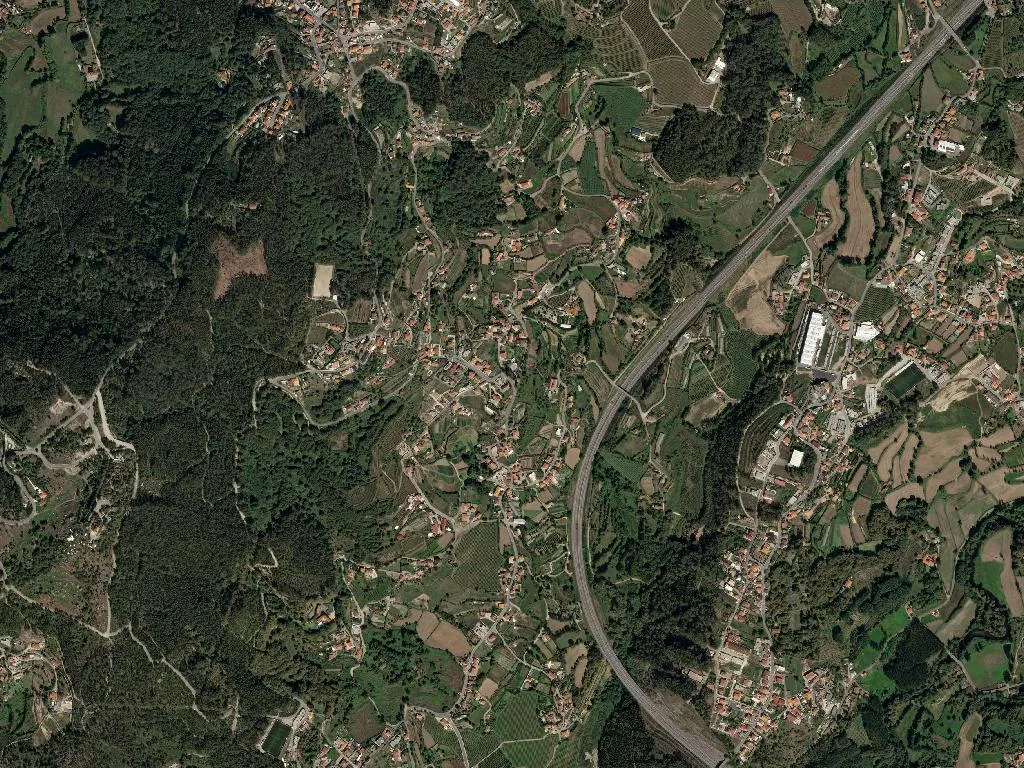
The land terraces gently: alluvial valley maize, mid-slope orchards of orange and persimmon, pockets of native oak on the crest. Unmarked footpaths climb toward the Penha ridge; from the top you can clock Guimarães’ granite towers and, beyond, the textile chimneys of Vizela. The parish sits just off the official coastal Camino de Santiago, so walkers with scallop shells are rare; silence is broken only by the creak of a hay baler or the whistle of a red-legged partridge.
Evening: granite turns amber, wood-smoke threads upwards, someone clatters home a gate. Hold the still-warm broa, smell damp earth on your fingers, overhear a neighbour’s television through an open shutter. In that hinge-moment between day and night, São Faustino needs no further explanation.