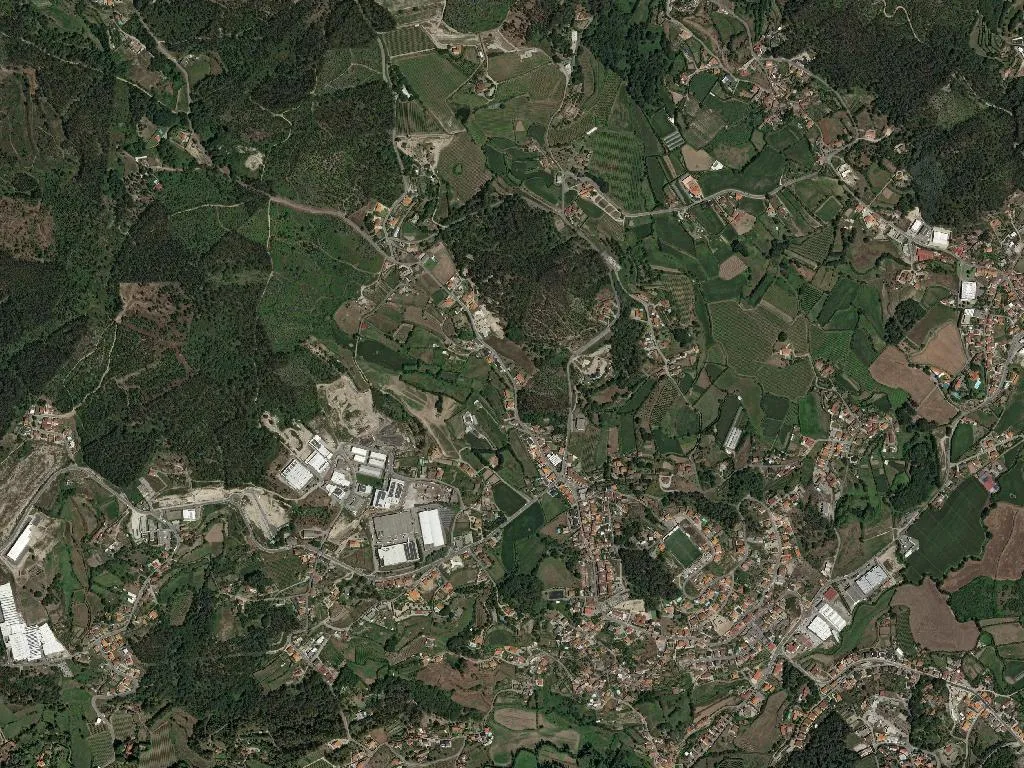
Full article about União das freguesias de Selho São Lourenço e Gominhães
Walk Guimarães’ hidden parishes: hear noon bells echo down gorse-lined Selho, taste paprika-cured rojões, play bisca on 12th-century granite.
Hide article Read full article
The bell at noon
The bell of the parish church strikes twelve and its roll tumbles downhill, snagging on gorse before it expires in the water. This is not “the Selho valley”; it is simply the Selho, still a stream at this point, sliding between ash trunks and granite slabs where shoe-less children practise catching lampreys with their bare hands. The scent is precise: green-olive smoke curling from Dona Aurora’s bread oven, the same chamber that baked yesterday’s loaves for the village procession and today cradles the usual kid goat.
Gominhães: a name no one translates
Scholars mutter about a Visigoth called Gumilan, but what you hear on the street is the surname Carvalho spoken at every corner. Two churches and five chapels are not statistics; they are doors opened according to need—Our Lady of the Conception for the harvest, Saint Sebastian for rain, Nossa Senhora do Socorro for homesickness. In the churchyard of the hill-top Castelo a Romanesque capital does duty as a bench for old men playing bisca in the shade. The granite granaries no longer store maize; they keep spades and the memory of those who left for France in TAP flight bags.
Selho, the invisible border
The bridge is not “medieval”—the stone says 1797—and its single arch is just wide enough for Sr Albano’s Massey Ferguson and his trailer of Barrosã cows. The water beneath is the council frontier: right bank Guimarães, left bank Póvoa de Lanhoso, where water rates are lower. Four kilometres of tar patched like a quilt lead to São Torcato, scented with manure and, occasionally, the thud of a blackbird against the windscreen. At the lay-by you’ll find a crushed Super Bock can and, yes, a view of the Serra da Penha—plus the concrete plant the town hall promised to screen with eucalyptus that never quite arrived.
Feast-day leftovers
Rojões is not a restaurant special; it is what remains of the pig killed in December, kept alive in salt and colour-bright paprika until August. During the Festa das Cruces (Festival of the Crosses) grandmothers carry camellias from their gardens in procession while grandsons shift hash from the shadows of canvas stalls. The fireworks at São Torcato send Adélio’s dog bolting up the mountain and the sheep scattering. On 10 August São Lourenço’s mass begins at eleven sharp, not noon—the priest must lunch in Vizela. Afterward you will be offered sarrabulho, but only the version from Dona Lúcia’s pots: two-day-old water bread and streaky pork “because the fat is where the flavour lives”.
Altarpiece: what you really see
The gilding on the high altar is peeling on the right, exactly where the sacristan’s finger lands when he tells you “that’s from the earthquake of ’41”. A candle still costs fifty cents, coins destined for the roof that drips on the second row of pews. Saint Lawrence clasps the iron grill the sacristan forged in technical school before sailing to Angola. In the side chapel a borrowed chainsaw leans against the wall—tomorrow it will tackle the pine that fell across the cemetery and no one wants to pay the parish council to remove.
By the bridge three concrete tables and an overflowing bin constitute the picnic site. The corn bread arrives warm from Gominhães, spread with factory butter because the farmhouse churn no longer pays. The wine is last year’s white, faintly corked from too many months in the lagar. Time keeps the rhythm of the river: after rain it carries away the vegetable patch; in drought it reveals the tins the old women pitch from the parapet.