Full article about Serzedo: Bell-Echo Views Over Minho Vineyards
Terracotta roofs, granite walls and butter-rich Barrosã smoke in Guimarães’ quiet hill parish
Hide article Read full article
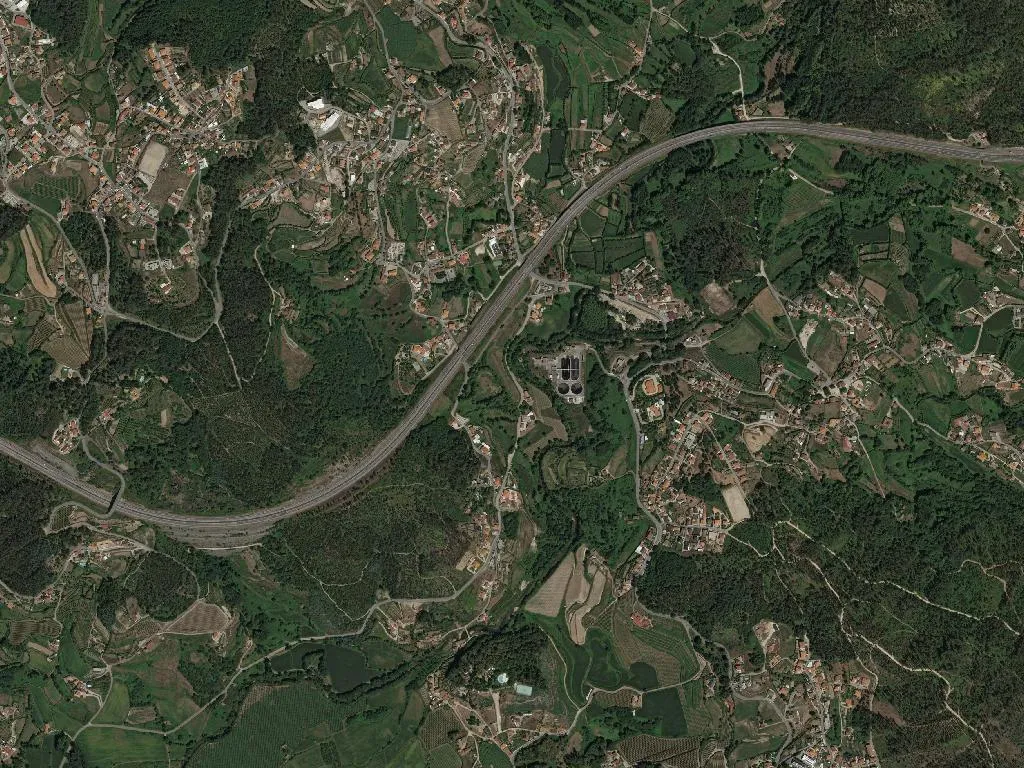
The church bell counts the hours over terracotta tiles that ripple downhill until the vineyards meet the River Ave. From 160 m up, Serzedo’s knoll gives a cartographer’s-eye view of the Minho: granite walls stitching together smallholdings, rye-coloured ox-ruts baked into the earth, and rows of loureiro vines trained so low they look like green stitches on brown tweed. Afternoon light flares off whitewashed walls; the only sounds are a murmured conversation at a gate and the bass-note bark of a farm dog echoing across the valley.
Between the cradle-city and the land that endures
Two hundred and forty-six hectares are shared by just 1,132 souls—barely five hundred per square kilometre—yet the parish feels neither empty nor museum-frozen. One hour lies between the furthest farmhouse and Guimarães’ UNESCO-listed centre, close enough for commuters, far enough for the scent of pine resin to arrive before diesel. The 2021 census shows an almost perfect split: 160 children under fourteen, 166 residents over sixty-five. On weekday mornings the lane to the N206 fills with hatchbacks heading to engineering plants and design studios, while those who stay behind tie their vines to the lower wires of the pergola, training next summer’s Vinho Verde.
Mountain flavour on a Minho table
Barrosã beef, trucked down from the Trás-os-Montes highlands, is seared on open-air grills at Christmas and Feast days, its fat flaring onto the embers so the smoke itself tastes of butter. The rest of the year the kitchen tempo is slower: cast-iron pots of paprika-darkened feijoada that bubble while neighbours trade cuttings of mint across the wall. There are no tasting menus; you eat what the family eats—perhaps a slice of broa still warm from the wood oven, cracked open so the corn aroma mingles with the fermenting tinta in the cellar.
A calendar measured in processions
May’s Festa das Cruzes—originally a plea to end medieval drought—still halts traffic as banners climb from the church to the cruceiro, the granite calvary that has marked the village bounds since 1623. Bigger still is the Romaria de São Torcato, when the silver-capped relic of the 7th-century hermit is shouldered through the lanes, escorted by brass bands and barefoot penitents. For 48 hours Serzedo becomes the magnetic north of regional devotion, its normally silent bell tower ringing in triple time.
Everyday life without a stage set
Only one registered dwelling offers beds to strangers; the rest of the hospitality is spontaneous—an offer of espresso made from robust beans bought in Braga market, directions given with a palm drawn across the dust to map the footpath. Walk east and you meet the Roman road that once carried gold from the Limia mines to Bracara Augusta; walk west and you reach the oak whose girth is measured in arm-spans by every generation of schoolchildren. Somewhere between them you realise that Serzedo keeps time not by Instagram moments but by the slower pendulum of seasons: the first press of grapes, the last leaf of chestnut falling on the threshing floor, the moment the Ave plain disappears into Atlantic dusk and the bell, once more, tells you it’s late enough to head home.