Full article about Tabuadelo: Dawn Bells Over Granite Roofs
Tabuadelo, Guimarães: granite ridge village where Roman-named plateau, floral-cross fiestas and oak-smoke broa meet.
Hide article Read full article
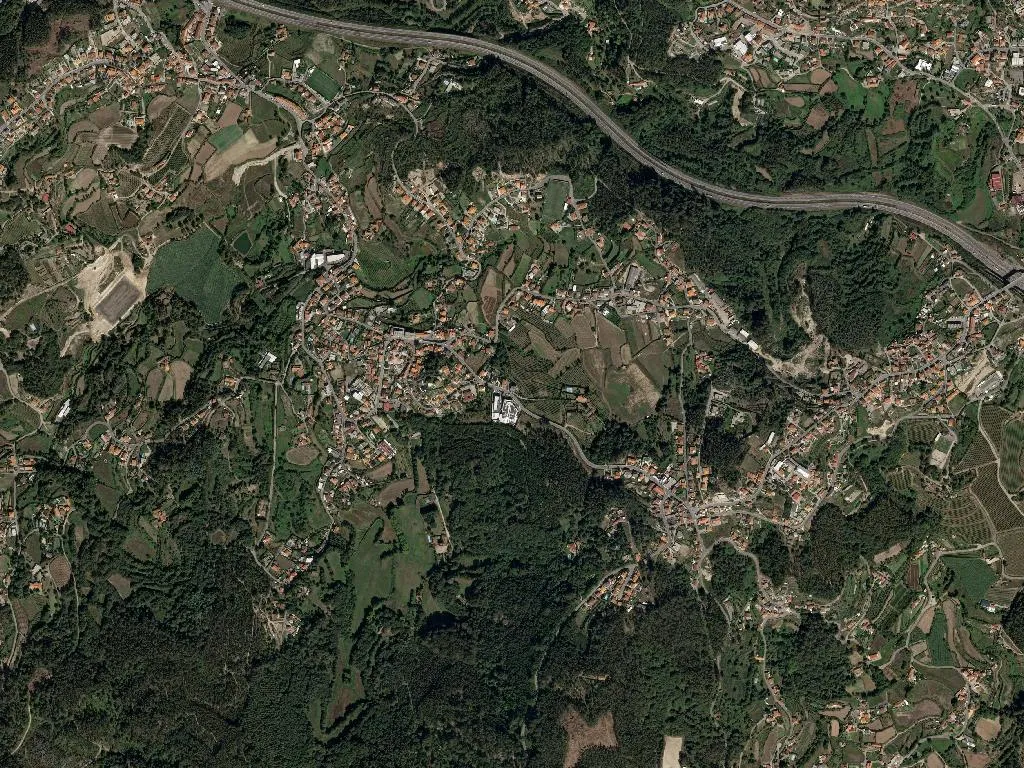
The bell tolls before anything else – a low bronze note slicing through the dawn haze that still clings to the granite ridge of São Torcato. At 374 m above the Ave valley, Tabuadelo sits on a wind-scoured tableland where red-tiled roofs are laced together by waist-high walls of stacked schist. Narrow lanes carry the scent of newly split oak and the darker perfume of corn-and-rye broa just out of the wood-fired oven, its crust cracked open by hand, never a knife.
The plateau that named the place
Romans called a flat upland tabulatum; the village still answers to the echo. Chartered in the thirteenth century, Tabuadelo was early folded into the municipality of Guimarães when the abbey at São Torcato was granted the surrounding land. The parish church, recorded in King Afonso III’s 1258 inquest, began as a Romanesque-Gothic cell; eighteenth-century wealth clothed it in burnished gilding and blue-and-white tile panels that catch the late sun like fragments of sky. Beside it, a Manueline pillory – moved here in the 1800s – shares the square with a small 1700s chapel housing the warrior-saint’s image. Granite coats-of-arms on nearby manor houses map the families who planted themselves here while the County of Portugal was still arguing its right to be a kingdom. Below the village, a single-arch eighteenth-century bridge throws its reflection onto the slow water of the Serzedelo stream, moss bright as emerald.
Crosses, candles and chestnuts
On the third Sunday of May the Festa das Cruzes turns lanes into a procession of floral crosses: carnations, roses, marigolds wired onto wicker frames. Smoke from Barrosã-sausage grills drifts above accordion music. Fifteen August brings the Romaria Grande: an outdoor mass, the saint’s statue carried in procession, and a fair where Loureiro and Azal vinho verde is poured into thick glass cups. At Easter sunrise boys haul a tar-drenched "Facho" pole to the ridge, set it alight and shout away the last of the cold. Martinmas on 11 November is marked by magusto bonfires, chestnuts popping in the embers, and jeropiga – fortified must – passed from hand to hand while singers trade improvised couplets deep into the night.
Beef, wine and sponge
Barrosã beef, protected by its own DOP, rules the table: rib-eye seared over oak embers, pork cheeks stewed with paprika, tripe stuffed with smoked blood and herbs. The Portuguese boiled dinner arrives in deep terracotta, greens from the backyard plot swimming with chorizo and pig’s ear; roast veal still carries the smell of the hearth. In the only bakery, Tabuadelo’s sponge cake is sold warm, wrapped in brown paper, the crumb elastic and tasting faintly of orange zest. In attic storerooms, sealed clay bilhas once slung across donkeys on the dirt track to Porto now stand empty, museum pieces of a pre-asphalt age.
Mills, levadas and nightingales
The PR6 "Trilho dos Moinhos" circles seven kilometres through oak and cork to neighbouring Serzedelo, past stone watermills, mossy levadas and the Senhora do Monte lookout where the Ave valley unrolls to the granite bulk of Penha. Dawn is a competition between cocks and nightingales; by mid-morning the only sound is water slipping over the lip of a mill-race. Below Merufe, a granite tank fed by the stream invites a brisk plunge before breakfast. In September the communal vintage begins: barefoot treading in granite lagares cut straight from the bedrock, purple juice running down the channels while someone’s grandmother keeps the count in minho dialect.
Locals still shout "Ó marra!" across the street – a greeting said to have sailed home with nineteenth-century emigrants who worked in Morocco. When the tower bell strikes again at dusk, the note rolls over the plateau, loses itself among the gorse and broom, and carries with it every arrival, every departure, every loaf broken on this same wind-scoured height.