Full article about Covelas: Where the Bell Echoes Off Granite
Roman ridge village in Vinho Verde country, 406 souls, Loureiro wine & Barrosã beef.
Hide article Read full article
The bell and the hill
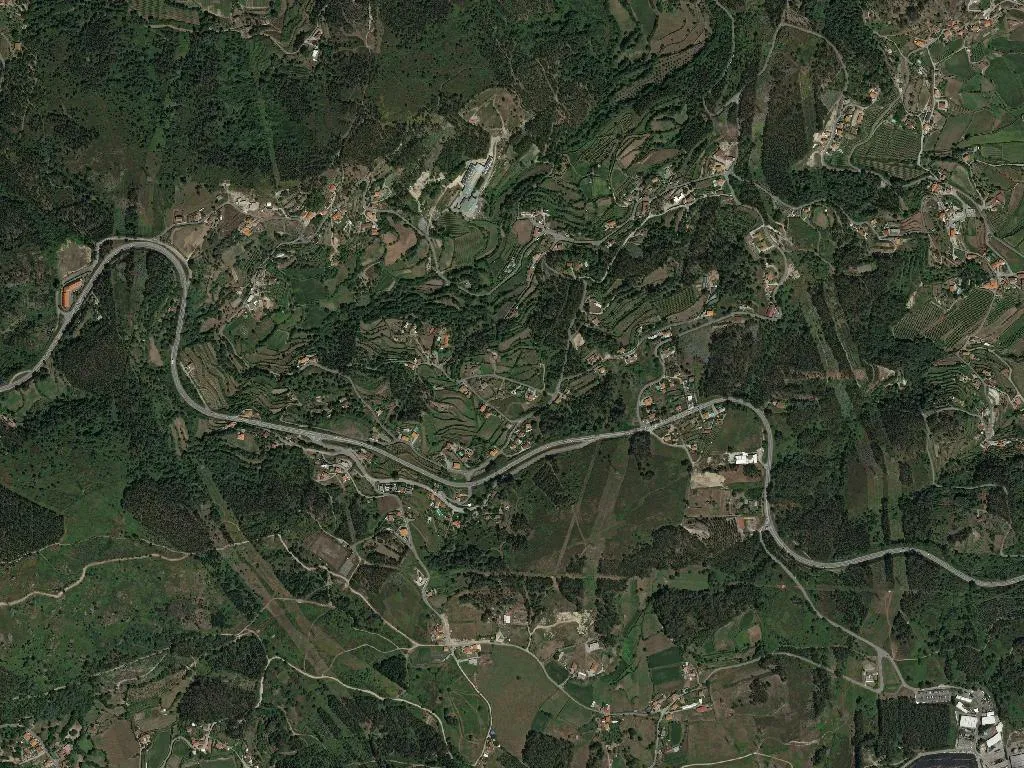
At noon the single bell of Igreja de São Julião fires its note over the ridge; the echo ricochets off whitewashed granite, then slips down the slope until the valleys swallow it. Covelas rides a crest 318 m above sea level—Roman surveyors called it cavella, a name still legible in the landform—and the Atlantic wind arrives a beat late, smelling of newly-turned soil and the faintest rasp of oak tannin. Less than three square kilometres contain the village: 406 inhabitants, three dozen cattle, 290 hectares of smallholdings and a network of footpaths only the parish council could map.
Saint on a plinth
The parish church sits dead-centre, a low-gabled rectangle limed the colour of fresh curd. No baroque tower, no blue-and-white tilework—just morning light bouncing off the walls with almost offensive clarity. Generations have polished the granite slabs of the forecourt to a dull sheen; look closely and you can still read the year 1897 scratched beside the south door. On the weekend closest to 19 March the Feast of St Joseph hijacks the square: butterflied sardines blackening over holm-oak embers, the local rancho folk band blasting brass that carries as far as Cancela crossroads, and white wine sloshing in plastic cups long before the procession starts.
Green wine, mountain beef
Covelas lies inside the Vinho Verde demarcation. The locals bottle only Loureiro, a grape that ferments into something pale, petillant and stubbornly adolescent—green apple skin and lime pith delivered with a razor-edge snap. In Zé’s tavern it is served in unglazed clay jugs that never see washing-up liquid—“spoils the wine,” the proprietor mutters. Barrosã IGP beef—dun-yellow fat, ox-blood flesh—trundles down from Vilar da Veiga every Wednesday in Alfredo’s pick-up. A quick hit of garlic, bay and cast-iron heat collapses the fibres into something that tastes of heather and mountain fog. For afters there is Júlio’s heather honey, dark as stout and scraped from hives hidden among gorse above the village; he commutes in a moon-suit, veil netted tight against bees that have never read the rules.
Small, but complete
There are no sign-posted trails, no thundering rivers—just the dirt track that climbs past Fonte da Moura where children fill yoghurt pots with wild strawberries in May. The 2003-approved coat of arms shows the very oak of Viso, a tree that once doubled as the village pub: men gathered beneath it with a bottle of bagaço to trade stories of wolves that still paw the outer pastures. A ten-minute drive north-west, Castelo de Lanhoso offers textbook medieval romance, yet Covelas refuses the stage-set treatment. The pleasure here is forensic: the hush between terraced houses, the sudden weight of humidity when evening fog unrolls, the tang of oak smoke drifting from Zeca’s bread oven, Dona Maria beating rugs at four sharp, and Sr Américo’s mongrel announcing each of the four daily cars like an unpaid sentry.
When the light thins, windows glow amber one by one, a Morse code that charts life on the hill. The bell sounds again—lower, slower—measuring not the hour but the density of the fading day.