Full article about Fonte Arcada & Oliveira: Time Kept by Bronze
Cornbread, 400-year olives and a spring that never dries in Póvoa de Lanhoso
Hide article Read full article
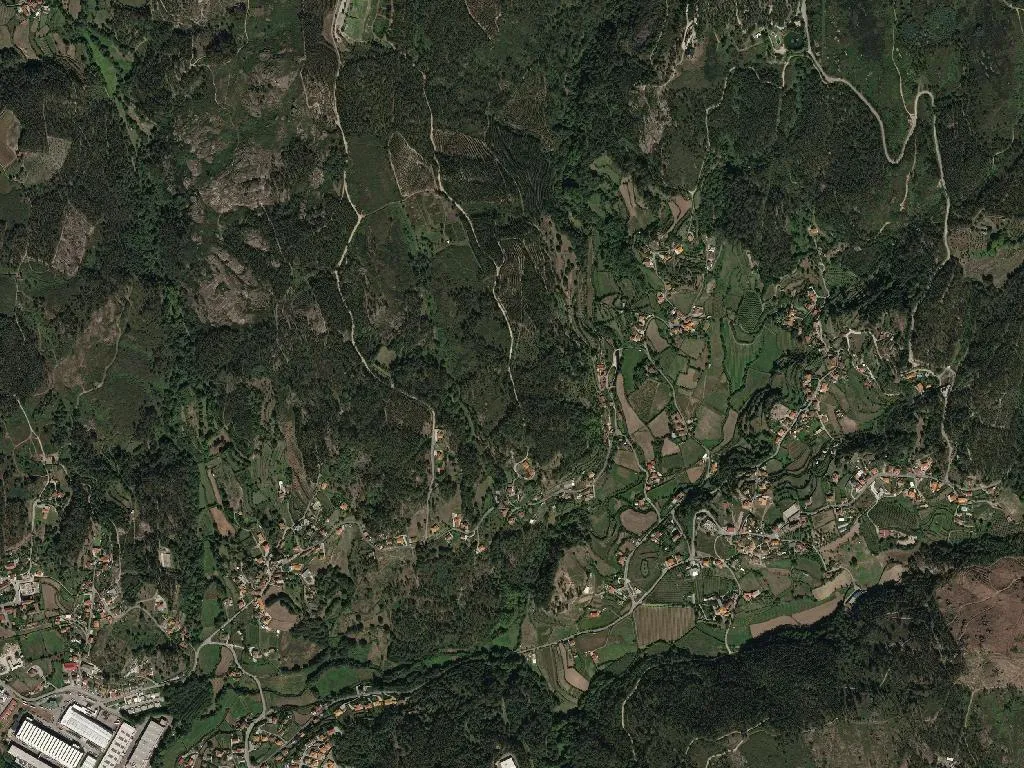
The noon bell rings. Nobody checks a watch; time here is kept by bronze, not batteries. Between Fonte Arcada and Oliveira the maize terraces still follow the valley floor exactly as they did when the first threshing floors were cut from granite. At barely 300 m above sea-level the air changes: the Lima breeze never climbs this high, replaced by the resinous scent of sun-baked schist and hay.
The parish’s namesake spring sits at the village entrance, just before the walled cemetery. A three-step stone arch frames a copper spout that has never, locally insist, run dry. Gardeners still trudge up with five-litre jerry-cans to water vegetable plots that survive on rainfall and stubbornness. Oliveira—literally “olive tree”—is ten houses, a 400-year-old olive in the churchyard, and a café whose opening hours depend on José’s mood.
The two villages were amalgamated in 2013; the head-count is now 1,629 and falling by roughly one funeral a month. The primary school closed in 2009; the nursery clings on with seven pupils.
Feast & table
São José is celebrated on the third weekend of August. Mass at nine, then migas à moda de Oliveira—cornbread crumbs fried with streaky bacon and safflower—followed by sarrabulho, a pork-blood rice stew thickened with black-herd chorizo. At four the bulls arrive from Rendufe farms for a cord-held bullfight between stone walls; non-payers watch from the flat terraces above.
The house wine is ramada, a field-blend of Avesso and Azal trained on narrow schist terraces too slim for a tractor. Green, sharp, 11% alcohol, it arrives in clay jugs at Solar da Oliveira, the parish’s only restaurant (253 621 259, Fri–Sun, book ahead).
Walks
No way-marked trails. Walk the single parish road—three kilometres, three unrailed stone bridges, a granary turned tool-shed, a threshing floor where corn is still hand-flailed. At kilometre two slip left down a bramble tunnel to the Fonte da Pipa mine: water gushes at a constant 12 °C, even in August.
For the long view continue six kilometres and 400 m up to the Senhora da Graça hermitage. From the granite balcony you can clock Gerês, the Lanhoso castle keep and, on very clear days, the Atlantic glint beyond Esposende.
Worth stopping for
- Fonte Arcada’s mother church: gilded eighteenth-century altarpiece and a Manueline portal dismantled and stored inside. Unlocked on Wednesday mornings for dusting—step in.
- The 1742 wayside cross where the lanes divide: iron-stamped coats-of-arms carved into the limestone plinth.
- Souto water-mill: still grinds corn for sponge-cake flour. Knock on the adjoining cottage door any Saturday before noon.
Leave behind
There are no gift shops, no public Wi-Fi, and Vodafone vanishes halfway along the lane. Bring water and proper soles—loose granite and red mud wait after rain. Park free on Fonte Arcada’s square; it never fills. From Braga take the EN103 then N306 (25 min). By bus: twice daily, Braga–Póvoa de Lanhoso line, 07:45 & 17:30. Miss it and tomorrow will do.