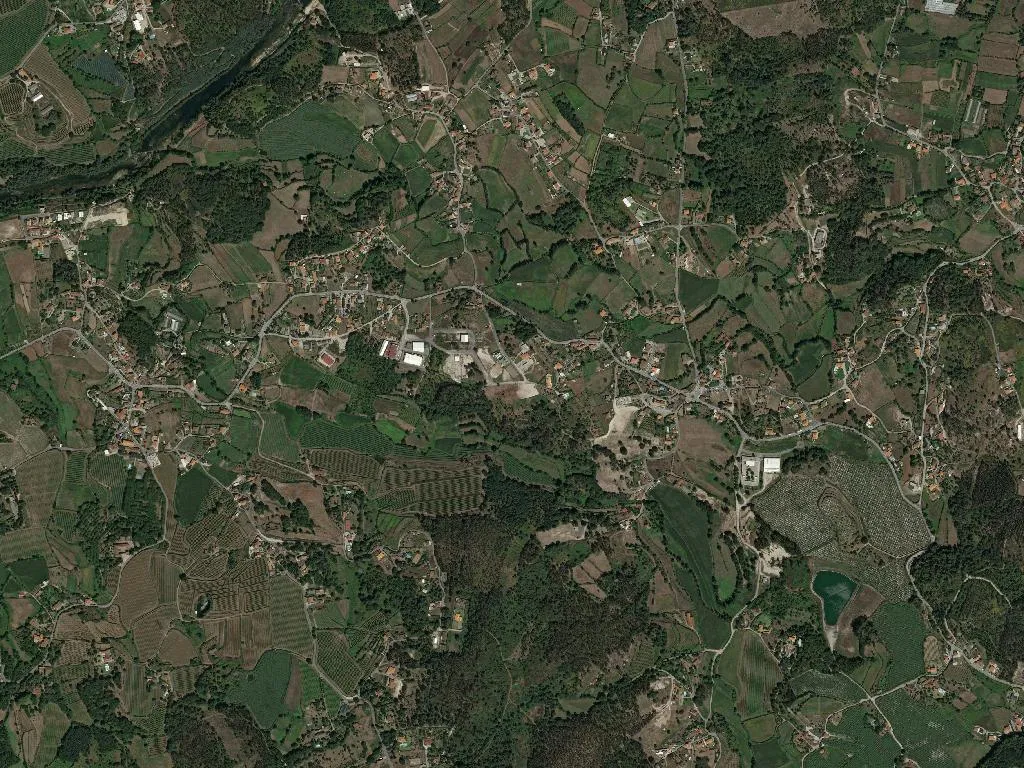
Full article about Monsul: Where Granite Whispers Above the Cávado
Monsul, Póvoa de Lanhoso, Braga: silent granite village above the Cávado, scored by emigrants’ bells, ageing echoes and March feast smoke.
Hide article Read full article
When the Valley Breathes
The church bell strikes eight and the note hangs in the air, rolling between the Cávado River and the first granite ridges like wine in a glass. Sound travels slowly here; a tractor coughs a field away, a dog barks on the opposite slope, and both arrive at the same measured tempo. Monsul, barely 100 m above sea level, feels less like a village than a natural auditorium where every noise is returned to sender, slightly softened, slightly changed.
A Parish Counting in Echoes
713 inhabitants, 183 of them over 65, only 71 under 14. The arithmetic is carved into the stone: granite cottages abandoned, then revived as three low-key country houses – enough beds for visitors who know how to read a map but never enough to register on package-tour radar. Density is 217 people per km², the precise point where silence is broken by footfall rather than traffic, and where a conversation across the lane can be followed without raising the voice.
Granite that Remembers
Two buildings carry Portugal’s “Public Interest” plaque, yet the whole settlement is a classified landscape. Every façade is a lighter grey than you expect – northern lichens yellowing the surface, wind burnishing the edges – a shade geologists simply call “Minho granite”. Walk the single main lane and you tread the same quartz-feldspar mix used for Braga’s cathedral and, further afield, for the docks of São Paulo. Monsul’s share went into manor houses, pig-pens, bread-ovens and the 17th-century pillory that once marked municipal rights.
Calendar of Returnees
On 19 March the Feast of St Joseph turns demography upside down. Emigrants fly in from Paris, Geneva, Newark; the square fills with smoke from beef ribs and the damp-earth smell of terraced fields being burned off for maize. By dusk the population has doubled, the parish council’s trestle tables sag with cod, lamprey and the first broad beans, and the bell that usually counts the hours is rung by children who have never lived here year-round.
What the Plateau Sends Down
Monsul’s kitchen is supplied from the high country immediately to the east. Carne Barrosã DOP – meat from long-horned cattle that spend nine months above 700 m – arrives at the village butcher already darkening and marbled. Honey labelled Terras Altas do Minho DOP follows: heather and sweet-chestnut blossom give it an almost mahogany colour and a slow, granular set that speaks of low moisture and no adulteration. Both products travel less than 40 km, dropping from moorland to valley in time for Saturday lunch.
The Green Wine that Isn’t Quite
The parish sits inside the Vinho Verde demarcation, yet its sheltered, south-facing terraces behave more like the Douro. Arinto and Loureiro ripen a full fortnight earlier here; the resulting wine keeps the region’s light spritz but carries an extra half-degree of alcohol and a weight that stands up to grilled Barrosã steak rather than merely baptising it. Locals drink it from white porcelain bowls, the better to judge the colour against the granite table.
Geography of the Everyday
327 hectares, of which 40 % is still cropped: maize, rye, potatoes in narrow strips retained by chestnut stakes. The rest is gorse, oak scrub and the odd pine planted after the 2017 fires. Waymarked paths leave the tarmac at either end of the village, climb for 20 minutes and deliver you to wind-blown summits where the Cávado’s reservoir appears as a sudden sheet of mercury. No entry fees, no turnstiles, no queue for the viewpoint; just the sound of your own breathing returned, like the bell, a little softer than when it left.
Dusk Accounts
Evening light strikes the western façades and turns them the colour of wet sand. Long shadows slide across the schist terrace walls; a gate latch clicks, a van starts, the bell marks six and the valley exhales. The echo takes its time, suspended in the cool air sliding down from the Serra da Cabreira, and you realise the delay is not an acoustic quirk – it is Monsul’s way of asking you to wait, listen again, then go home changed by a place that has already forgotten you arrived.