Full article about Wood-fired Bread & Palomino Wine in São João de Rei
Granite cottages, chestnut vats, honey from a Renault 4 boot—rural Minho alive.
Hide article Read full article
Woodsmoke and Warm Loaves
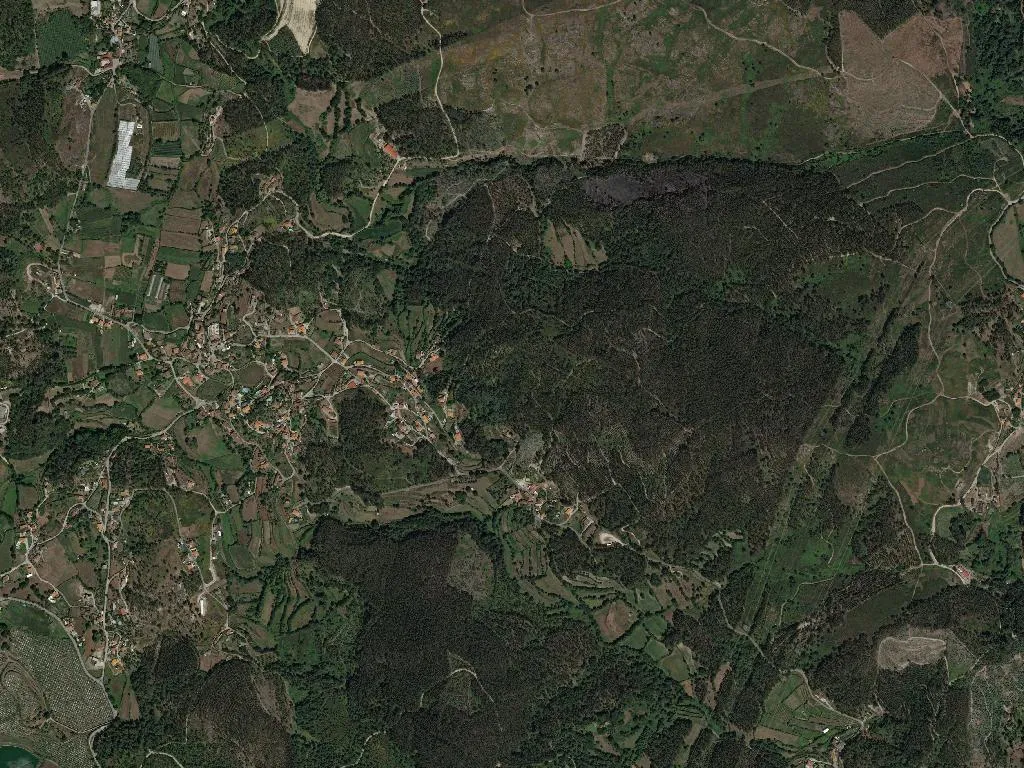
The tang of eucalyptus smoke drifts through São João de Rei just as Dona Lurdes pulls a corn-sprinkled loaf from the wood-fired oven built into her back wall. At 276 m above sea-level, on a granite ridge between the Ave and Cávado valleys, the village’s stone houses hoard the afternoon sun like storage heaters. The church bell tolls the hour with the unhurried cadence of a place that never bothered to replace its clock.
Three-hundred-and-sixty-five souls keep the parish breathing. None of them stayed for lack of an exit; they simply refused to let the Minho’s rural exodus finish the job.
Where Vine Meets Granite
São João de Rei sits inside the Vinho Verde demarcation, but forget orderly tastings or gift-shop corkscrews. Terraces drop away in irregular staircases, the Atlantic’s humidity wrung dry by the Gerês and Amarela ranges. Schist veins thread the granite bedrock, lending the palomino-white wines a quartz-edge acidity that makes your molars sing. In family cellars—low granite rooms smelling of crushed laurel—fermentation still happens in chestnut vats holding no more than 800 litres. Labels are unnecessary: the wine is drawn off with a bamboo pipette into washed-up tonic-water bottles that travel across hedges, not borders.
Barrosã beef, normally linked to the high plateaux of Trás-os-Montes, appears here via cousins who drive the brindled cattle down to winter pastures. The meat, rose-veined and almost gamey, is braised with bay and smoked paprika from morning Mass to evening rosary. Finish with Minho Highland honey: dark, thixotropic, tasting of chestnut blossom and heather, sold from the boot of Zé’s Renault 4 in whatever jar came to hand.
Saint Joseph’s Day
Fireworks would feel ostentatious; instead the feast of São José is announced by processional brass drifting through lanes barely two metres wide. Women balance trays of honey cakes slick with lard and spiced port, children dart between skirts, and for one afternoon the population doubles. Filipe—who left for Lisbon’s tech hub two decades ago—returns with teenagers who speak with the clipped vowels of the capital. No one mentions that the primary school closed ten years ago; they simply pass the cakes faster.
The Geometry of Staying
Officially there are 43 residents under thirty and 73 over sixty-five, but statistics miss the choreography. At dawn António, 78, still climbs the slope behind the cemetery to hoe his cabbage rows; the retired teacher continues to mark the parish council minutes in immaculate copperplate. Density—66 people per km²—feels meaningless when houses cluster like barnacles, separated by oak coppice, small meadows and tractor tracks fossilised since the 1973 Massey-Ferguson.
Only three paying beds exist: two stone cottages restored with Swedish insulation and one spare room in D. Fernanda’s house, scented by the lavender she irons into sheets. Guests arrive for the negative space: no itinerary, no coach turning circle, no gift shop. Nights are orchestral only with distant dogs and the soft clink of cowbells; dawn fog pours uphill like a slow river. At 7.30 a.m. sharp Zé’s café raises its shutters, espresso machine growling to life for the first of five daily customers.
Daylight slants across schist roofs, a hinge creaks, someone shouts for Piloto the mastiff, woodsmoke rises vertical. São João de Rei offers no spectacle—only granite’s rough warmth, the scrape of a cork pulled from a bottle you’ll never see again, and the certainty that some places persist simply because no one remembered to erase them.