Full article about União das freguesias de Verim, Friande e Ajude
Timber boardwalks, mandolin breeze, 655 souls across three granite villages
Hide article Read full article
Where towels outnumber umbrellas
In August the Cávado widens to the breadth of a Scottish loch beside Verim, yet the water stays so clear you can count the stones on the riverbed. Families arrive after siesta with cool-boxes and folding chairs, staking rectangles of shade under the poplars. The council’s €500,000 upgrade in 2018—timber boardwalks, a floating jetty, wheelchair-friendly changing rooms—turned this bend into the only officially recognised river-beach in Póvoa de Lanhoso, but the engineering is discreet. What you notice first is the sound: water slapping granite, cicadas, someone tuning a mandolin in the car park.
Three villages, one parish map
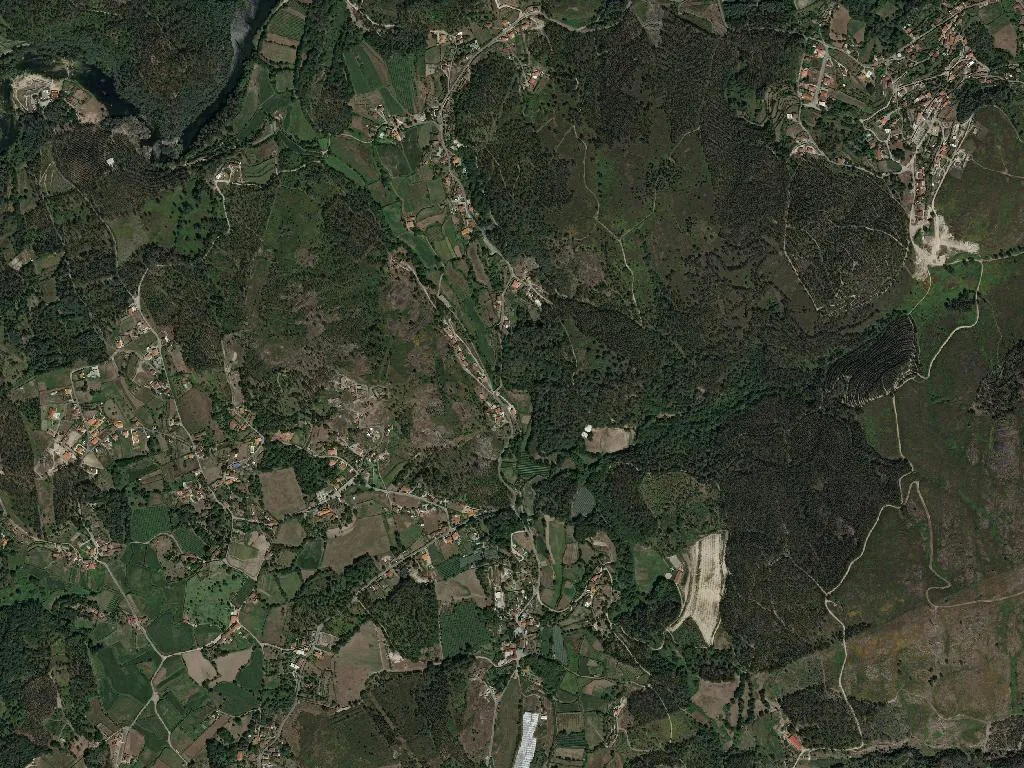
Verim, Friande and Ajude were jammed together by administrative fiat in 2013, yet they have always shared the same patchwork of smallholdings and oak scrub. The earliest charter, from 1207, calls the place “Sancta Maria de Virin”; the Latin root Verini points to a Roman landowner who planted vines along the terraced banks. Until 1853 the settlement belonged to the neighbouring municipality of São João da Rei; boundary re-drafts later parked it with Lanhoso, then Póvoa de Lanhoso. Today 655 residents occupy 1,009 hectares—roughly one person per rugby pitch—leaving space for cattle to wander and for the scent of mimosa to travel.
Granite, water and a carpenter saint
The parish church of Our Lady of Ó stands square in the middle of Verim, its 18th-century façade wearing a Manueline portal like a brooch on a work shirt. Inside, the gilded wood-carving is restrained, almost Protestant, until candle-light catches the cherubs’ cheeks. A side-chapel to St Sebastian still hosts the annual rain-procession—an insurance policy against August drought that older villagers remember from childhood. Walk out among the smallholdings and you find granite threshing-floors where maize once dried, dark-stained maize-stores on stilts, and stone mills whose millstones are now garden ornaments. A 19th-century water-tunnel, built after floods diverted the Cávado, reminds you the river has never been merely scenery; it is a piece of public infrastructure, like a road or a railway.
March smoke and concertina Sundays
The first Sunday of March belongs to St Joseph, patron of carpenters and, by extension, of anyone who has ever hammered a roof-beam in the Minho. After Mass, the bells of Friande—three bronze castings from 1926—ring across the valley. Processions shuffle through all three villages, statues bobbing under embroidered canopies, while a brass band from Gême squeezes out marches that sound half-forgotten even as they are played. Lunch is served at trestles in the churchyard: Barrosã beef blackened over vine-prunings, pork nuggets stained red with Esposende paprika, steaming pots of sarrabulho porridge, and Vinho Verde from the Basto sub-region poured into clay cups that leave a ring of green glaze on your lip.
Between vineyard and oak
The land rises only 87 m above sea level, but the view feels alpine. Vineyards run in ruled lines, Loureiro and Borraçal trained on high pergolas so tractors can pass underneath. Above them, holm and cork oak interrupt the geometry, their acorns fattening local black pigs. No nature reserve signposts stand here; instead the river itself acts as a 14-kilometre wildlife corridor. Grey herons stalk the shallows, kingfishers flare orange across the road, and at dusk the crickets start up like badly oiled machinery. Farmers still paint gate-posts the traditional indigo—an Atlantic habit imported by returning emigrants who swore the colour frightened evil spirits, or at least made the hinges last longer.
The courage to enter 18 °C
Even in high summer the Cávado rarely tops 18 °C. Children shriek, leap, acclimatise within three strokes; grandparents watch from canvas chairs, ankles crossed, remembering when no one owned a thermometer. Across the water, granite boulders radiate the day’s heat back at the sky. Stay until the sun drops behind the ridge and the surface turns molten copper; the only sound left is water on stone—the same frequency, geologists say, that lulled Roman sentries two millennia ago.