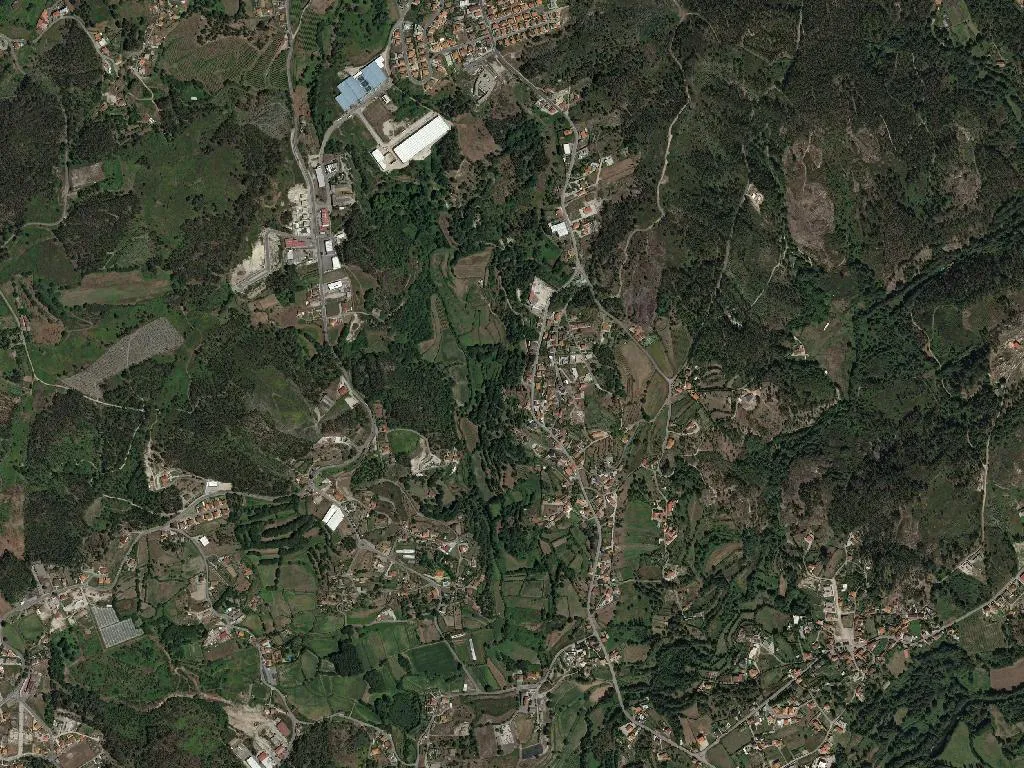
Full article about Vilela: Where Time Strikes Thrice Over Granite Terraces
Bronze bells, Barrosã beef and 1953 timekeeping echo across mist-draped maize terraces.
Hide article Read full article
The bell rings at seven, noon and nine
In Vilela the day still starts with the same three strikes that have sliced the air since 1953, when parish priest António da Silva locked the mechanism at 07.00, 12.00 and 21.00. The bronze note rolls over terraces of dwarf maize—42 % of the parish’s farmland—hops the EN 205-3 and expires halfway up the 312 m hump of Viso. By six the mist off the Ave has already beaded the EDP wires; the faint pong of scorched eucalyptus drifts from one of the two remaining breeze-block plants. On 457 ha of medieval benches, dry-stone walls—on average 80 cm thick, 1.2–2.5 m high—grip the granite skin that, here, is only 18 cm deep before bedrock.
March devotion
St Joseph’s Day, 19 March: dawn mass at eight, four-o’clock procession shouldering the 1892 palanquin on loan from Braga’s own St Joseph guild. Since 1968 the saint has been paraded along Domingos José Alves and Dr Joaquim Sampaio—the sole street cobbled with dressed granite setts laid by political prisoners in 1951. In the churchyard the confraternity hands out 400 sugar-dusted fritters and 80 litres of hot red; the village social-centre women sell 28 800 g sponge cakes baked to the 1912 recipe of grandmother Elvira.
Territory on a plate
Barrosã DOP beef: twelve registered producers, cattle finished above 600 m. The licensed slaughterman kills two cows a month, Friday at six, in Póvoa de Lanhoso’s municipal abattoir. Serrana kids—150 goats—come down from Carvalhinho to the wood-fired oven of Restaurant O Minho (est. 1987) where 18 are roasted each summer weekend.
Vinho Verde: 23 ha of high-trained vines, 168–250 m, 65 % Loureiro, 35 % Pedernã. The Argoncilhe co-op pays €0.65 a kilo; the 11 % abv wine sells at Quinta do Outeiro (manor house dated 1734) for €3.20 a bottle. Don’t miss the “licor de merda”—a practical joke liqueur invented in 1971 by Zeca do Mini, a Santo Tirso tailor—still served frozen as a digestif, 2 cl for €1.50.
Life on the slope
Levada do Viso: 3.2 km irrigation canal built 1897, still delivers 18 litres a second in August. Walking route PR 10 “Vilela–Rio Ave” stretches 7.4 km with 180 m of ascent; way-markers went up in 2016. Tuesdays and Thursdays the Transdev 102 leaves at 07.30, returns at 18.10; 23 min to Braga, €2.05 with a pass.
Beds: two granite cottages restored with 2014-20 PRODER funds—Casa do Outeiro (four beds, €80 per night) and Quinta da Veiga (six beds, €120). Both hold “Turismo no Espaço Rural” certification, file 2020-04-PT.
At 18.45 the bell tolls the rosary; guard dogs at the three working farms bark back. Eighty-two-year-old Sr Albano—back from Lyon in a Toyota Land Cruiser—descends Rua do Cemitério where the 1947 wayside crucible, paid for by public subscription after the war, still points to the church. August light slips to 18° over the two-slope roof of No. 47, the last house with a nineteenth-century turned-wood eave. Vilela promises no spectacle—only the precise weight of 596 lives who know to the centimetre where their soil ends.