Full article about Balança: Where Vine Roots Grip 300-Year-Old Slate
Taste slate-kissed Vinho Verde, spoon four-season DOP honey and follow lantern processions through Balança’s 300-year slate walls in Terras de Bouro.
Hide article Read full article
Between slate walls and water
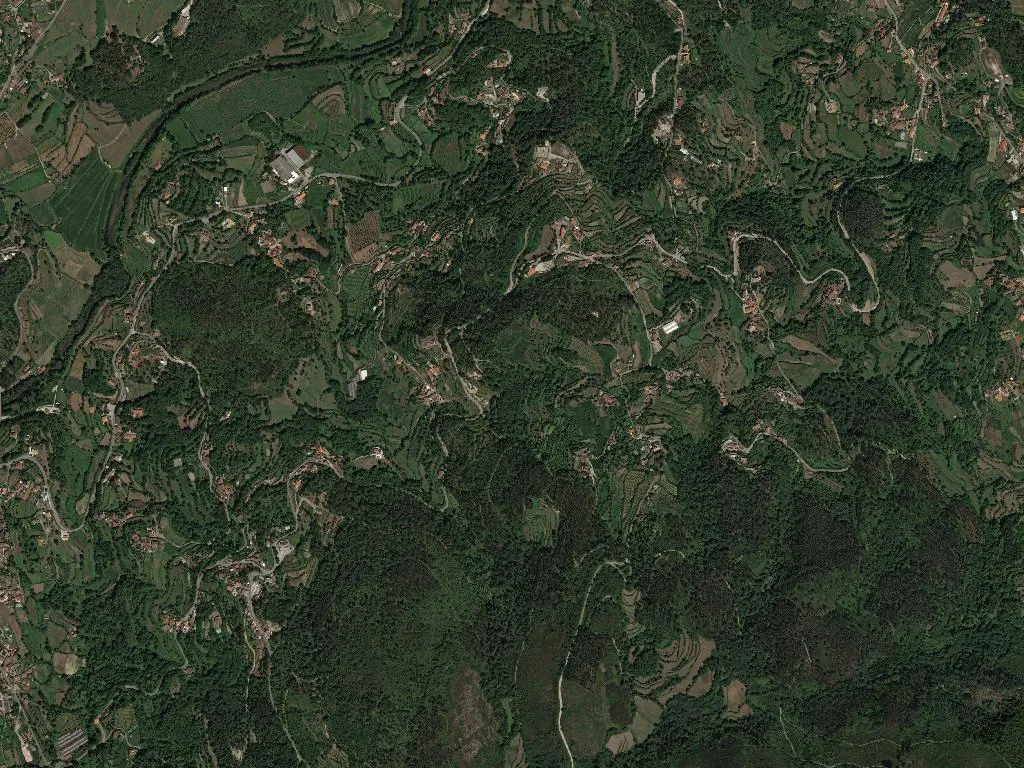
The lane narrows to a shoulder-width thread of granite chips, hemmed by slate walls that have shouldered Atlantic rain since the 1700s. Somewhere below, the Rio Homem flicks over stones, its hiss the only constant in a valley where 307 people share 3.8 km² of Terras de Bouro. Every footstep releases the scent of wet schist and bruised ferns; the air is so saturated you taste iron in the back of the throat. Balança sits at 261 m, too low for postcard peaks, yet the serra’s shadow still arrives early, folding the parish into dusk while the rest of the municipality drinks late-summer sun.
Wine that clings to stone
The slopes are stitched into dry-stone terraces so narrow that the plough is a man with a hoe. Here, Avesso and Loureiro vines cling to fissures, their rootlets prizing the same mica that roofed the county’s manor houses. The resulting Vinho Verde is bottled without malolactic trickery: sharp enough to rinse the lungs of granite dust, green enough to recall Atlantic moss. Locals drink it from porcelain cups at 11 a.m.—a quiet rebuttal to the Douro’s velvet cult.
Honey stamped by season
Above the last terrace, apiaries sit like small chapels among heather and strawberry-tree scrub. The DOP honey is harvested four times a year: spring brings gorse and rosemary; early summer, chestnut blossom; late summer, wild marjoram; autumn, heather. Each vintage hardens to a different colour—citron, bright amber, burnt toffee, bitter chocolate—so a spoonful can taste like a calendar. The 81 bees per square kilometre outnumber the human 4:1.
Festivals that keep time
The liturgical year still governs the valley. On the last Sunday of August, Nossa Senhora do Livramento is carried downhill from her chapel; shoulders replace engines, and the procession’s lanterns swing like slow metronomes. Two weeks later, the São Brás municipal fair drifts up from the county town with accordions and chestnut-wood stalls selling cured ham sliced so thin you read the newspaper through it. At the edge of the parish boundary, the Benedictine monastery of São Bento da Porta Aberta receives 60,000 pilgrims each July; their wax ex-votos hang in the cloister like brittle orange leaves.
Footfalls on the Northern Way
Balança marks kilometre 90 of the Caminho do Norte, the less Instagrammed sibling of the French Route. Pilgrims arrive wet from the 600 m climb out of Cabril, boots squelching, eyes already scanning for the church bell that means coffee. The parish council keeps a stone drinking trough topped by a scallop-shell tile; no one remembers when it last ran dry.
Learning to age slowly
Ninety of the 307 residents are over 65; only 29 are under 15. Yet the exodus has slowed: eight granite cottages now take paying guests, their façades restored with EU funds and the patience of returning grandsons. Wi-Fi is reliable enough for Zoom, patchy enough to guarantee silence. At dusk the sun ricochets off schist into the vines, turning them molten for seven precise minutes; then the valley cools, the bees settle, and the church bell counts the hour the way a farmer would—by the weight of remaining light.