Full article about Chamoim e Vilar: Where Park Meets Silence
Stone lanes, wolf-yellow gorse and vending-machine bagaço in Terras de Bouro’s forgotten twin.
Hide article Read full article
The chapel bell rings four times and the echo lingers over the stone-walled terraces as if it, too, is reluctant to leave.
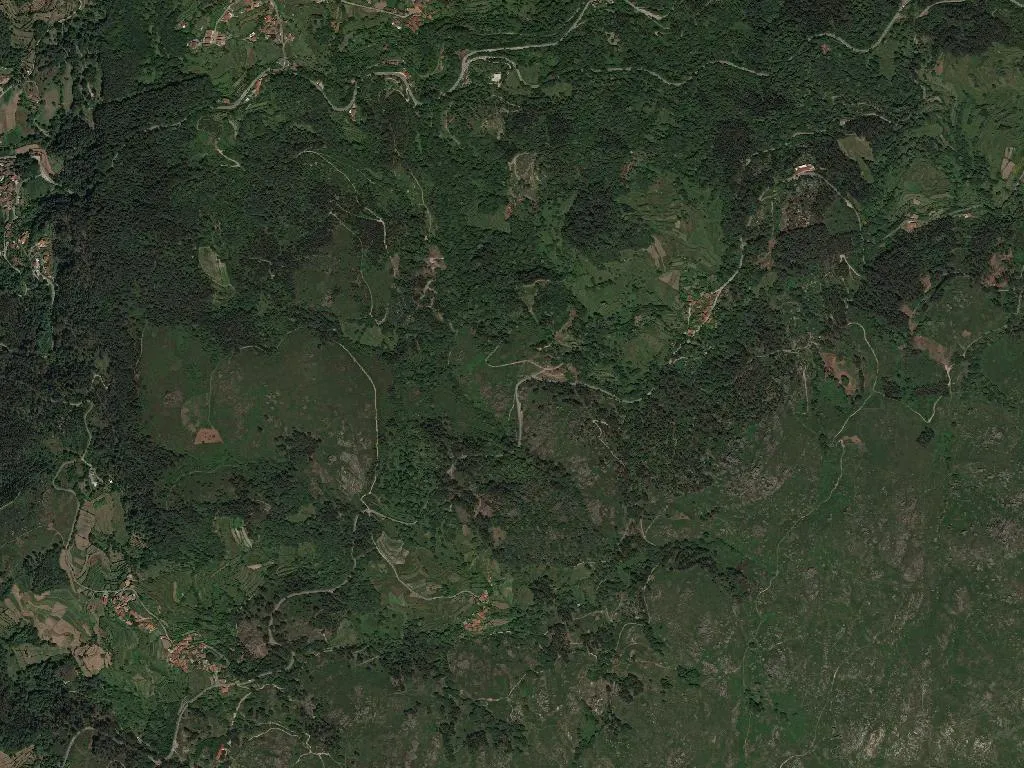
We are 540 m up – high enough for the air to carry a blade of cold and the sour-sweet scent of burnt eucalyptus, low enough that your lungs still work without thinking. The parish of Chamoim e Vilar was invented in 2013 by a bureaucrat’s rubber stamp, yet the moment the tarmac thins you feel the old fault-line: the lane to Chamoim climbs straight and stern, while Vilar’s road meanders like a yawn and deposits you beside a football pitch where the goalposts flake orange in the rain and the grass is real enough to stain your knees.
Inside Peneda-Gerês, minus the tour-bus package
The boundary signs insist you are now within Portugal’s only national park, but forget the Instagram shepherd. The map claims 1,256 ha of scrub, oak and wolf-yellow gorse; the reality is a tangle that can swallow an experienced Alentejo farmhand. The old transhumance trails still braid the ridges, yet cattle no longer parade through daily. Pack a paper map or hire a local – GPS merely drains your battery and self-esteem. For supplies, the nearest supermarket is down in Terras de Bouro; arrive after 20.00 and you’ll discover the Portuguese version of “you’re stuffed”.
Holiday homes are scattered sparingly – twelve at last count – christened with grandmother names: Casa da Dona Emília, Casa do Lagar. Their owners live in Braga or Paris and leave the neighbour’s number on a scrap of card. August vibrates with returning nephews and the smell of grilled sardines; the remaining eleven months return to a hush broken only by the clang of a cowbell and the wind riffling through maize stubble. There is no interpretative centre, no tuk-tuk rank. In Vilar a battered vending machine sells honey and bagaço liqueur; if the bulb inside is dead, knock at the yellow house – Mr António is usually watching the evening news and will shuffle out in carpet slippers.
A calendar still governed by saints
Time is divided by feast days. Mid-August belongs to Nossa Senhora do Livramento and Santa Eufémia: emigrants swap Geneva licence plates for plastic chairs in the churchyard, generator fumes mingle with sardine smoke, and someone always produces a chromatic accordion. February’s São Brás is more intimate – a 09.00 Mass, then parish-council tents dispensing kale soup and soft cornbread while the village brass band negotiates a waltz in zero-degree air.
Two kilometres away sits São Bento da Porta Aberta, one of northern Portugal’s largest pilgrimage sites. On the major weekends hikers pass through Chamoim asking for water or directions. Hospitality is not performance art: “Third gate on the right, mind the white cow, you’re grand.”
349 people, some present, some accounted for
Census arithmetic: 349 residents, 111 drawing pensions, 24 still in primary school. The rest are either hanging on or coming back to keep bees, bottle honey with EU labelling, or convert grandfather’s hayloft into an Airbnb. The park’s environmental rules chafe, but they also pay: certified mountain honey, trail-maintenance subsidies, the convenient excuse of “walking the dog” that disguises an eight-kilometre ridge loop.
Vinho Verde exists, but the terraces are so narrow the entire harvest fits into a single afternoon’s picking and a weekend’s worth of bottles. At dusk sunlight strikes the granite like a match; smoke rises straight from chimneys scented with bean stew or pine, cut with a whiff of weekend bleach. No one calls it nostalgia – simply the hour when today ends and nobody hurries tomorrow to begin.