Full article about Cibões & Brufe: Mist-Clad Minho Villages
Schist terraces, granite ridges and heather-scented air at 738 m in Terras de Bouro
Hide article Read full article
Where mist has a postcode
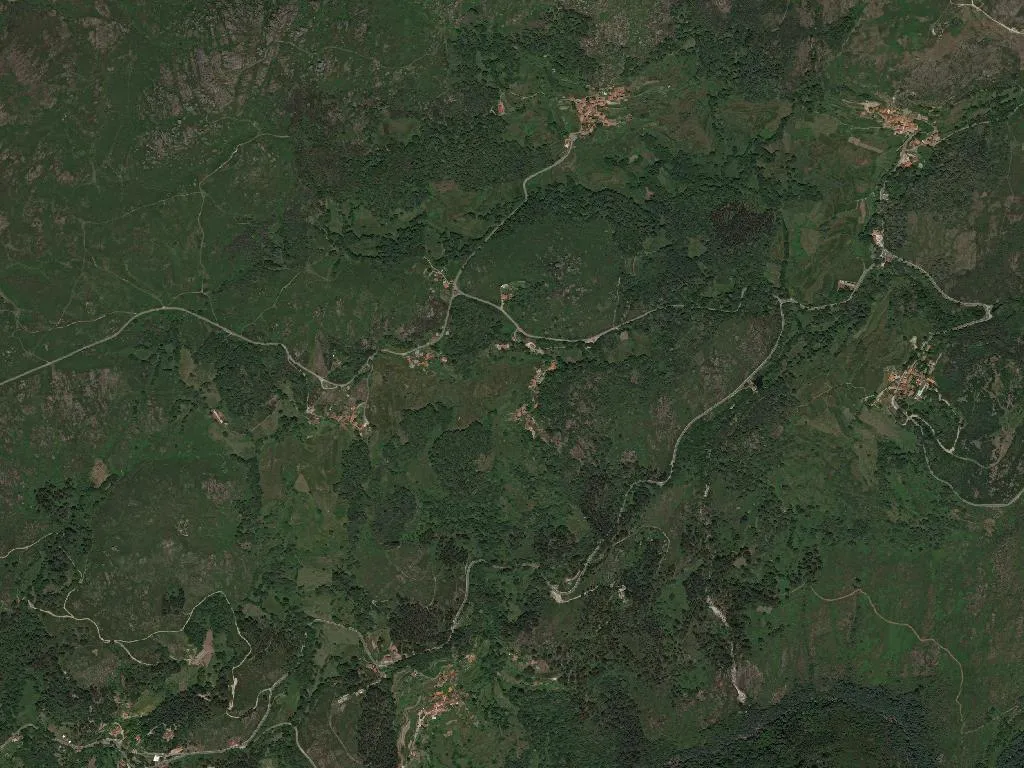
At 738 m the dawn fog inhales, exhaling dark schist terraces back into view. Cold air carries the twin scent of damp loam and wood smoke slipping from chimney pots. Cibões and Brufe occupy this hinge between cloud and open sky, where the Minho highlands crumple into granite ridges that announce Peneda-Gerês National Park.
The name “Brufe” itself is climatic shorthand—borrowed from bruma, the low, clinging cloud that turns mountain lanes into water-colour washes. Cibões, recorded in medieval charters, hints at either old kinship networks or Latin roots tied to water and grazing rights. Neither word translates neatly; both murmur of altitude, isolation, weather.
Passage and permanence
Spread across 2,403 ha, the parish averages 12 inhabitants per square kilometre. The 2021 census lists 304 residents—only 28 under 14, 107 over 65. In a single decade the population fell by 28%. Empty houses outnumber occupied ones, yet a scatter of windows stay open and hearths remain alive.
The Portuguese Central Way of St James crosses the ridge; hikers refill bottles at granite fountains, calves burning after the 500 m climb from the Homem valley. Thirteen licensed guesthouses cater to those who prefer moorland silence to Gerês spa crowds. “Folk only come up here if they really mean it,” laughs José, pulling an espresso at the only café in Brufe.
Calendar of belief
Annual rhythm is still set by the liturgical clock: Our Lady of Deliverance in July, Saint Euphemia in September, the municipal feast of Saint Blaise. Yet the magnet is the nearby Romaria de São Bento da Porta Aberta—Portugal’s largest open-air Benedictine pilgrimage—when 70,000 worshippers flood the hills, bells ring without pause, and the air turns waxy with candle smoke. For three days the parish forgets its silences.
Vertical honey
Above 700 m, heather, broom and sweet chestron flower in succession, giving beekeepers an unbroken nectar flow. The resulting Mel das Terras Altas do Minho DOP is dark amber, almost bitter, with notes of moorland herbs and a texture that crystallises slowly in cool pantries. Hives sit in wind-scoured clearings, their wings tilted south-east to dodge Atlantic squalls.
The EN 308 twists past loose-stone walls; granite crags saw at a sky that can shift from gun-metal to cobalt within minutes. A bell tolls—not for Mass, merely to mark an hour measured differently here, where time is fog-bound until the sun reclaims the ridge.